
| Home | Nature Diary | Flora | Fauna | Fungi | Events |
| Rugs | Dogs/Cats | Smallholding Devon | Smallholding Cornwall | About |
| 2024 | 2025 |
| << February 2026 | March 2026 | April 2026 >> |
|
1st: Hedgehogs are awake Caught our first hedgehog of the year on the trail cam last night. It looks a huge one too. This is in Goat field, by the fox hole, so we wonder whether it was in the barn under all the straw in there. Very chuffed to see it and know that it's got through the winter. AND we now have new toadspawn in Chaser and in Oak.This means we have had frogspawn in four ponds and toadspawn in four ponds too, although not in the same four: Poultry, Chaser and Oak have both, Little Chaser just has toadspawn and Goat just has frogspawn. Also of note is that with both species, once the first lot is laid, that then 'seems' to become 'the' area for all spawning, no matter how big or small the pond (update: see 3rd March). In addition, the two species don't mix - there is always a separate spawning area with at least several feet between the two. The frogspawn is now hatching in its thousands. There are going to be some very well fed pond invertebrates over the next few months. Finally, spring has officially arrived - the first Blackthorn is out!!    |
|
2nd: Dandelion This has to be one of the most vibrant and colourful flowers on our land and yet dandelions are a hugely maligned plant. It is no co-incidence they are one of the earliest to get going in the year. Bumble bees love them and there are now some queen bumbles starting to appear. slowly waking up and looking for food and then a good nesting site to lay her eggs. Interestingly, the queen has to keep the eggs warm which she does by shivering her flight muscles as she sits on the brood cell (made of pollen). A fascinating process - and not unlike a bird incubating eggs. All the first eggs that hatch and then pupate emerge as females who then help the queen to collect nectar and pollen and so feed new larva. An example (and one of many) at how amazing invertebrates are creating organised and well-managed colonies who work together for the good of every individual. 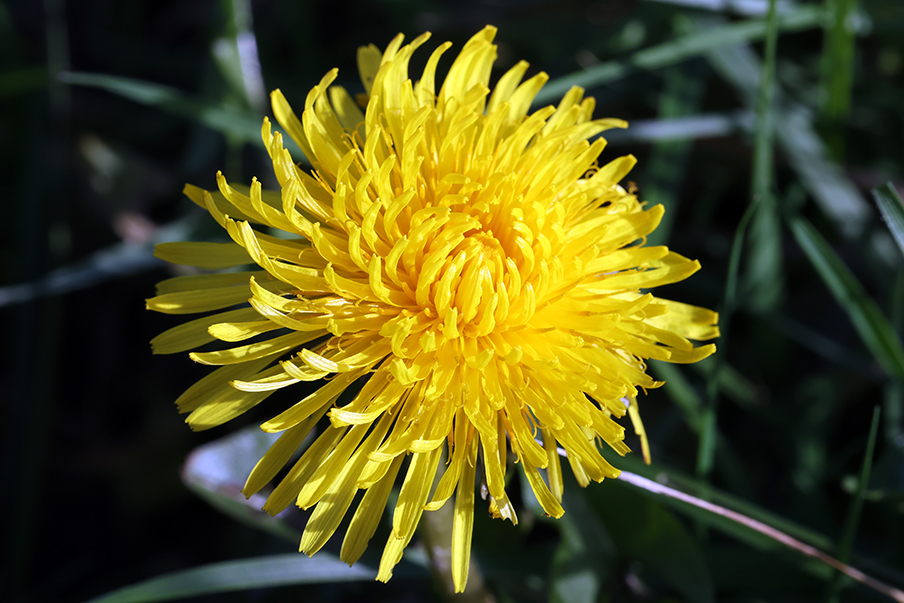 |
|
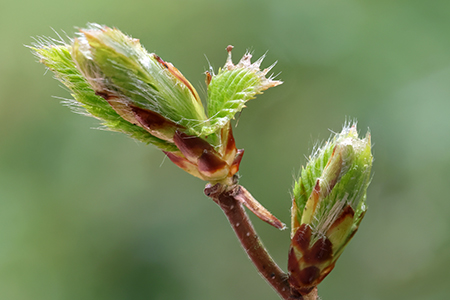
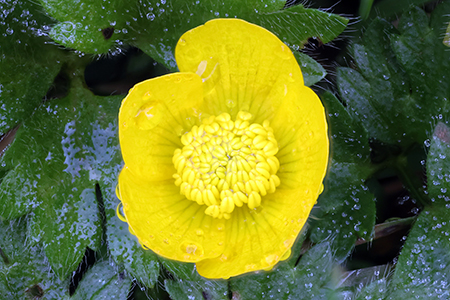
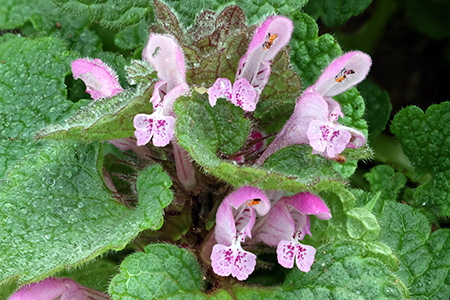
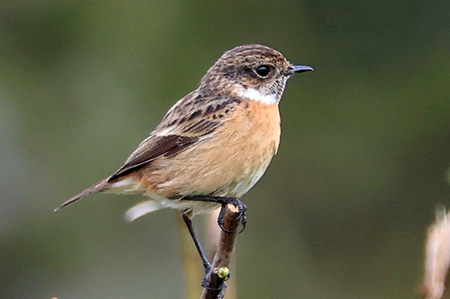
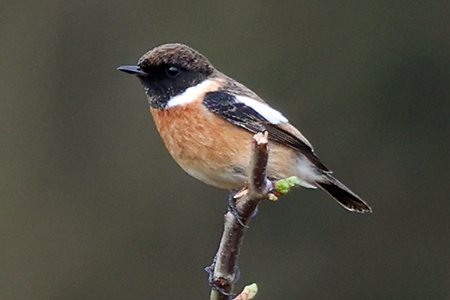
3rd: Spring So much for our theory that each pond only has 'one' area of spawn per species. Today we spied toad spawn in the main bowl of Poultry pond, several metres from the huge amount laid in the shelf last month. It's great when observation leads you to drawing new conclusions about animal behaviour. And this morning we spotted our first flowering Buttercup and Red dead-nettle as well as now seeing several of our young trees starting to bud, including this delightful hornbeam in the bottom of Oak. And what a joy to be be seeing Stonechats on a daily basis, and now begriming to pair up. These two were flitting around in the hedgerow at the bottom of Oak. 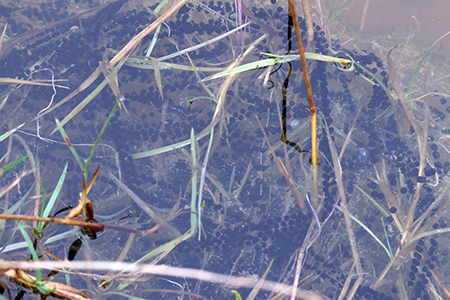
 |
|
4th: New life everywhere It is now incredibly easy every day to find signs that new life is emerging: overnight it seems, the catkins have appeared on our Purple willow in Oak field; we 'think' we are still seeing new toad spawn (there is so much it is hard to tell now); Marsh marigolds are popping up in most ponds with leaves and buds and the daffodils are putting on the best show in years. They are covering the verges and hedgerows as we drive around the county - what a lift!! Today was pretty dull most of the day but it wasn't hard to find vibrance and colour. And we are now catching 'our' hedgehog underneath the Bird feeding station at night - judging by the feast here, it is finding plenty to eat!! 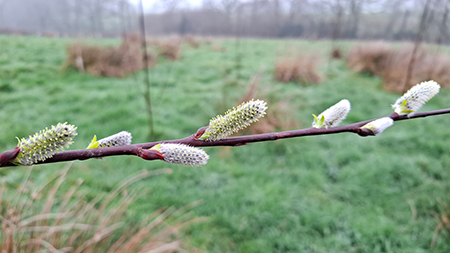 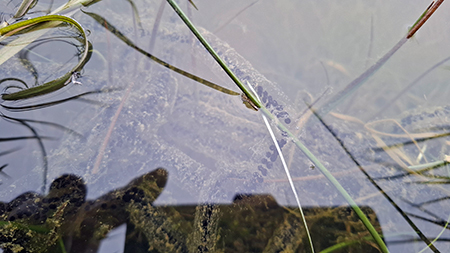 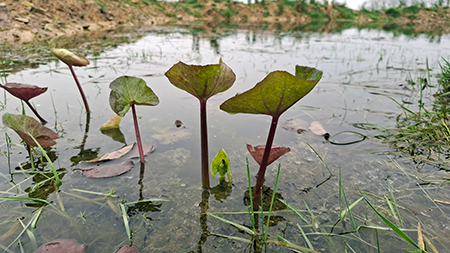 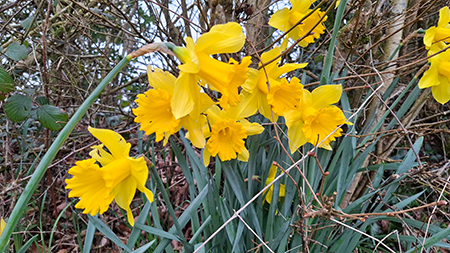 |
|
5th: Still water It is extraordinary how little the water moves as our heron slowly wades through Chaser pond, and how still its whole body is. What an elegant and controlled bird. This was a very lucky capture on the Trailcam. |
|
6th: From pond to forest After a whole year and a very wet winter.. we are fairly sure that both Swallow and Yeti ponds are not going to fill up any time soon. They are both very stony and the clay in this field is not as pure or dense and as such, they were probably always destined to leak. Natural ponds can seal themselves BUT it takes a very long time and is usually the result of a silt build up from them having 'some' water in. These two have never even had a covered bottom in any meaningful way, we just always get 'puddles'. And so.. Plan B: the mini forest. We are now planting them both up with 250 acorns each plus a variety of willow whip around the banks. We are, as the photo below of Swallow pond shows, planting close so that the resulting saplings will compete and grow taller than if they had more space. We fully expect not to see the full benefits of our work but is will be fun to be here at the begriming and to leave the joy of our project for someone else to reap the benefits of (fingers crossed). We are now going to spend the spring anxiously looking for signs of germination!!! 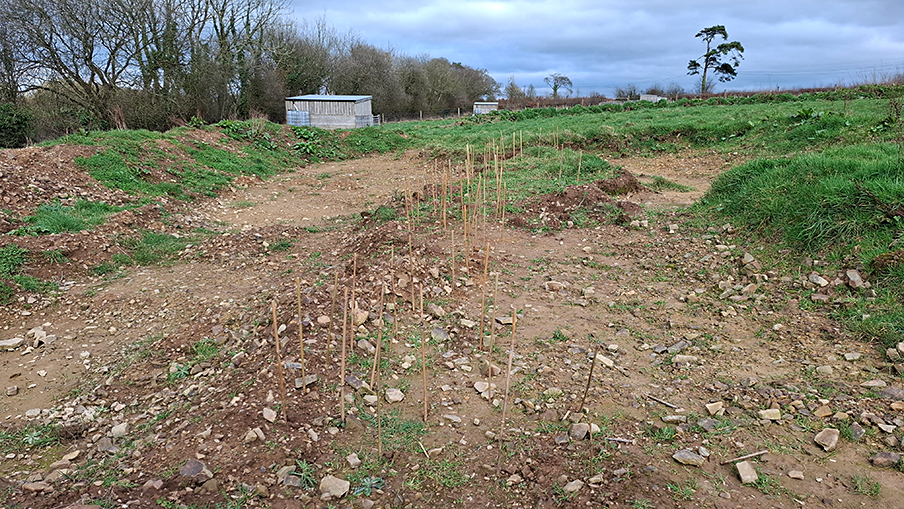 |
|
7th: Allotment to Willow Another 'change of use' project began today. The piece of land we call our 'allotment' has been through many iterations. It was originally part of Fruit field, back when we didn't even call it Fruit field and was grazed by cows, sheep, goats and alpacas (and the odd escaped chicken no doubt). We then fenced it off and it became our pig plot where for two or three years we raised weaners for meat. After that it then officially became the 'allotment' when we planted fruit trees, lots of fruit bushes and grew a variety of veg. It briefly morphed into a community allotment before them morphing into a fruit cum wildlife cum veg bed area (the later managed by Lynda and Andrew who have had beds here for years now). AND now??? Now we plan to grow willow here, as many varieties as can with the aim of using them for weaving as well as wildlife. This afternoon, we roughly strimmed most of it, including removing old fruit canes from last year and giving all the currant and berry bushes a bit of a tidy. Next comes the planting bit - we have a lot of willow of varying colours and thicknesses and hope as many will take as possible. Fingers crossed. In other news, we heard a very proud yellowhammer today (they have been a bit absent this winter) and we are very chuffed to be capturing our mallard pair on the trailcams most nights. We'd love them to nest here but because of the dogs, we hope they don't. 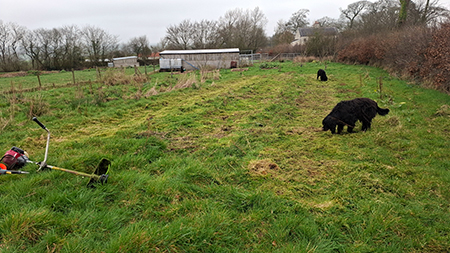 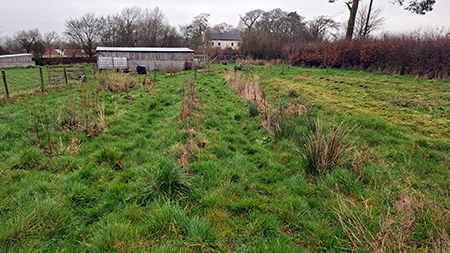 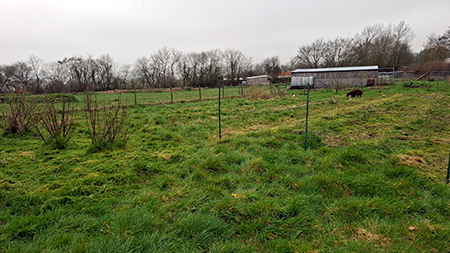 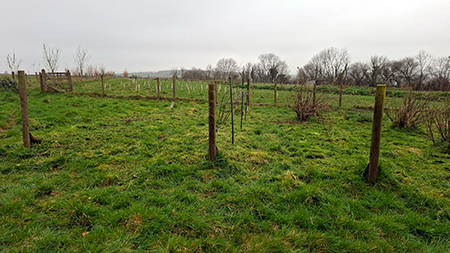 |
|
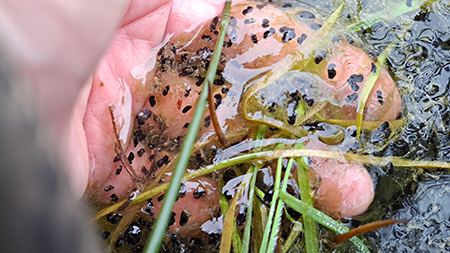
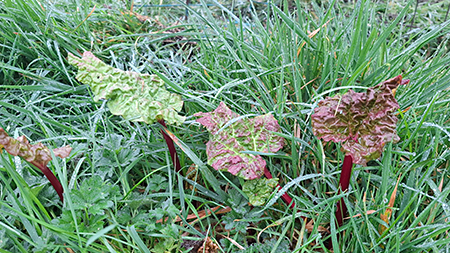
8th: Willow and Heron And today the planting began - 54 willow whips are now in the ground - at this spacing we should get around 450 or so in these three rows!! Not sure of the number of varieties - at least six we think. And our heron was caught on the cam again - looks like it is feasting on a backswimmer here - there are plenty around!! On another clip (a misty one so we didn't keep it), it looked as though it got something a tad larger - a beetle of dragonfly larvae perhaps? Never tire of watching the stealth and poise of this bird. Meanwhile, we are delighted to say that we have rhubarb coming up - not sure quite why - we planted this crown two years ago, it grew a bit in the first year, we didn't see any signs last year and now this.... fingers crossed it manages to produce some stalks for us to eat! And after staring at it for days and days, the toadspawn looks as though it is starting to grow - we now have wobbly ovals, not circles!! 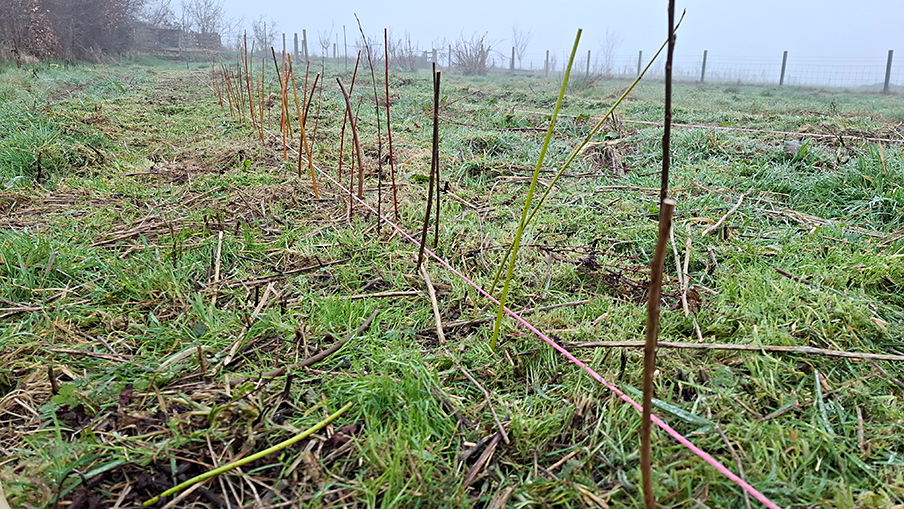
  |
|
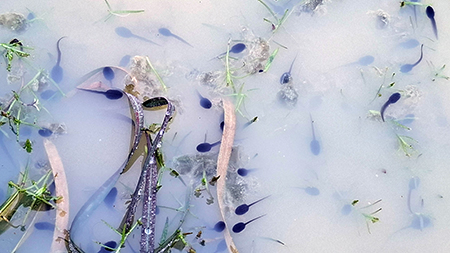
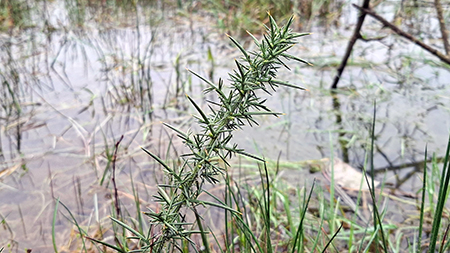
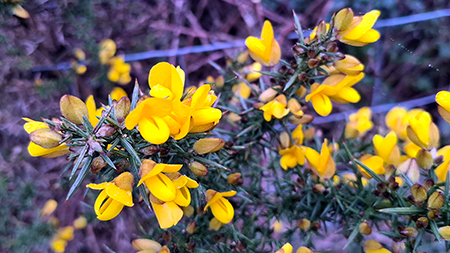
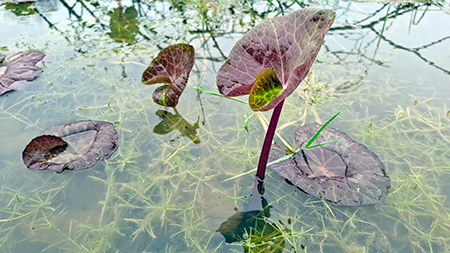
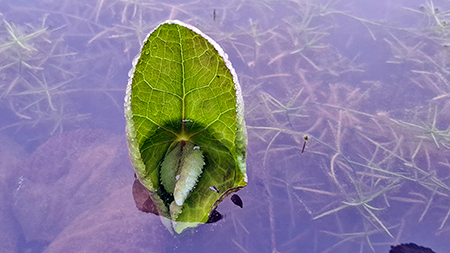
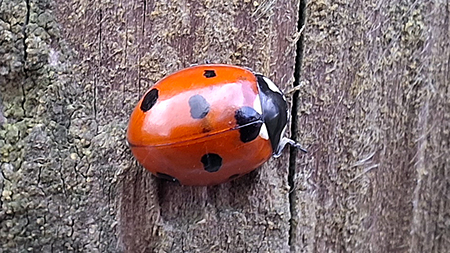
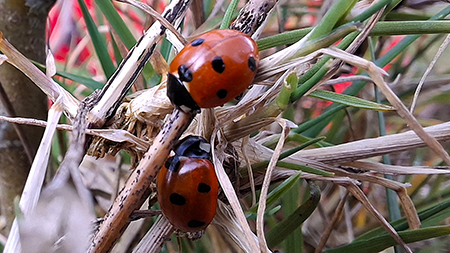
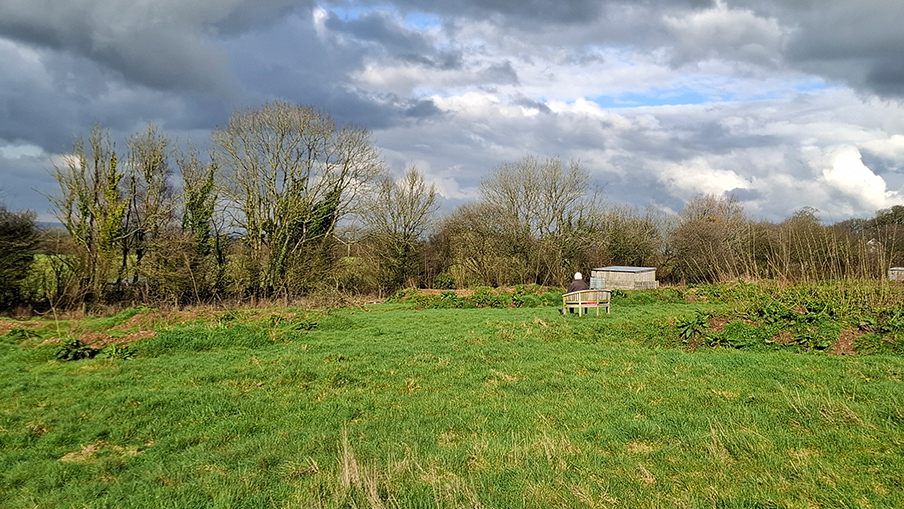
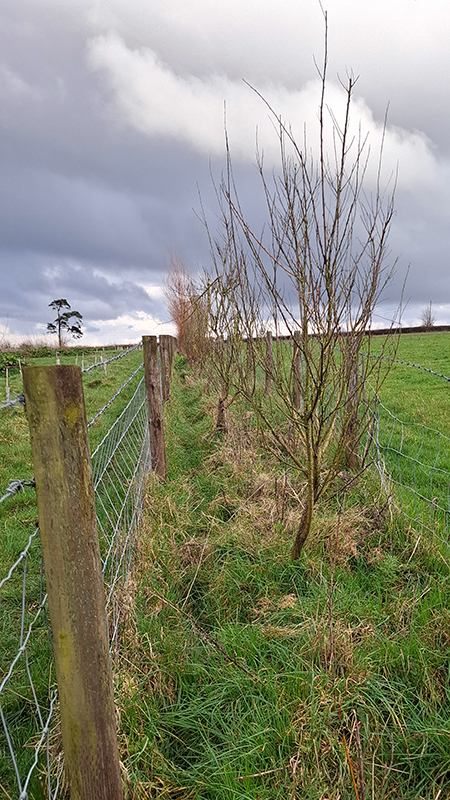
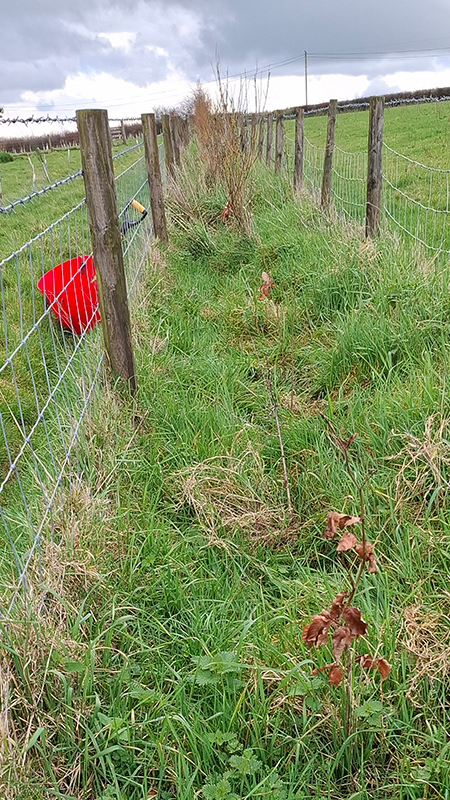
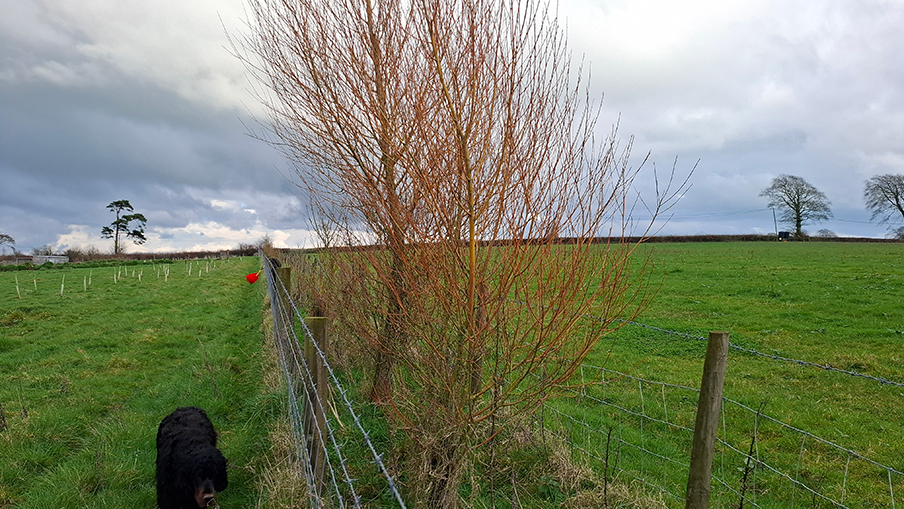
9th: The Extraordinary world of the Ordinary This morning's walk was in a murky grey of cloud but everywhere we walked, we saw signs of new adventure; different colours; changing shapes and emerging life. The afternoon shook off a little of the grey for a while and the sun shone. Bird noise was a constant. The starlings now seemed to have moved on and instead of their cacophony of mimicry, the ash trees in the Green Lane are now full of the chatter of siskins. We have never had such numbers before. Out in the fields there is a robin at every turn, always visible just a few feet above our heads, red breast proudly facing forward, head back, telling the world that it is time to wake up and get on with the important task of finding a partner and bringing the next generation into the world. The yellowhammers, dunnocks and stonechats, along with the joyful skylark, are also all in fabulous voice. In the ponds the frog tadpoles are more then three times the size they were when they hatched last week and after days of being basic round dots, the toadspawn is now becoming obvious in its kidney shapes with developing heads and tails. We have gorse coming up everywhere, it fills the shore line of Goat pond and is even appearing in the scrapes of Swallow field, despite the nearest established gorse being far away in the hedgerows. Marsh marigold leaves are reaching up high above the water in virtually every pond or empty shelf, a mixture of purple and green leaves with tight flower buds just waiting their chance. Invertebrates are starting to wake: we spotted the first ladybirds today and have also seen a few bumble bees, numerous flies, pond skaters, whirly gig beetles, the odd moth or two at night, springtails.. And our benches are now looking seriously inviting again as the temperatures slowly rise and the winds ease a little. We haven't had any major rain for a good week or so: the land is drying, although sadly, some of the ponds are too and already we have lost a lot of tadpoles, stranded in shallow water in dips. We console ourselves with the thought that they will provide food for other species - although will confess to trying to save some when we first released that the water was drying up for them. It's a tough call!! This afternoon, we added another 25 or so new hedging whips to the Birthday hedge (between us and Edward's field). We have been trying to establish this hedge for years now. We began with willow, added oak and beech (much of the later dying off), then more willow again and then 18 months ago filled all the gaps with hawthorn and beech. Many of these seem to have taken and today we added rose (possible gelder) and wayfaring trees to the mix. We are fairly hopeful that we may actually see some progress this year!! (More gaps to fill tomorrow). We really are delighting in the 'Extraordinary world of the Ordinary'. 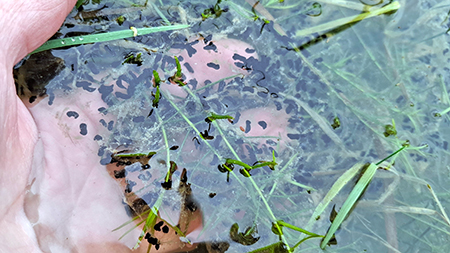
    |
|
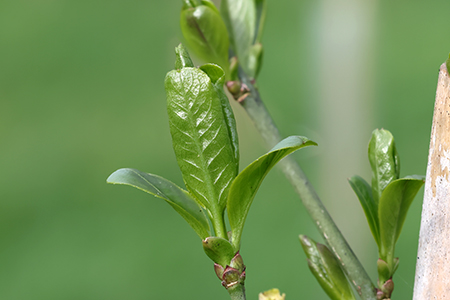
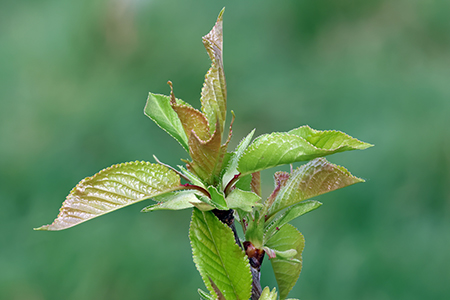
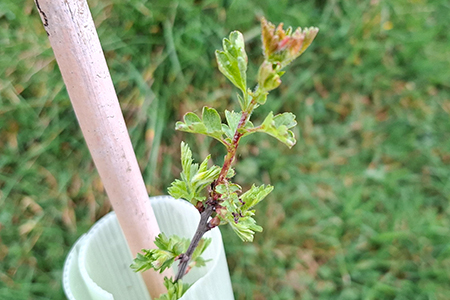
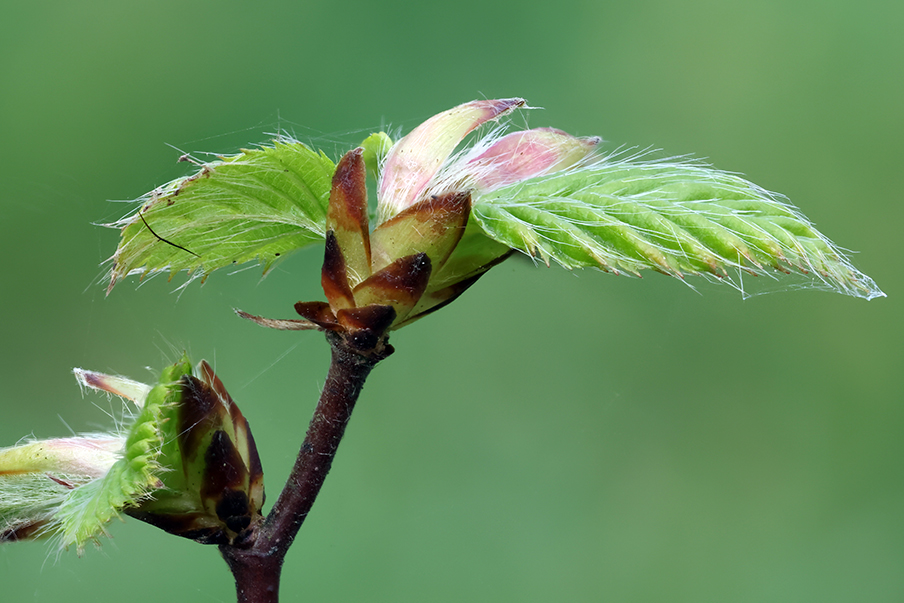
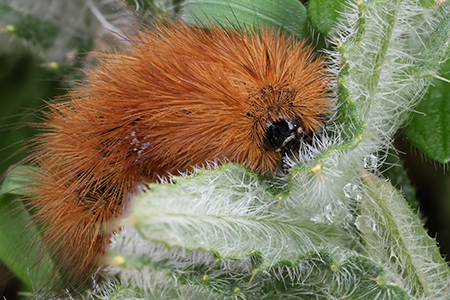
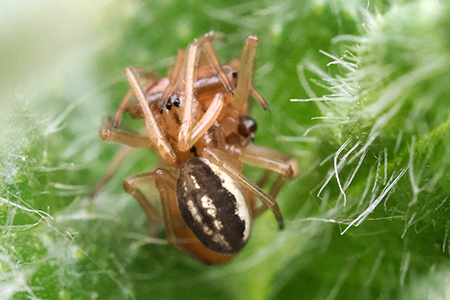
10th: Saplings and wakening invertebrates Some of our saplings are starting to open their leaves - just a few, but it's an exciting start as we look forward to the most of them starting their second or third year of growth. As we wandered around today we saw and photographed hazel, spindle, wild cherry, hawthorn and hornbeam. They are fairly spread out across the land as well, although those in Oak and Goat are perhaps just a fraction ahead of those in Swallow and Fruit!! And as we made our way back to the house at the end of the morning walk, we spied a Ruby Red caterpillar on a thistle, not its usual food of choice (favours ragworts, plantains, heathers, dock, dandelion, Spindle and Broom usually) but it seemed to be having a bit of a munch!! And then when we looked closer we spotted a spider, subsequently identified as (possibly) a Pachygnatha clercki, an orb weaver, have a HUGE feast on something - it looked like another spider - was it a female that has just mated and subsequently was tucking into her husband? Not sure. Is it a bit early? A lovely find though of a spider less than half a cm long!! More willow planted today and yesterday's hedgerow planting is looking good!! BUT no mallards on the trail cams since they were disturbed during the day on Sunday... so hope they find each other and will come back, 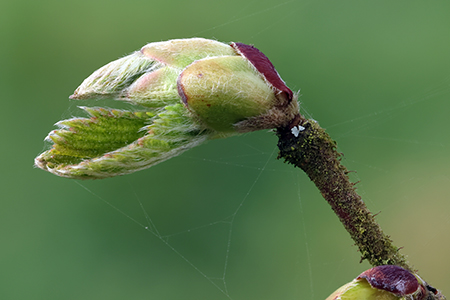
 |
|
11th: Happy Mallards We are delighted to say that our Mallards have returned. Illogically we were concerned that having flown off in different directions following us disturbing them on our early morning walk on 7th, they hadn't found each other again. Madness. We expect they went back to their usual daytime roost and all was fine. They were back with us a lot of last night and there was a lot of tail wagging (a sign of happiness and contentment) and a lot of simply chilling in the water. We captured almost 30 trail cam videos from just gone 7pm till a quarter to nine. Big sighs of relief all round. Meanwhile, a fair bit of sunshine today and yet more firsts: first flowering Corn Marigolds spotted, first toadspawn in Rabbit Pond (although been there a while by the looks of it) and first row of willow whips fully planted in the Allotment. And the dandelions get every brighter and more numerous and the Periwinkle (now recognised as naturalised in the UK) is really starting to fill the top of the allotment. It has been in flower pretty much all winter. And just look at the colour of these willow catkins: this was ID-ed on Picture This as Purple willow!! It will be interesting to find our exactly how many varieties of willow we have on our land now!! 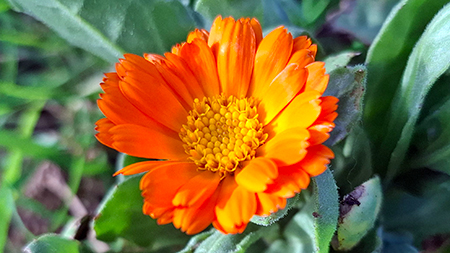 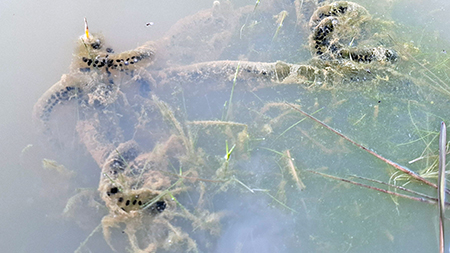 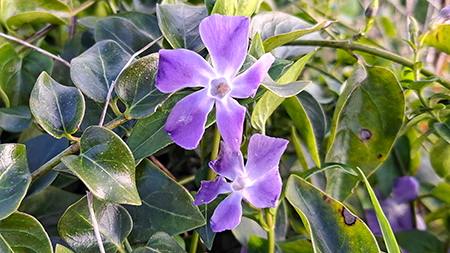 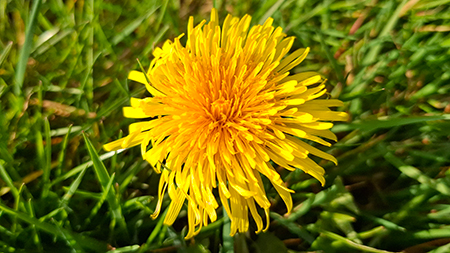 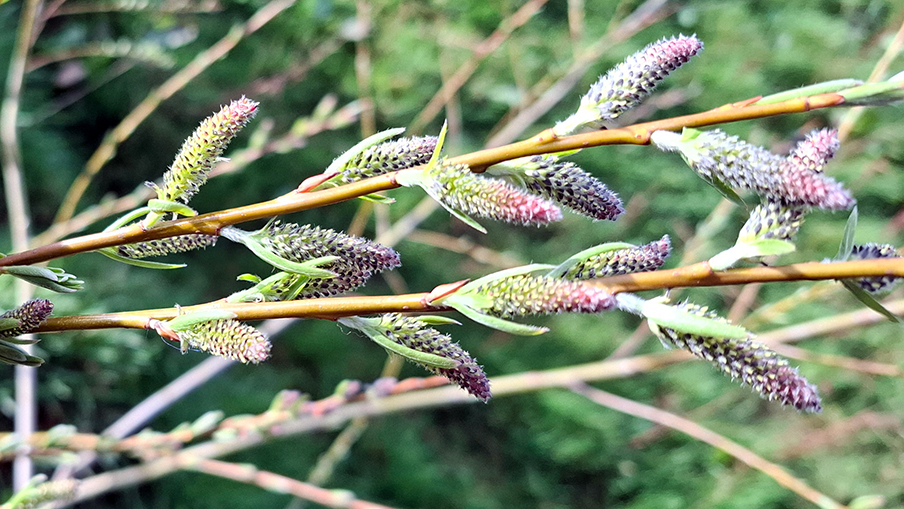 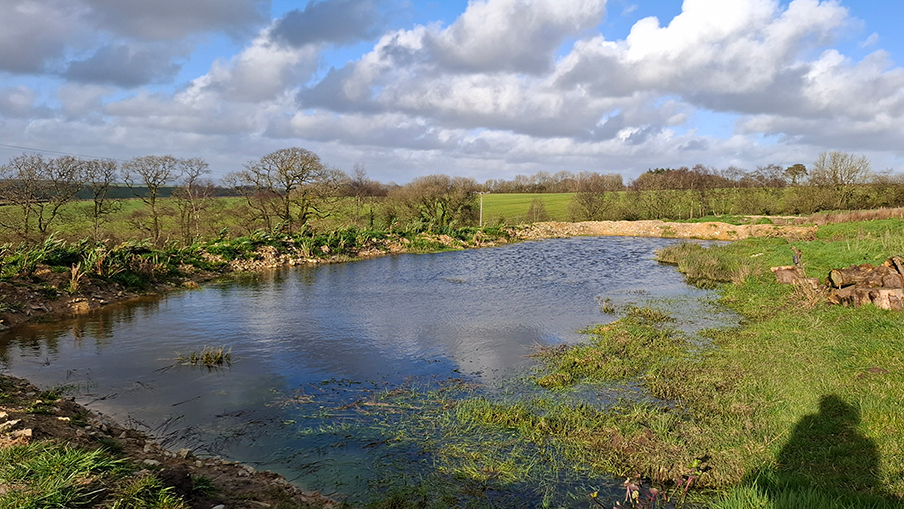 |
|
12th: Field mice, hedgehogs, finches and more... Back when we were smallholders, a much discussed topic with many fellow smallholders, centered around how many different ways bailer twine could be used... ... This is a new one for us: nesting material for a family of field mice!!! So sweet!! We felt bad we disturbed them though - there was another container on top which we moved, not knowing they were underneath. It was a busy night and early morning under the Bird Feeding Station. We have identified two individual hedgehogs (one of which we think is the one we spotted back in Goat field at the start of the month) and last night, they appeared together for the first time. Not for long though, as the video shows!! Slightly happier in each other's company are our Green Lane pair of robins who seem to be all loved up and ready for the breeding season. We are still however only seeing a single female bullfinch.. we do hope a male appears soon for her. No single numbers for our siskins and goldfinches though. They are such busy, chatty, sociable birds. Love seeing so many together like this. 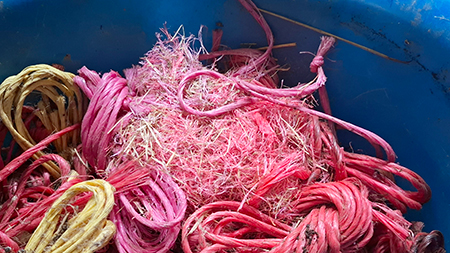 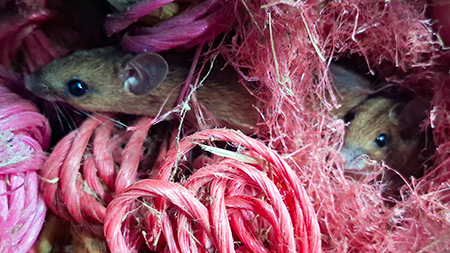 |
|
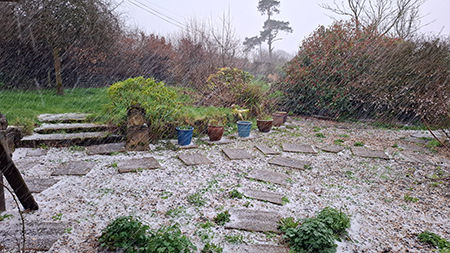
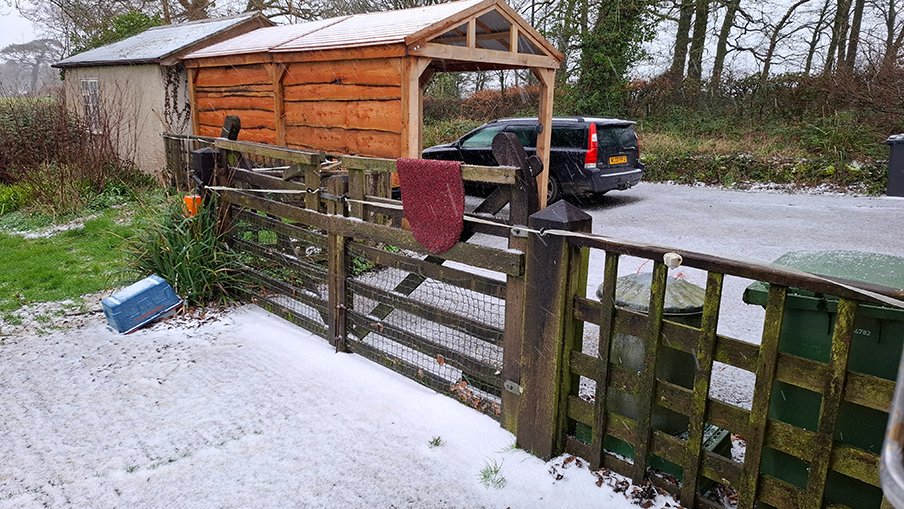
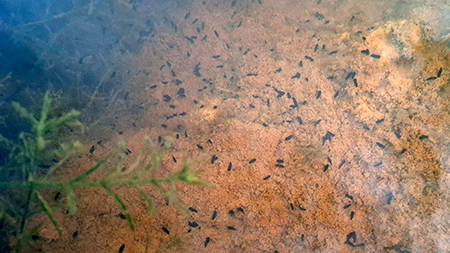
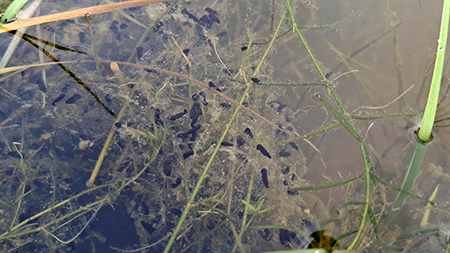
13th: Weird weather Today has been cold, bitterly cold and we have we have had rain, sunshine, hail and snow. It looked as though some of the ponds took a bit of a beating with vegetation somewhat flattened and patches of spawn blown across the water. In Poultry pond we saw lots of 'hatched but not yet swimming' toad tadpoles on the bottom of the shelf, away from the jelly - their first food source. In theory they won't survive - but there did seem plenty still attached they should!! It's no wonder frogs and toads lay so may eggs. At every stage, danger awaits. 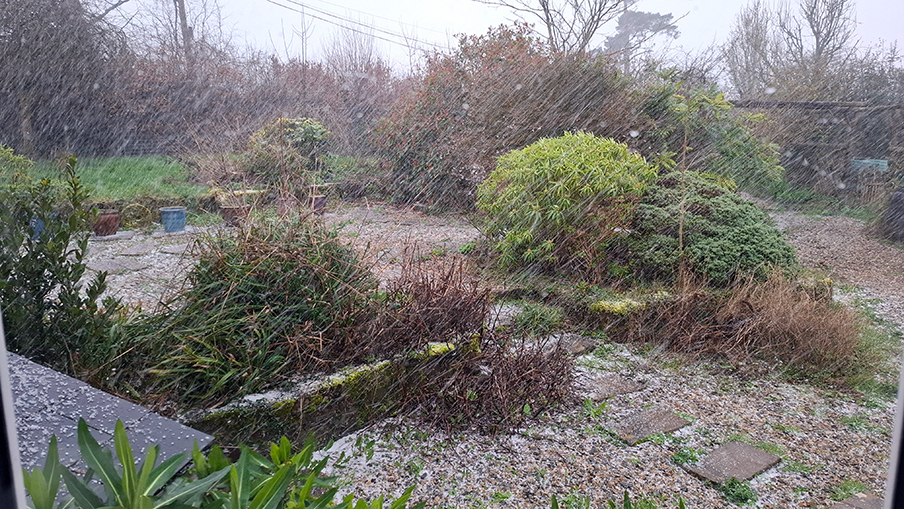 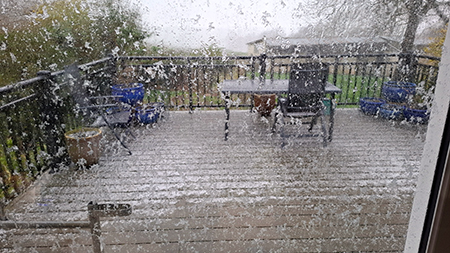
    |
|
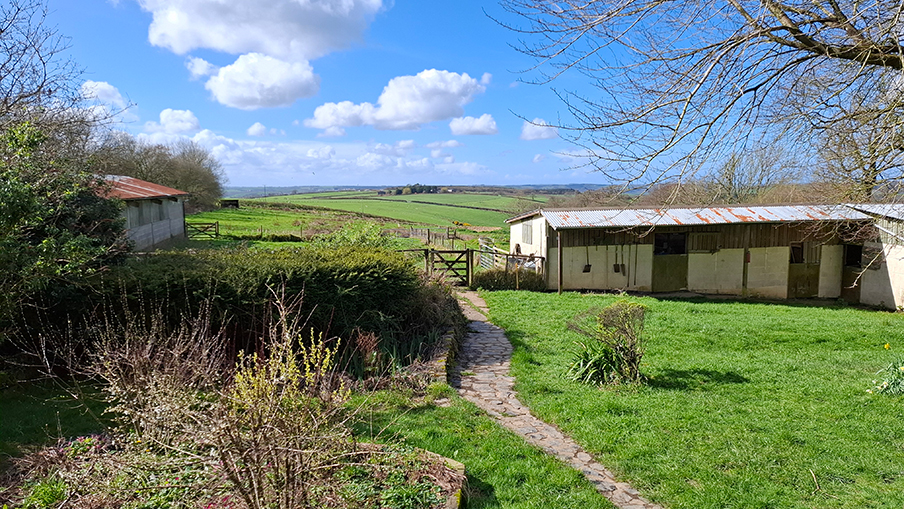
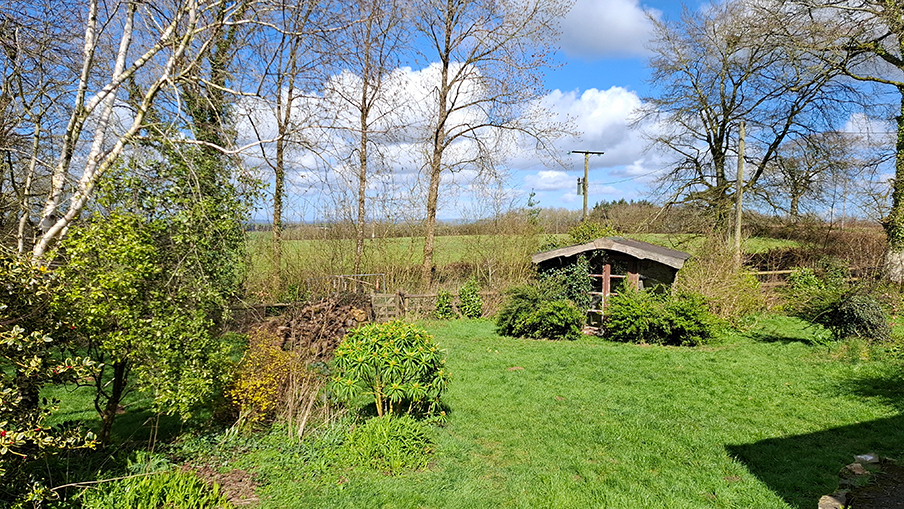
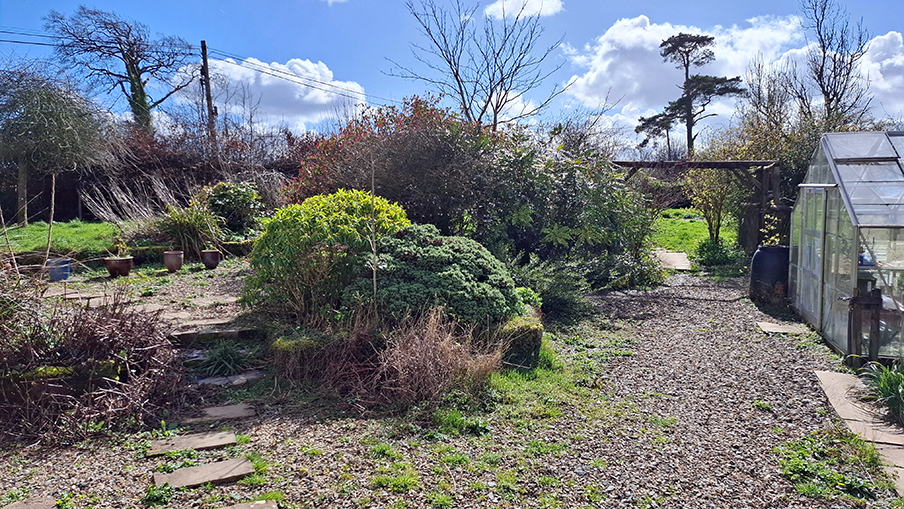
14th: Fungi and Sunshine Such a contrast to yesterday: today was full of pretty much wall to wall sunshine (must have been warm cos we sat outside at the Bistro). We have taken as many photos of blue sky as we can!! The buzzards have been out in force too, we are seeing and hearing them pretty much daily now, including a trio of them a couple of days ago, right over the garden, circling up on the thermals, their echoy mewing sounding so crisp and clear. Today we also spotted a new (to us) fungi - the Sulphur Tuft, growing by an old water trugg in front of the Goat field shelter. They grow on wood and the site where we found them used to have lots of woodchip there which we guess must still be around under the tall grasses. It was a lovely find, and a fungi where the name is delightfully obvious! 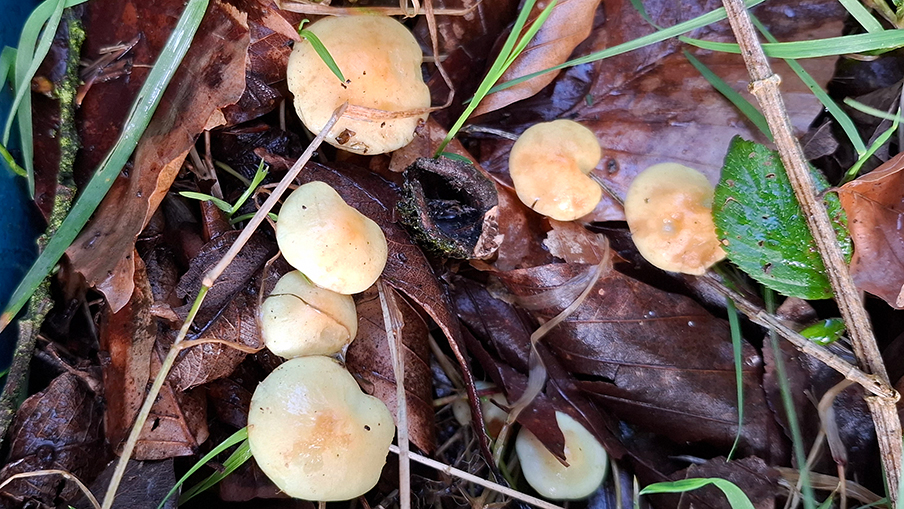
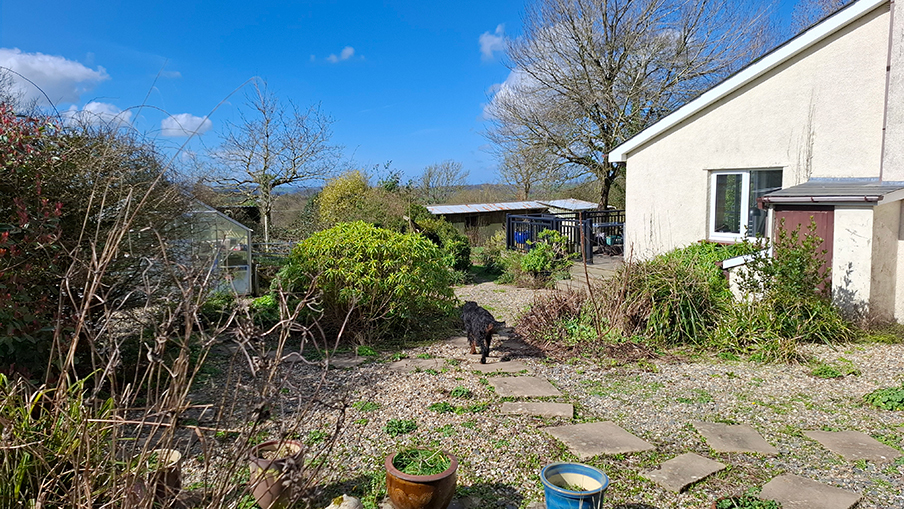
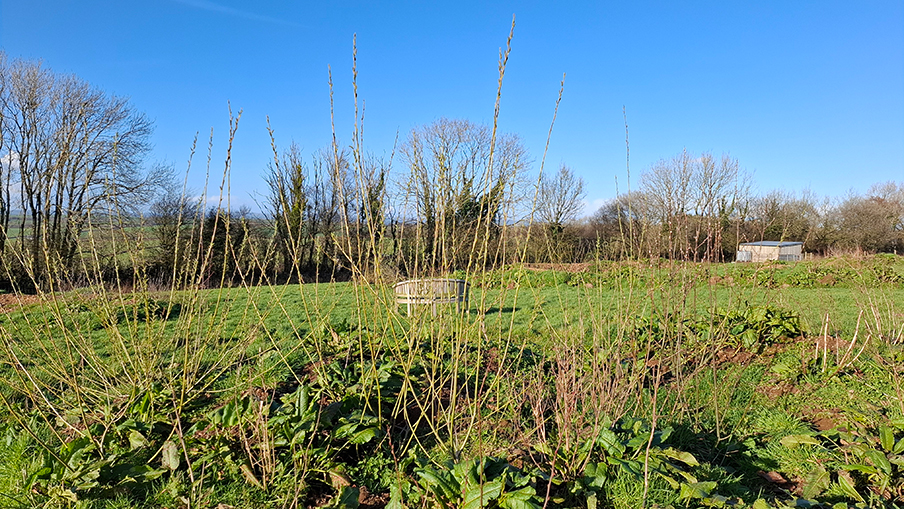 |
|
15th: Fencing The fencing between us and Andrew's land was erected for the emu to prevent any fosby flops over the top, so it the stock fencing was raised above the ground to give extra height and wires were put above and below. Emus don't crawl underneath fences. Dogs however do. Today therefore was spent putting stock fencing on top of the existing wire such that it touched the ground and prevented any sneaky wriggling under. (You can just see the curve of the wore in the bottom left hand corner.) Fortunately, we have seen foxes get through the actual stock fencing itself, so we won't hopefully have stopped them being able to come and go. The things we do.... 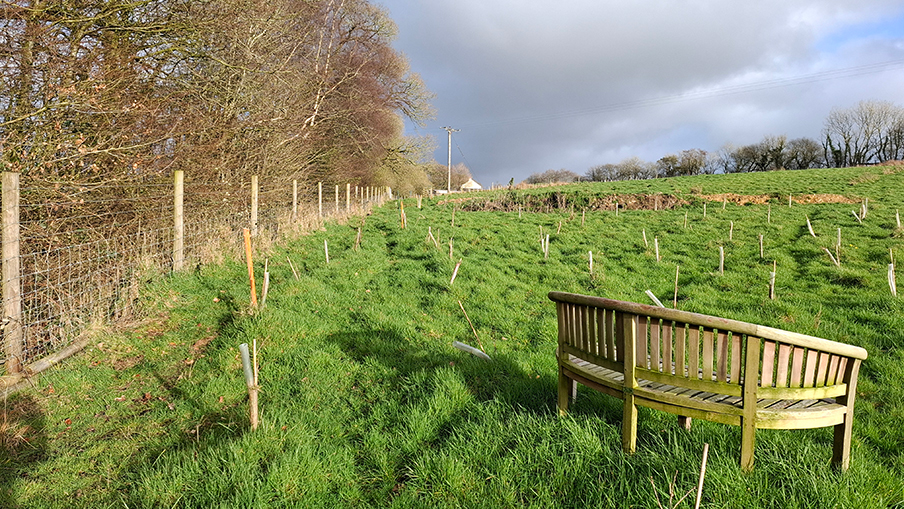 |
|
16th: Flowers and Tadpoles The toad tadpoles are finally on the move, munching their way through the remains of the jelly they emerged from before heading off looking for algae. Despite not being the first laid, these 'poles' are more advanced than other spawn as their hatching space (Chaser Pond) is in the shallows and so the water will have been much warmer. With any luck, having been laid early in the year, all our frog and toad tadpoles will have a good spring and summer and emerge fat and ready for their winter hibernation. Today we also spied the first Greater Stitchwort flowers and one of many now fully open Marsh Marigold flowers (although this one is a bit battered already). 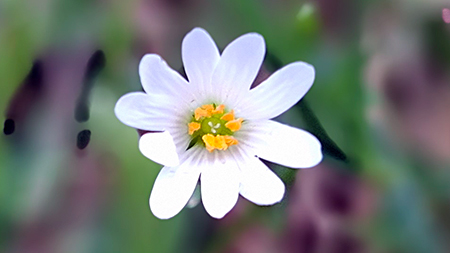 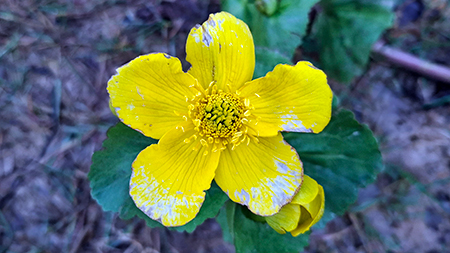 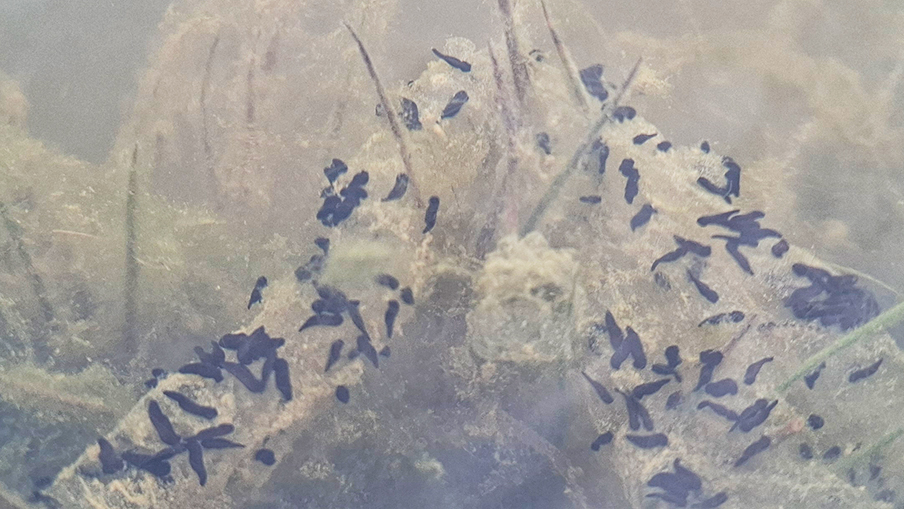 |
|
17th: Bravery A very brave pheasant having a stroll and a nosey around the hole in the fence the fox uses every night... ... wait till the end when suddenly he isn't so brave after all!! |
|
18th: More firsts Spotted our first butterfly of the year today - a Peacock. Not the best photo - it was rather lively, obviously thoroughly enjoying the amazing sunshine (as are we). The frog tadpoles are also enjoying the warmth of their ponds and we are starting to see a fair bit of activity in most ponds now. We are also seeing oodles of beetles and larva in the ponds too so we know that many tadpoles will become a huge source of fabulous food for the predators above them in the food chain. Some tadpoles have also been spied amongst the emerging toadspawn too - a bit of near-cannibalism is all part of nature's workings too! 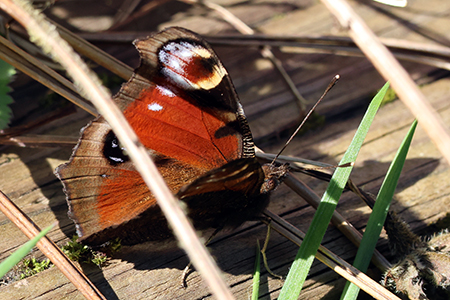 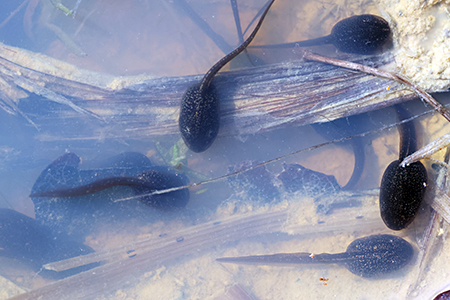 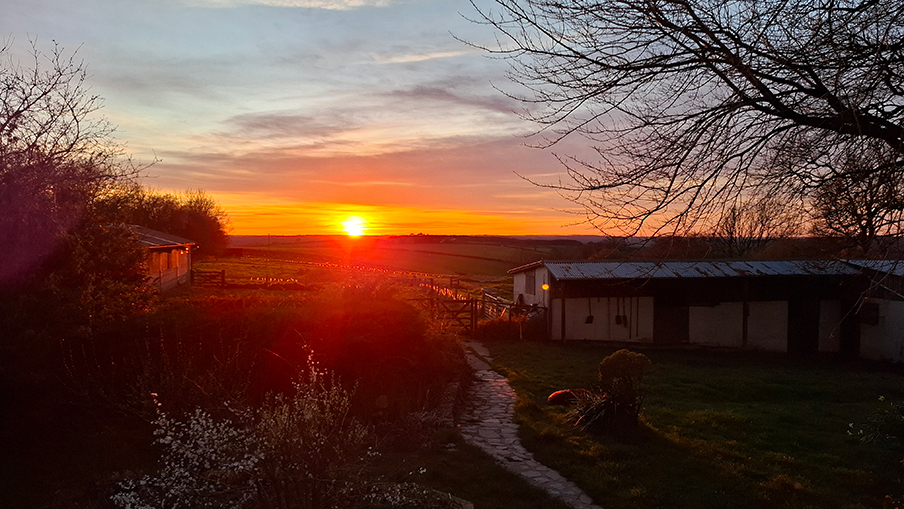 |
|
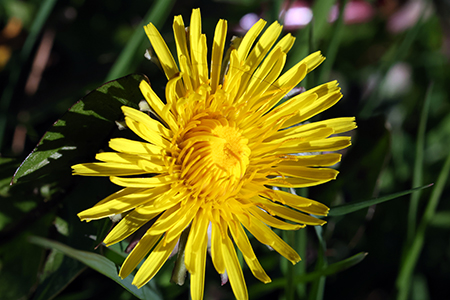
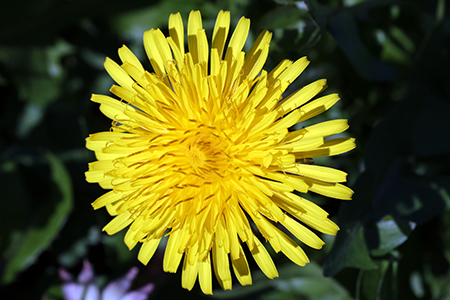
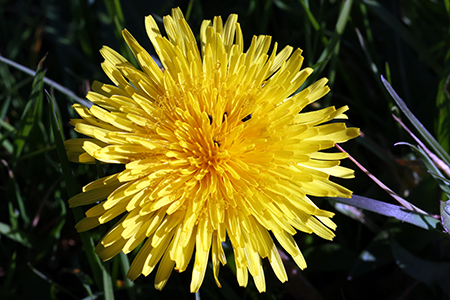
19th: Dandelions We have never seen so many dandelions before and they are all so bright and such a fabulous source of food for all the emerging bumble bee queens, of which there are many as well.. 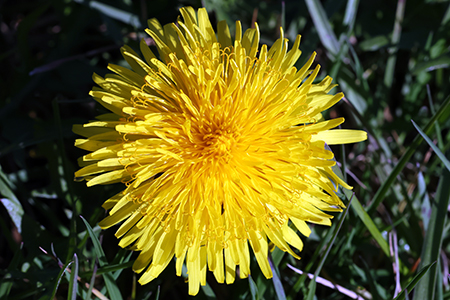
 |
|
20th: New species Hopefully we will start to find lots of new species as the spring continues - new to our land that is - not to science. Most will be new because we haven't found them yet, some may be new because they are first time visitors. Our current number of 'recorded' species: (plants, animals and fungi) is a mere 619. In theory we should be able to find thousands on our ten acres. There are some families and orders we haven't begun to explore yet: crustaceans, molluscs to name but two. It is all about finding time. And of course the other issue is knowing that what we find is actually different to what we have previously found, and then be able to identify it. Faced with finding out that there are 337 different crane flies in GB and Ireland (we have found 6) for example and that many species of invertebrates are identifiable by their genitalia only, well!!! The current plan is to just thoroughly enjoy the journey... Here we have Common Yam Cranefly (the larvae are semi aquatic so this may be a species that is 'new' to our land) and a Great Pond Snail (not new to the land but now reordered and photographed). 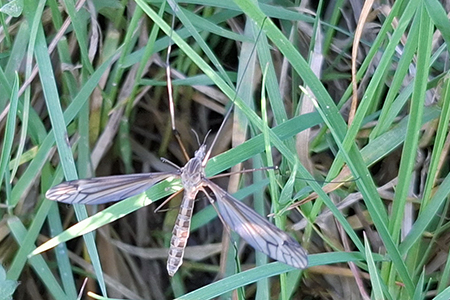 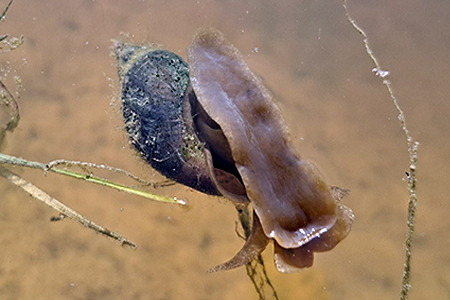 |
|
21st: First Mothing of the Year Our first Mothing of the year saw us catch 60 individuals of 6 species - we had fun telling the Quakers apart and felt sorry for the Clouded Drab to be given such a terrible name!! AND we heard our first Chiffchaff of the year. Early Grey and Clouded Drab 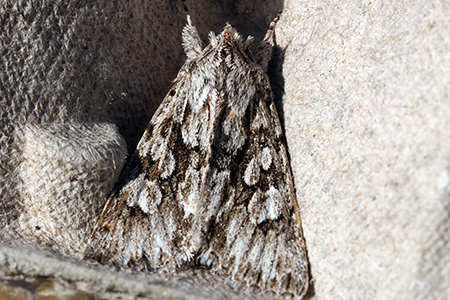
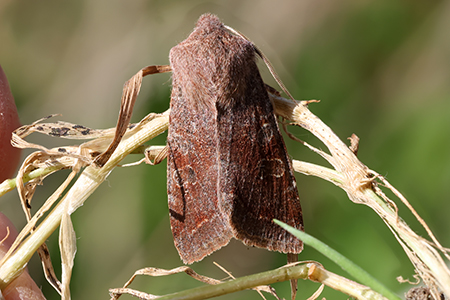 Hebrew Character and Powdered Quaker 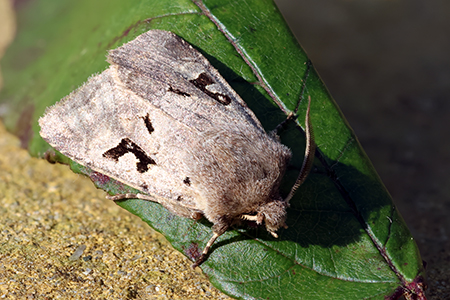
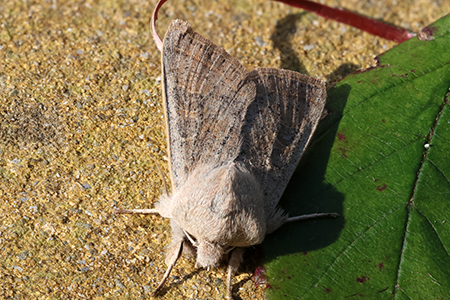 Common and Small Quaker 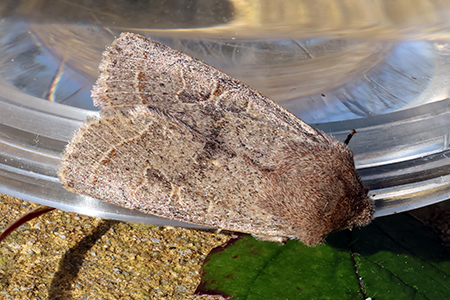 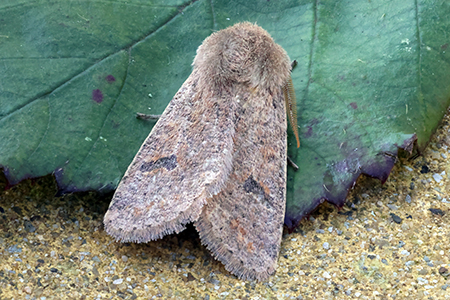 |
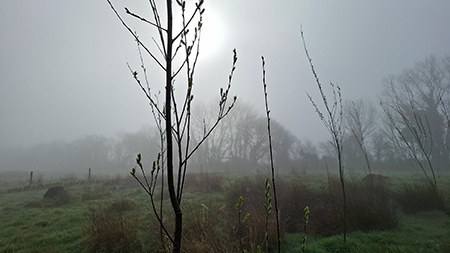
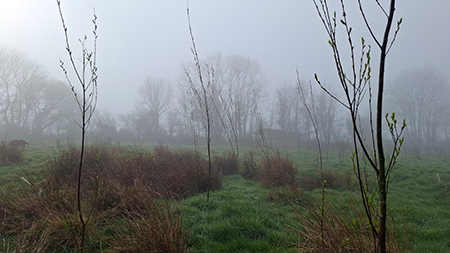
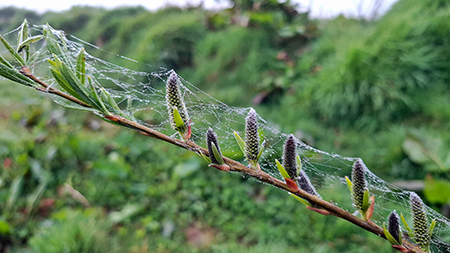
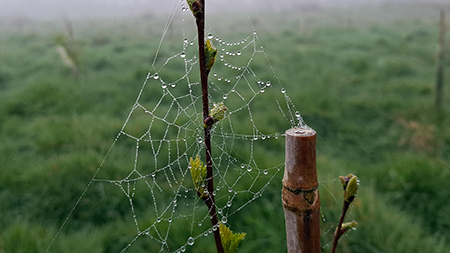
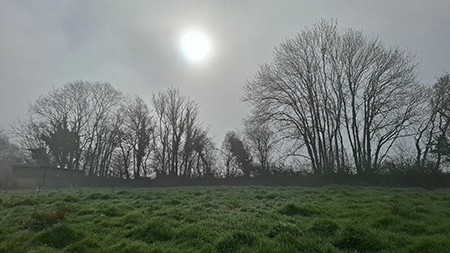
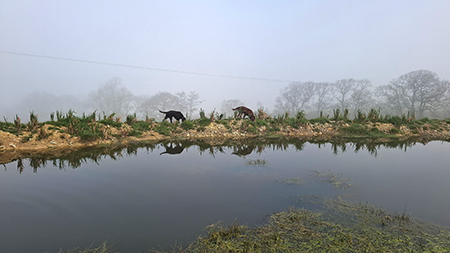
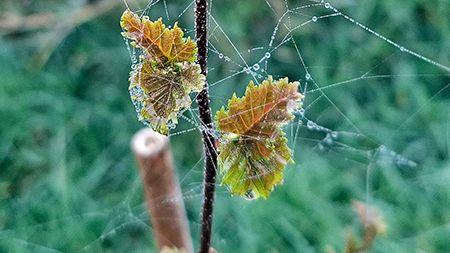
22nd: Misty, spidery morning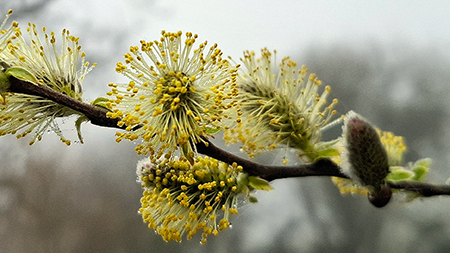
 |
|
23rd: A happy snipe on Chaser Pond. There are lots of snipe just down the road from us on Orange Moor and both last winter and now, the odd one makes its way over to see what our ponds can offer. Snipe are on the Amber List which means there is a 'moderate' concern about them as their numbers are in decline. Currently there are about 80,000 breeding pairs in the UK, with the north of the country seeing more of the population that the south. According to the Wildlife Trust 'Snipe have a flexible tip to the beak that is full of nerves; this helps them to feel for worms deep underground and then open the end of their beak to grab them.' Isn't nature wonderful? |
|
24th: Otter Holt After the excitement of having an otter visit our land for a week or so last month, it was suggested that building a holt near Poultry Pond (where the otter first appeared), was a good idea. Whilst it is unlikely that we will ever get otters breeding here (we are too far from the river), otters do create several holts because as the cubs get older and can explore further with mum, they like to have safe places to go to on their travels. They also need several in case any get flooded and it allows them to build a large territory (they will travel within a 15-20km range). So, over the last few weeks, we have been getting on with it and on Saturday, we got it in situ. In time, plant life will grow around it, we will add more brash and it won't look quite so stark. There are two entrances/ exits so the otter never feels trapped. One leads into the water, the other out to the land and as the photos show, they are long and narrow to discourage other animals from entering.The bottom is bare earth (we will put some straw in to help kick start their bedding collection) and 'above' the water level so it won't (fingers crossed) get flooded. We will of course set up a trail cam near it to monitor any activity (we don't expect any for a while). All very exciting. .jpg) .jpg)
.jpg) .jpg)
.jpg) .jpg)
.jpg) .jpg)
.jpg) .jpg)
.jpg) .jpg)
.jpg) .jpg)
.jpg) .jpg) |
|
25th: Bird Feeding Station This video is from 14th of this month but this is what the feeders have been like this month - masses of goldfinches and siskins, with the poplar trees being filled with the chatterings from both species pretty much equally. The tits (Blue, Great and Coal - no sign of the Marsh) are around a lot too, less of the Coal but the Blue tits fill the scrub behind the feeders and are still adoring the fat balls. We see up to three GS Woodpeckers, lots of sparrows, dunnocks and a very sweet pair of robins (caught one of them romantically popping a suet pellet in the beak of the other a few days ago). A female bullfinch pops up every now again, ditto the odd greenfinch. The chaffinch numbers have gone up and some of the males are now just stunning looking. No sign of the nuthatch recently and the starlings vanished, almost overnight, at the start of the month. We see the occasional Stock doves, Wood pigeon abound and it looks as though we have a pair of magpies who may well be nesting in our beech tree again. Blackbirds are very common and we are seeing wrens feeding on the ground more this winter/ early spring too. A delightful sight! The dried mealworms are no longer flavour of the month and overall we are not having to fill the feeders every day now. The fat balls consumption is way down. All good signs that Spring is starting to provide. Must do an entry on the birds round the land!!!! |
|
26th: Deer!!! Oh my goodness. The trail cam at the top of Oak field caught these two female red deer having a bit of gallop yesterday lunchtime. Now we understand why the dogs have been racing around at top speed - this must be a very new and exciting smell for them. It's fabulous to have the deer but not sure we want them too regularly for the sake of all our young saplings!! Mind you, their behaviour suggests they were rather keen to get out so it may be that they won't be back anytime soon. We see Red Deer in Andrew's field next door, but to our knowledge, we have never had any on the land before now!! |
|
27th: Stock doves These birds really are delightfully pretty - and are becoming more regular feeders at the bird station thie month. They are common, with around 300,000 pairs of birds in the UK - slightly more than the Collared dove but way less than the Wood Pigeon with 2.7 million pairs. Their song is very gentle compared to the Wood Pigeon and a delightful background to the chatteries goldfinches and siskins. |
|
28th: 24 hours of wildlife Hedgehog - Stock Doves - Finches and Sparrows - Crow - Mallards - Red Deer |
|
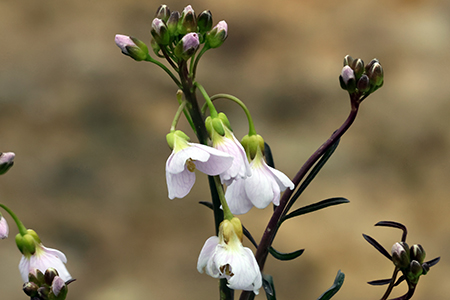
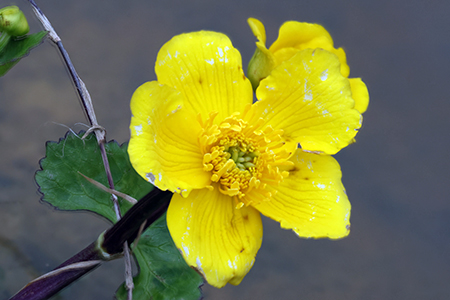
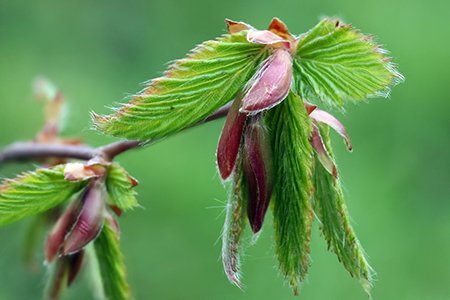
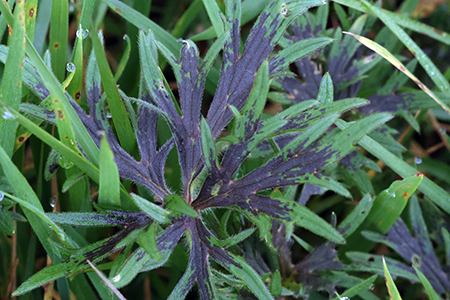
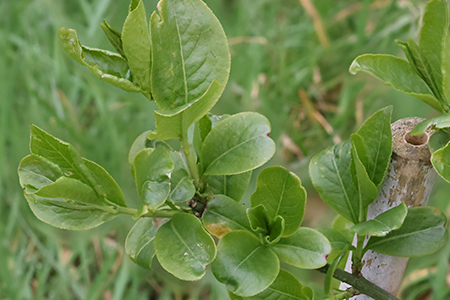
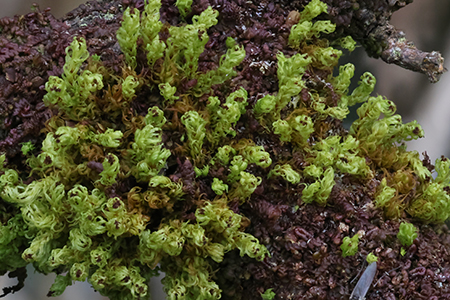
29th: Spring.. depsite the weather The weather may have reverted to autumn cold, but as last week was quite spring-like and nature felt waking up her flora and fauna 'was' a good idea, waking up is carrying on with a vengeance. Hail, wind and rain is no deterent for our brave cuckoo flowers and friends. L to R, and T to B: Dog violet, Cuckoo flower, Marsh marigold, Hornbeam, Meadow buttercup, Spindle tree, Unidentfied moss and Turkey tail fungus. 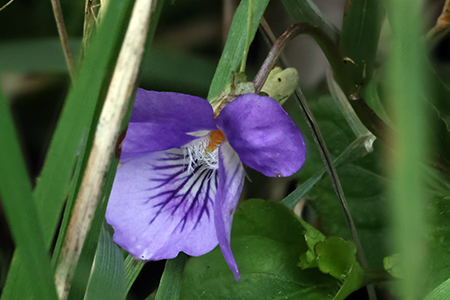
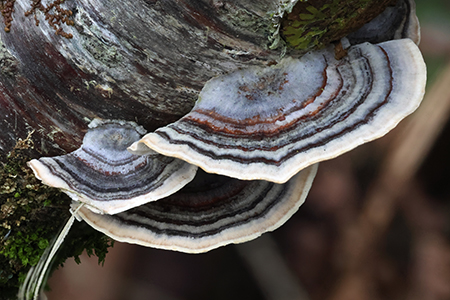 |
|
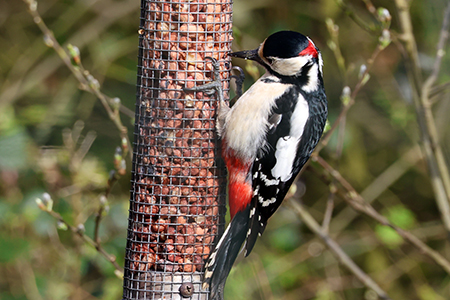
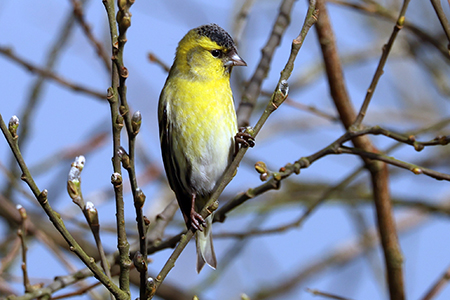
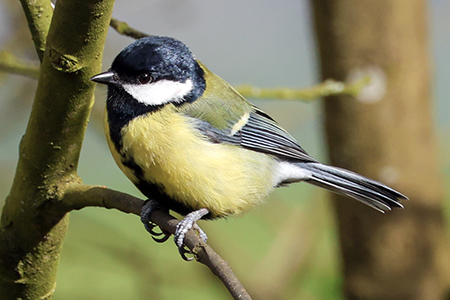
30th: Bird Feeding Station Delightful colours and action at the Bird Feeding Station this morning. 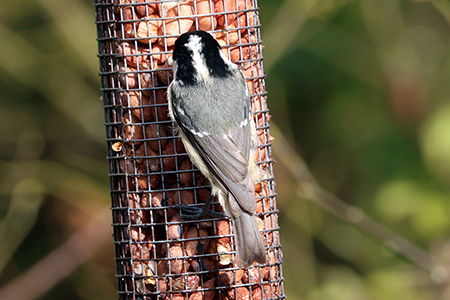
 |
|
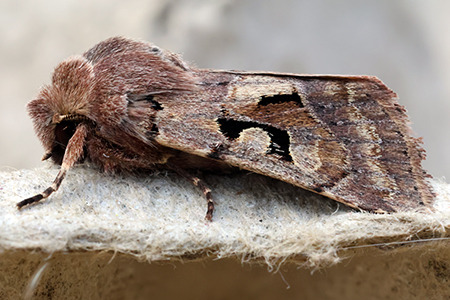
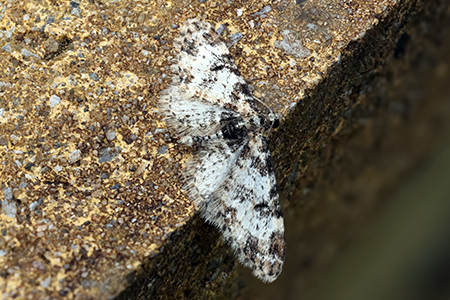
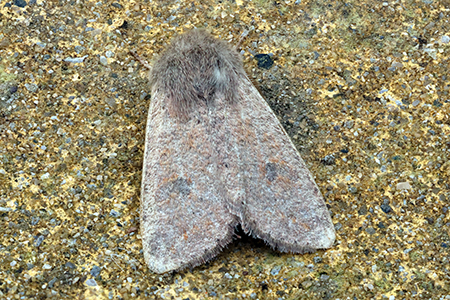
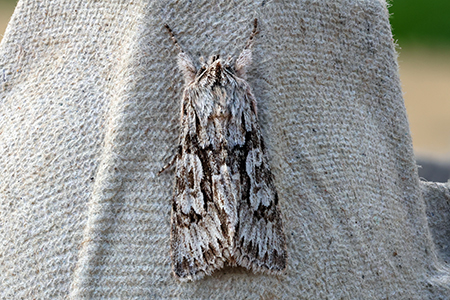
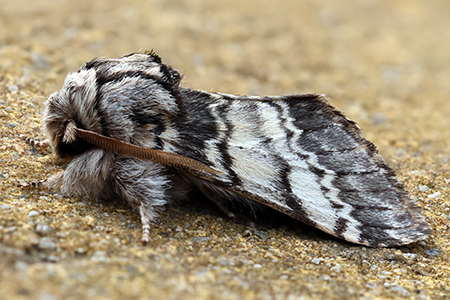
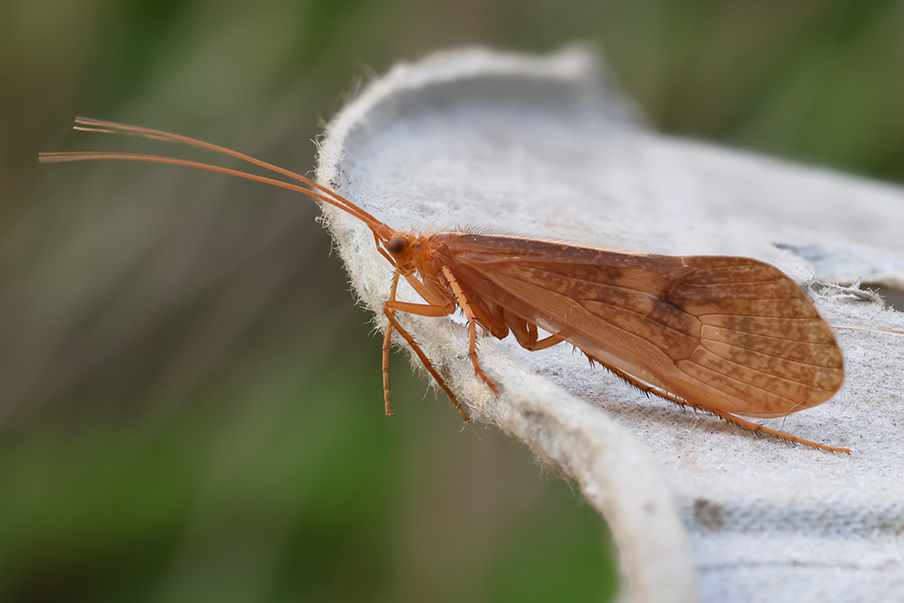
31st: Mothing Our second mothing of the year: 18 of 6 species - a colder night that we did it back on 21st. There we had 60 of 6. L to R and T to B: Common Quaker, Hebrew Character, Marbled Pug (NEW), Small Quaker, Early Grey and Lunar Marbled Brown (NEW) plus a new Caddis fly, the Stenophylax permistus. 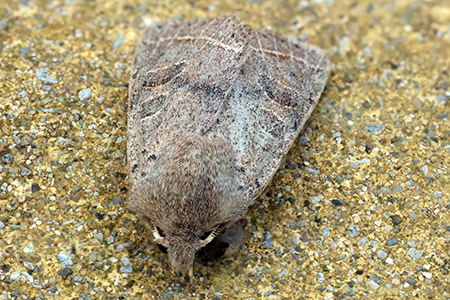
 |