
| Home | Nature Diary | Flora | Fauna | Fungi | Events |
| Rugs | Dogs/Cats | Smallholding Devon | Smallholding Cornwall | About |
| 2024 | 2025 |
| << April 2026 | May 2026 | June 2026 >> |
|
1st: Happy mallards These two are certainly very relaxed!!! |
|
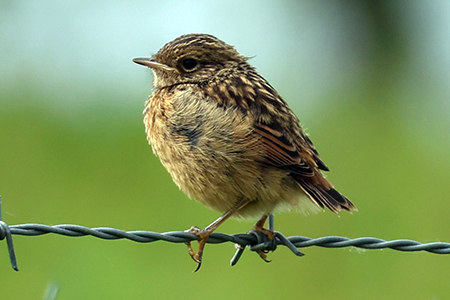
2nd: Birding and Mothing A delightful walk this morning caught fabulous views of a family of Stonechats fence and sapling-hopping in Fruit field whilst calling out to each other. We managed to get fairly close to a youngster and get a half decent shot. It was also wonderful to stand under the Ash trees by Yeti's gate and see and hear this Willow Warbler. The land is filled with bird song at the moment and it's coming from the middle of the land as much as the outer hedgerows it seems. As what were once fields, become more and more filled with vegetation, so we are hearing and seeing the wildlife from all angles and heights. With any luck, it will only get better. Mothing this afternoon saw 13 of 11 species - we have have lost the easterly winds for a while but the nights are still a tad chilly. 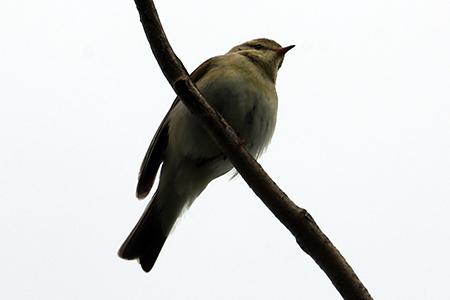
 Great Prominent and Scalloped Hazel 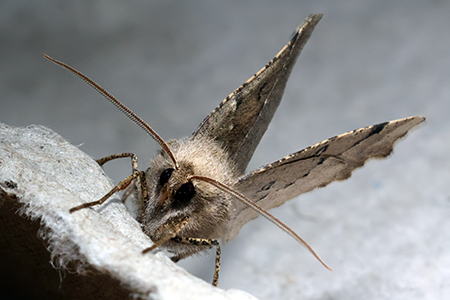
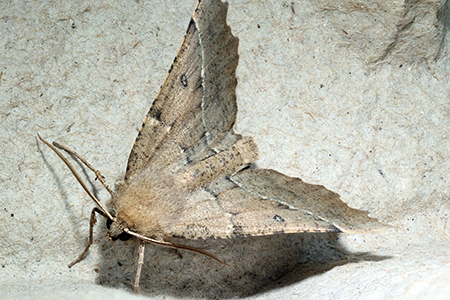 Brown Silver Line and May High Flier 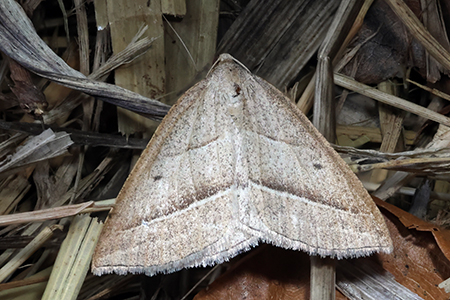
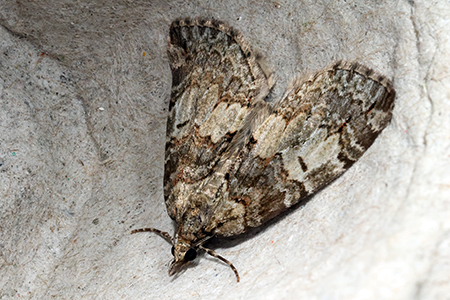 |
|
3rd: So much going on It is difficult to know where to look as we walk round the land at the moment. There is sooo much going on. If we crouch on the ground, we see huge colour differences, small movements, invertebrates disappearing in the long grass. Looking up we are met with the brilliance of the flowering hawthorn and emerging saplings. If we peer in the ponds, backswimmers, whirlygigs and pond skaters are immediately on show. Then there is the bird song: warblers and finches are dominating at the moment although the mighty wren is more than holding its own, alongside the 'chatting' of the Stonechat and the melodies of the Skylarks. Deep breaths in are to be encouraged as we fill our nostrils with the scent of the hawthorn, crab apple, lilac and euphorbias. It's a real sense fest right now and destined to only get better!! Nursery Spider and a Wolf Spider (species of latter unknown) 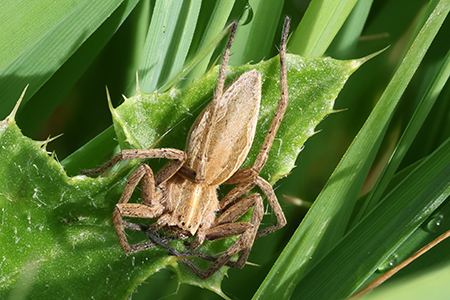
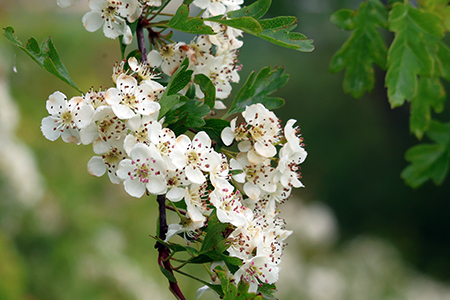
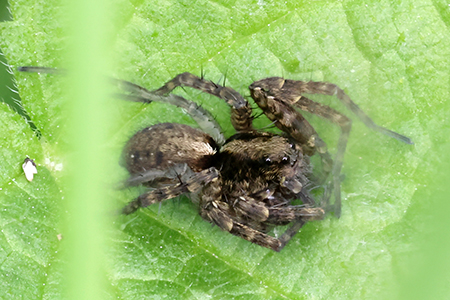 Groundsel and Hawthorn 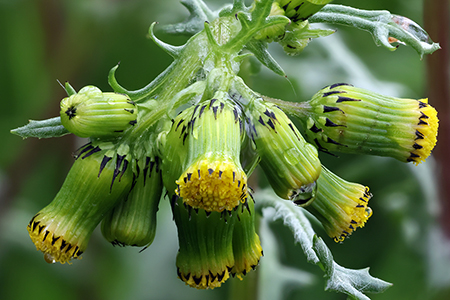
 Large Red Slug (Arion ater group) 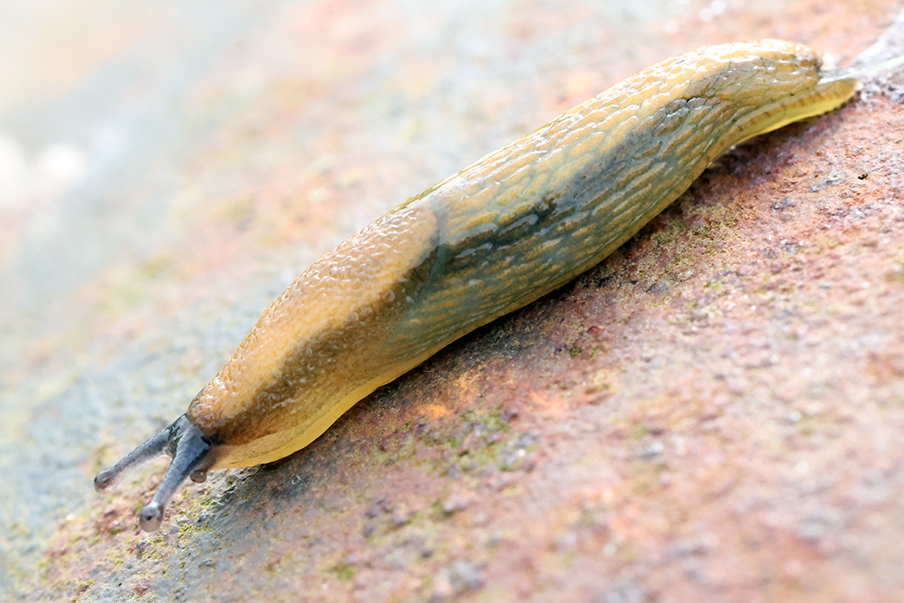 |
|
4th: Sparrows This part of Poultry Pond is becoming a bit of a favourite of the Sparrows - they love to fly in, land on the tall grasses, often then pecking off any invertebrates they find there, before hopping down to this little spit for a drink. House Sparrow numbers may have declined a huge amount since 1970s (by around 70%) and now be on the Red List but they are most definitely thriving on our land, with nest building and mating in full swing in the garden in particular!! Caterpillars: The Common Footman (that feeds on lichens) and the Drinker (that feeds on grasses and 'drinks' the water from them!! 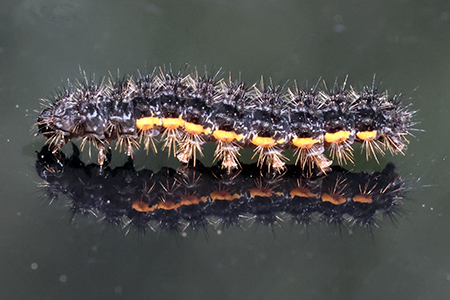 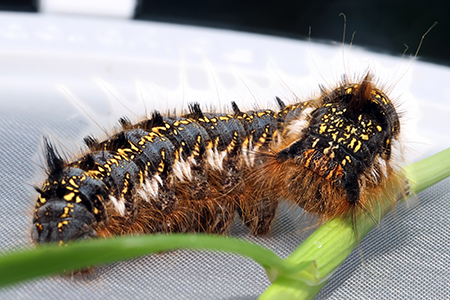 Brimstone Butterfly whose caterpillars feed on Alder Buckthorn, a plant we have yet to spot on our land!! 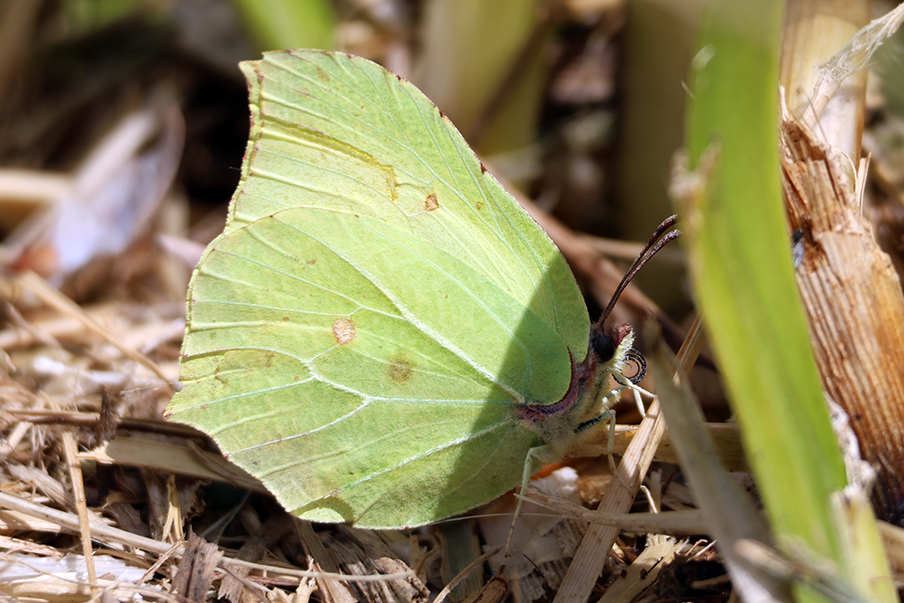 A Leech, spotted in Poultry Pond and a good 12 cms when stretched out and the rather delightfully named Common Snout Hoverfly!! 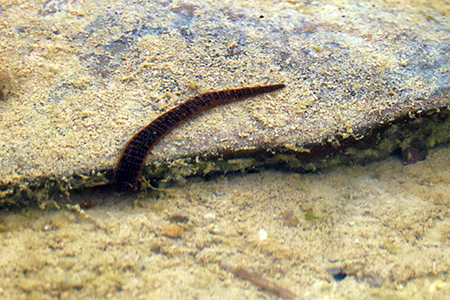 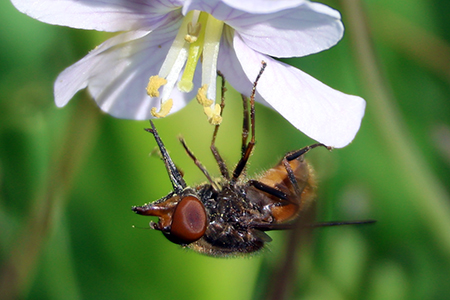 |
|
5th: Caterpillar Catch up Our captive caterpillars are all doing ok. Top of the list for survival and hardiness has to be the Emperor Hawk Moths. We had 25 hatch and we still have 24. Bottom are the Tiger Moths. 26 hatched and we have 10 left and some of those are not looking great. We are making careful notes about what we are doing and not doing and so hope to learn how to have better success in the future. All are fascinating creatures and all very different. The numbers by the photos indicate eggs, hatch and current 'still with us'. Garden Tiger: 50 - 26 - 10 and Eyed-hawk: 20 - 18 - 11 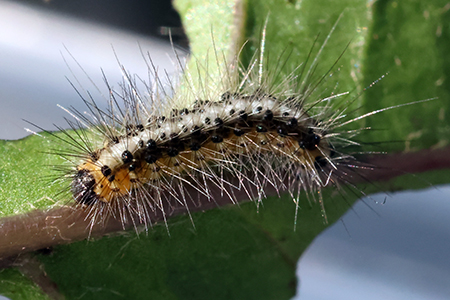 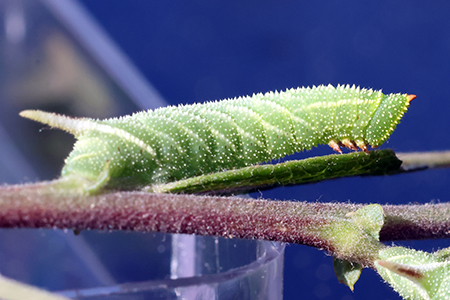 Emperor: 50 - 25 - 24 and Puss Moth: 20 - 9- 8 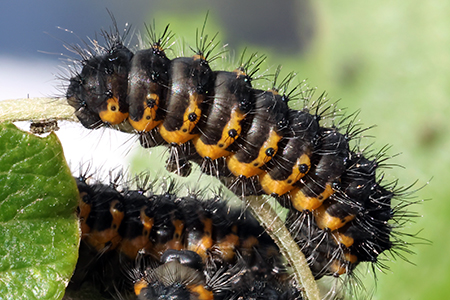
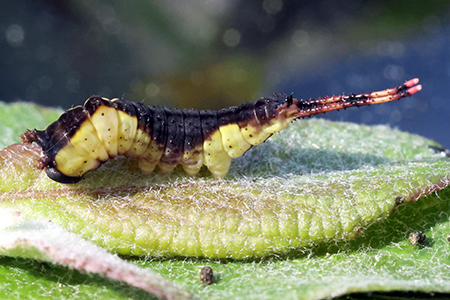
Lime Hawk: 20 - 17 - 6 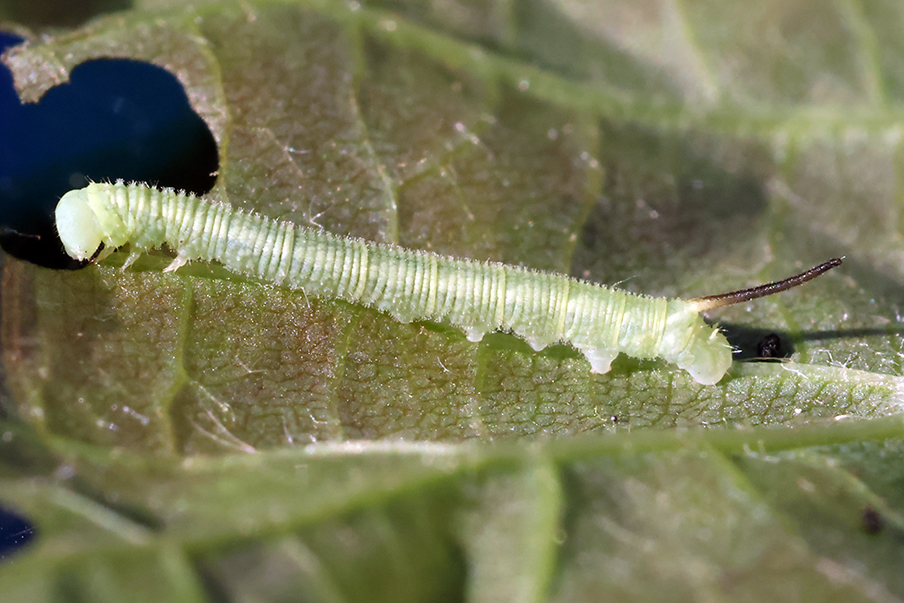 Meanwhile we spent a very happy half hour watching the Furrow Orb-weaver scurrying around its nest after we inadvertently removed a tree guard from a sapling tree and realised we had removed the top, back and sides of its home. It was only when we looked at the photos afterwards, we realised there were young spiders in the sacs. Everything was unharmed, there was simply a bit of house-repair to do. On reading up about the spider afterwards, we read that the females usually die once the babies have hatched as they don't look after them. It may well be when we look tomorrow that the babies will have gone and the mum will be nowhere to be seem. And finally, we came across these two well fed beasties - possibly Yellow Underwing Moth caterpillars - we are keeping them in a pot till they pupate and then a few weeks in, we will hopefully find out what they are. 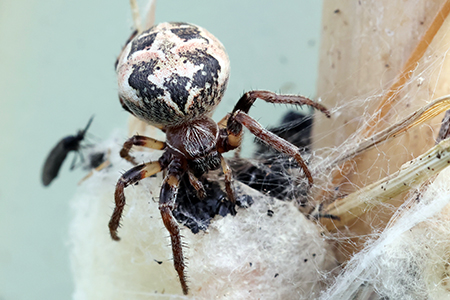 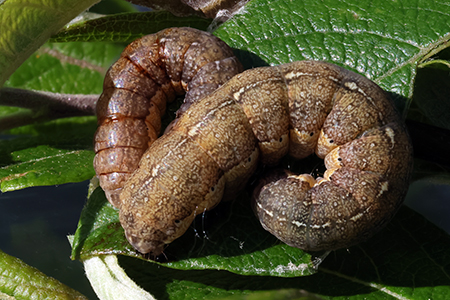 |
6th: There are two sides to every hedge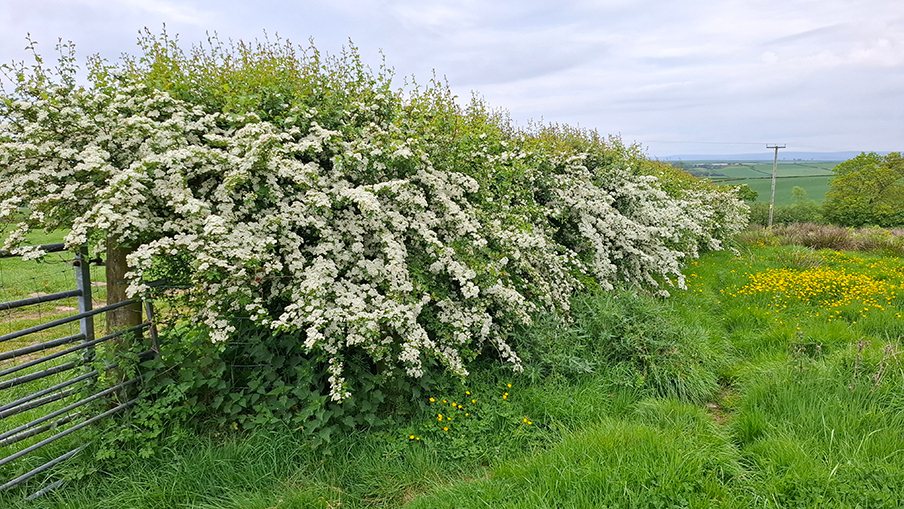 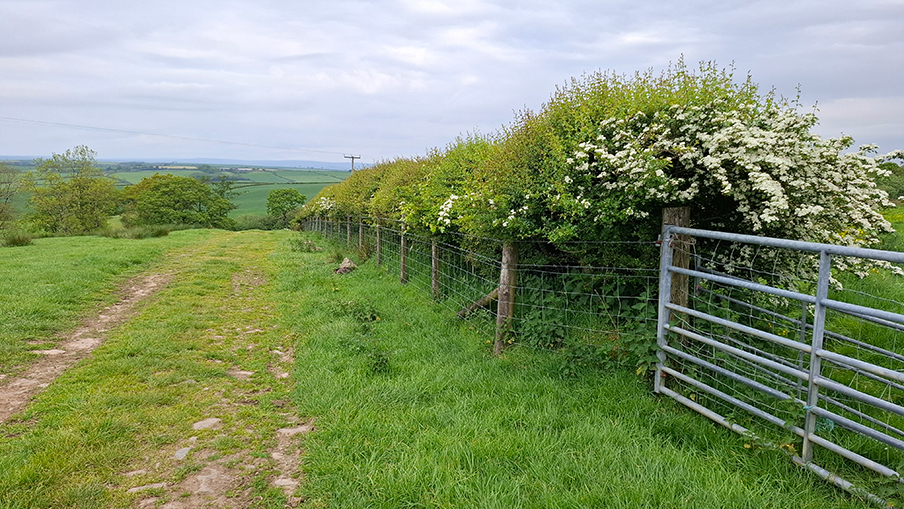 |
|
7th: More invertebrates We spied this very tiny and beautifully marked moth in the grass this afternoon. It is a Small Yellow Underwing and you can just see the 'yellow' in first photo. Underneath is a bumble bee nest - not something we normally get to see. This was found by friends when they went to get some hay from a stack of bales in their barn. It is quite extraordinary. Bumble bees tend to nest underground, often in places such as old mouse holes, or in dense woodpiles or similar. The queen lays anything from 50 - 300 eggs and it is always the workers who hatch first as their job is then to help the queen feed and raise the next to hatch. We hope to show this nest to Cathy from DWT when she comes to do a wildflower and grasses talk here next month as she is also a bumble bee expert!! 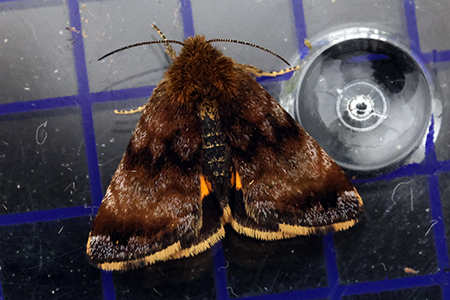 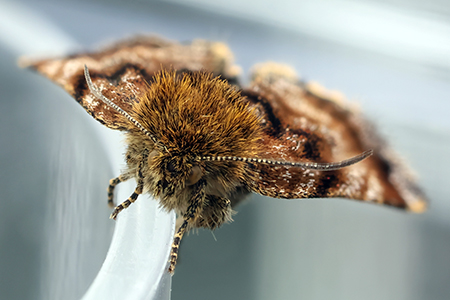 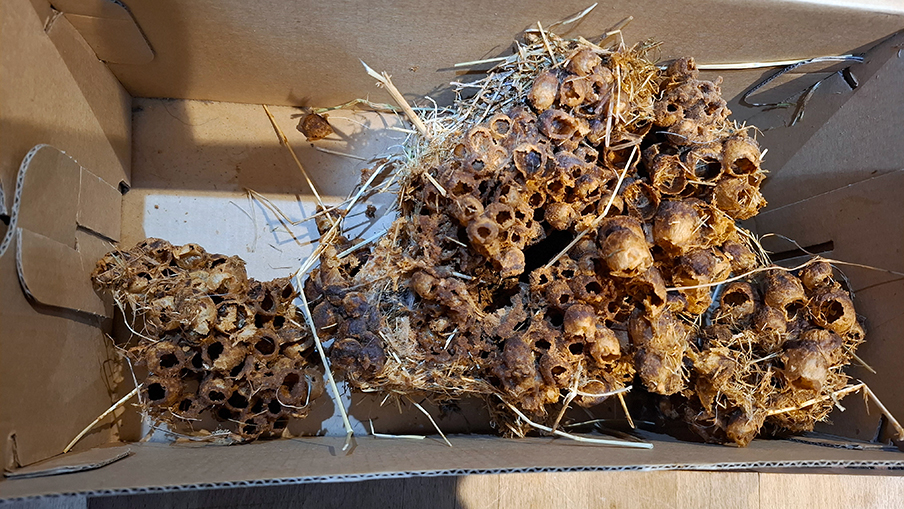 |
|
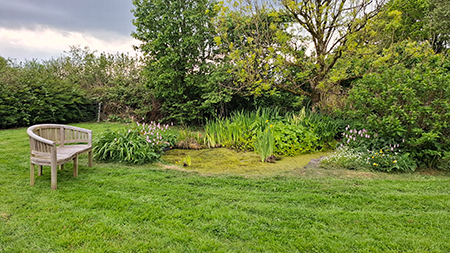
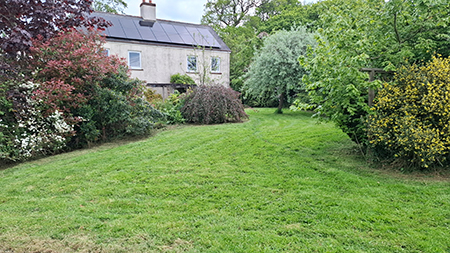
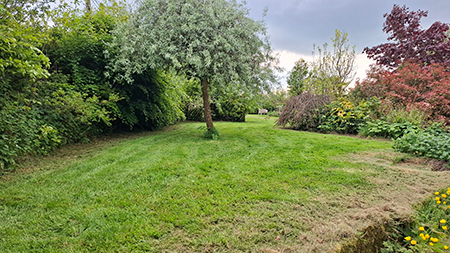
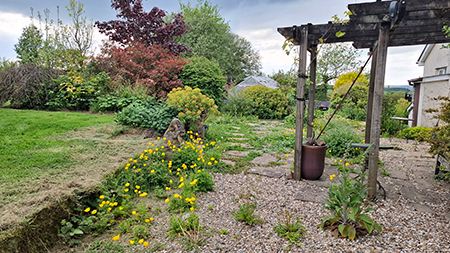
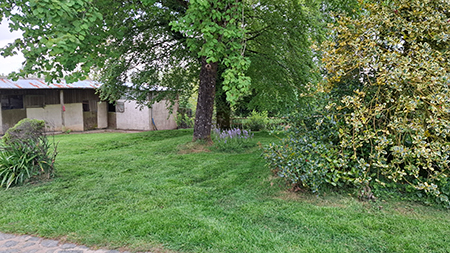
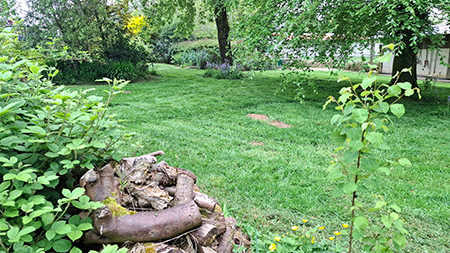
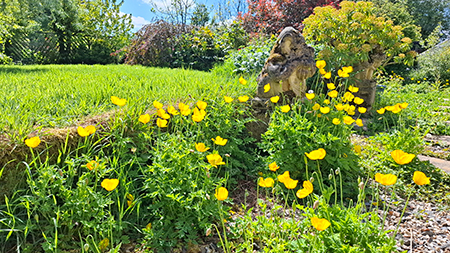
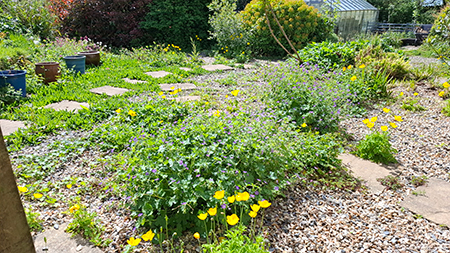
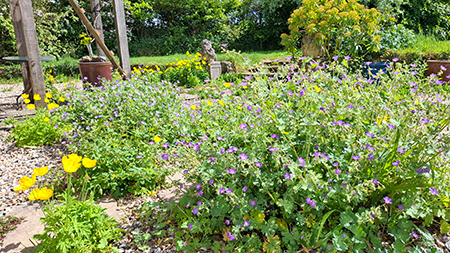
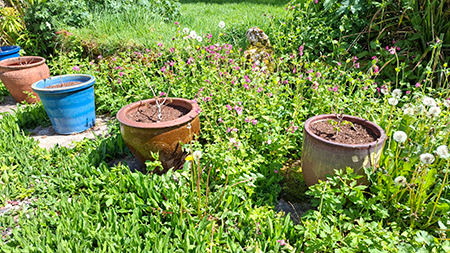
8th: Gardening We are enjoying managing the garden... it is becoming a mixture of wild and not so wild so that it will benefit the wildlife, as well as giving us an enjoyable place to relax and admire the beauty. The gravel area is definitely very special this year - full of colour and invertebrate life. 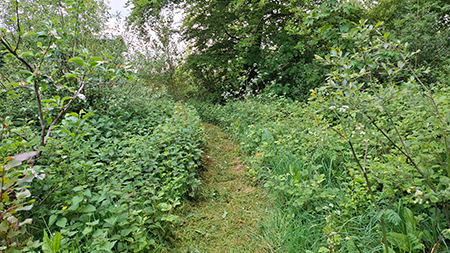
 |
|
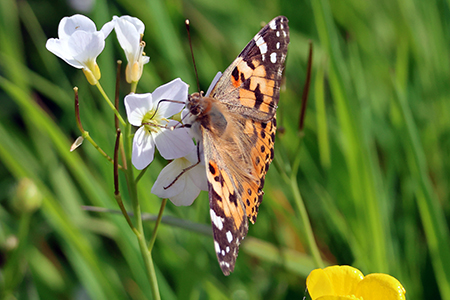
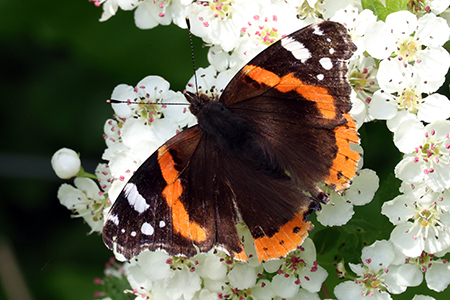
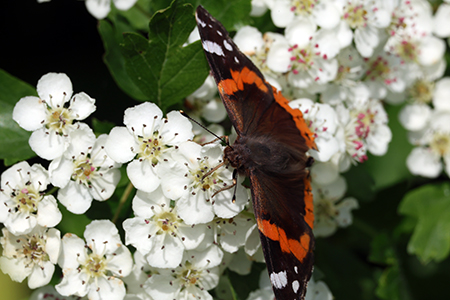
9th: Weather We are rather cold for May - the easterly winds don't seem to be abating BUT...when they ease a little and the sun comes out, the butterflies do too - we are seeing oodles of Orange Tips and Painted Ladies have been quite common too. In recent days the Red Admiral has started to put in an appearance as well and we have seen them in one of their favourite sunny spots - our front drive!! The Flame Carpet Moth is a dusk flyer really but like other 'Carpets' can be disturbed during the day. 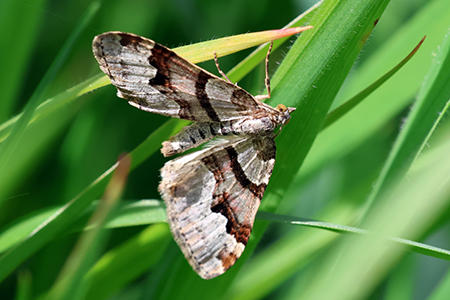
 |
|
10th: Bats A great trail cam capture of a pair of bats in Fruit Field in the early hours of this morning - no idea what species they are but hopefully we can find someone who might be able to tell if we slow down the footage. The trail cams pick up bats a lot at night which is enormously heartening to see. We believe we do have a healthy population round here, as our bat surveys in both 2025 and 2018 have shown. |
|
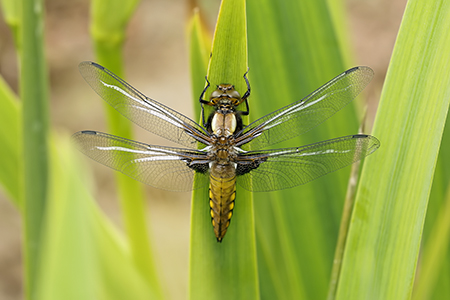
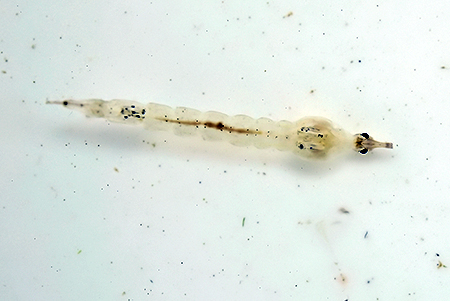
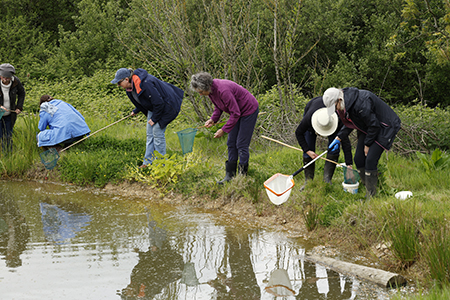
11th: Pond Dipping Our Pond Dipping afternoon yesterday was just amazing. Highlights for us: A female broad bodied chaser landing on Nicky's net handle and then letting everyone admire her, handle her and ooh and aah over her. Me saying, I have 'never' seen a great diving beetle larva predate once inside the containers at the EXACT moment one grabs hold of a toad tadpole and starts sucking the life juices from it. Constantly hearing exclamations of joy and delight every time a net was lifted from the water and peered into. Thanks as ever, to Paul and Theresa for the photography. (More photos under Events) 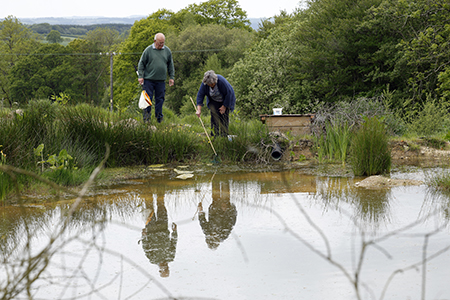
 |
|
12th: Birds It's sort of all about invertebrates at the moment but the bird life is just wonderful too. Stonechats are very very common now on the land and we also hear the skylarks on every walk. We are delighted to be seeing and hearing more greenfinches too, not just by the feeders but also on the land - maybe they really are making a comeback!! And as for the GSW - between them and the tits, we are getting through around 4-5 fatballs at the moment (and yes, we are still feeding our birds). 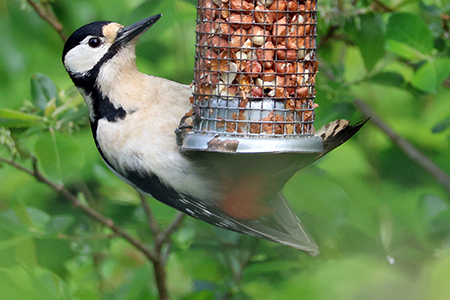 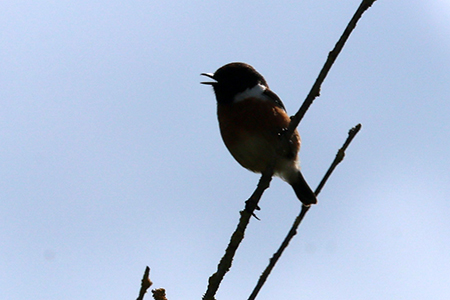 |
|
13th: Parasitic Wasps We found these tiny cocoons at the start of the month. They were attached to a small piece of grass that was simply laying on the ground in Swallow field. It looked as though they had been blown from somewhere else perhaps? We popped them in a container and yesterday had the joy of seeing what had emerged. With the help of the amazing Jo Everitt, our conclusion is that they are a type of Parasitoid Braconid wasp (similar to the ones that emerged from a yellow, communal cocoon we found last Autumn). It is likely that a caterpillar was parasitised and the resulting wasp larva then pupated in these individual cocoons once the caterpillar had been eaten. There are 4500 Parasitic Wasps in the UK, up to 1500 of which are Parasitoid Braconid wasps. They are Parasitoid because they usually kill their hosts, whereas 'parasites' generally don't kill their hosts, just reply on them. These wasps are in fact regarded as crucial pest controllers for various species of beetles and moths etc that eat human crops. |
|
14th: Views The views across our fields continue to be spectacular. Buttercups are now out-doing the Cuckoo flower, both are stunning and provide such colour and depth to the grass. It is difficult to know where to walk at times. 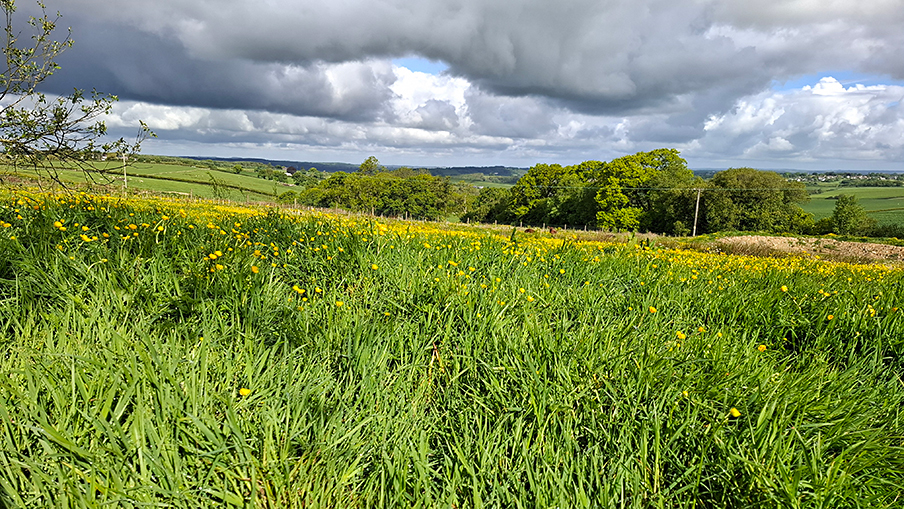 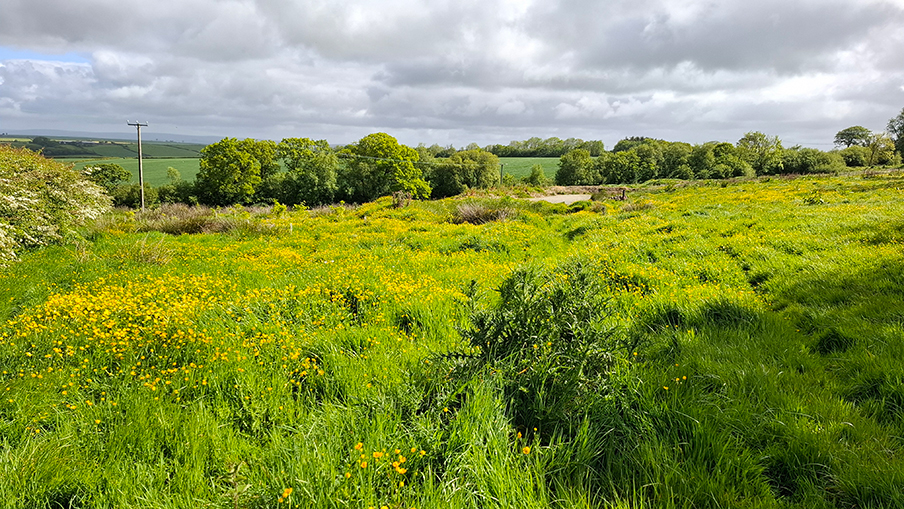 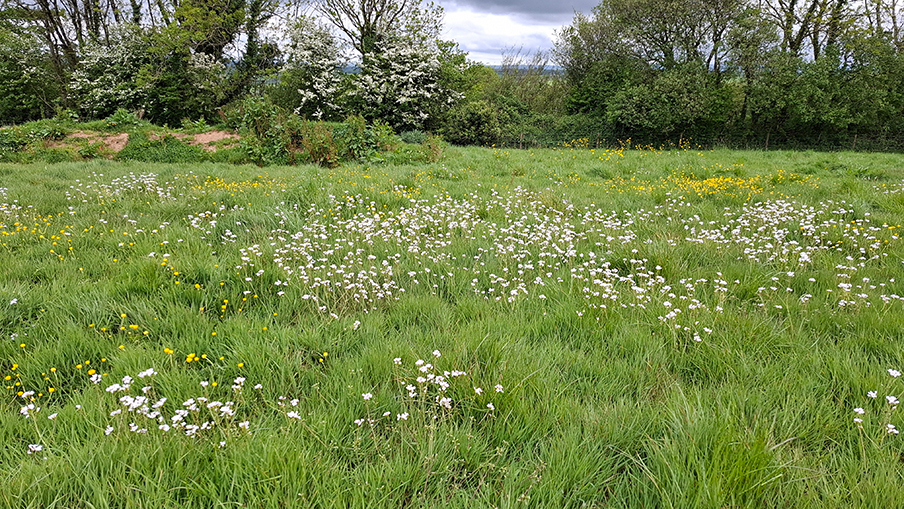 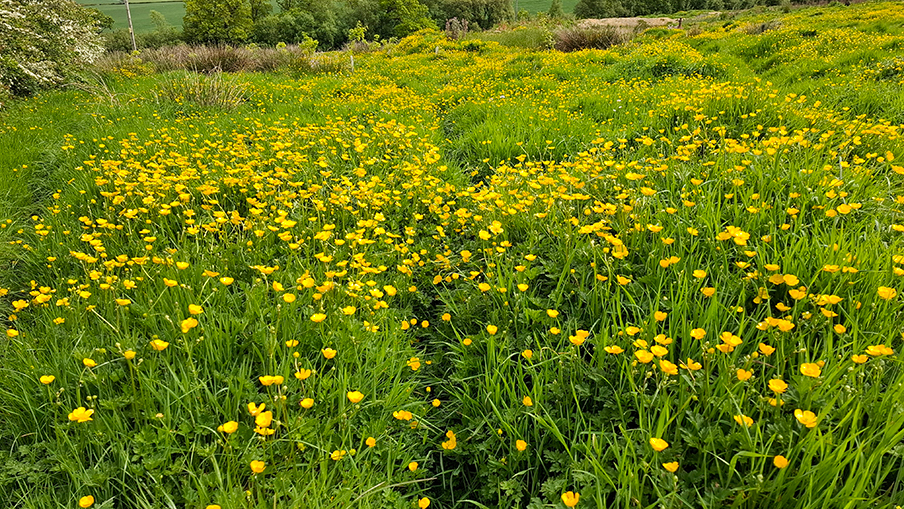 |
|
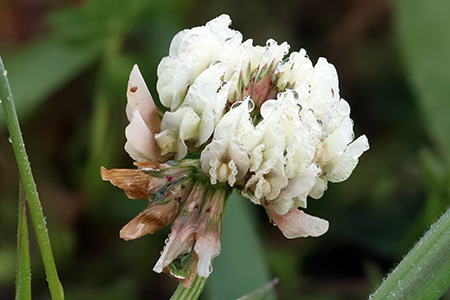
15th: Fruit Pond banks The south facing bank of Fruit pond is proving to be a fabulous habitat for quite a range of plants, similar to the 'beach' on its east side. We must try to do a full bio-blitz and see how many we can find. Common Vetch and Mouse-eared Chickweed 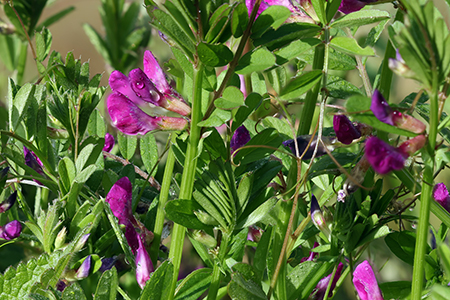
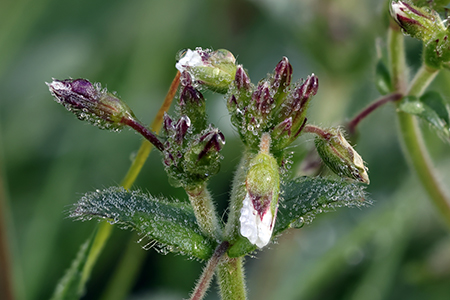
Woundwort and White Clover 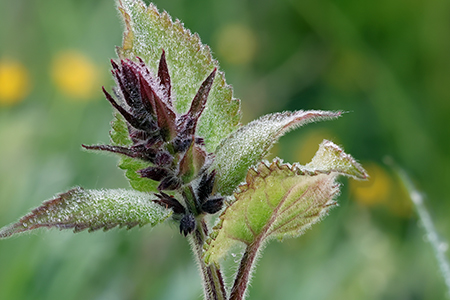
 |
|
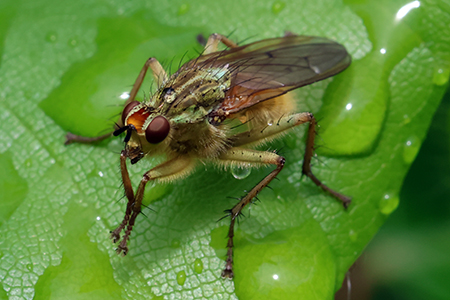
16th: Between the showers The weather is seriously weird - at times we have three or four layers on and doors have to be shut when in the house. Our walks are a mixture of sitting on benches in the sunshine and dodging torrential raindrops. And that easterly keeps persisting!! Nonetheless we enjoy invertebrate spotting where we can AND listening to the greenfinches who seem to be making a bit of a come back - we see them regularly on the feeders and hear them in most of the fields. This is excellent news!! A plant Bug Pinalitus cervinus and the Yellow Dung Fly - the most common fly we are seeing at the moment 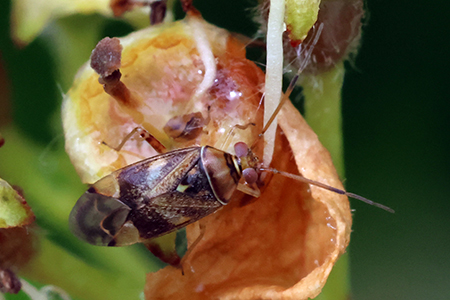
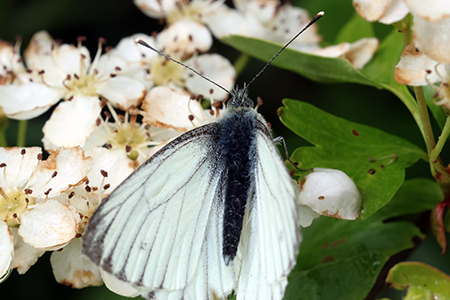
German Scorpionfly (appearing in big numbers this week) and Green-veined butterfly 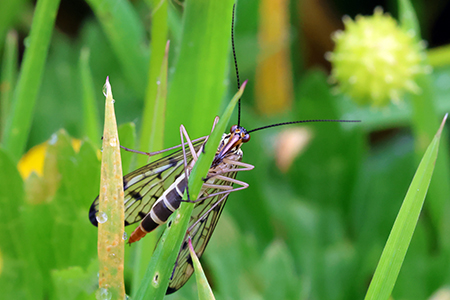
Cuckoo flower 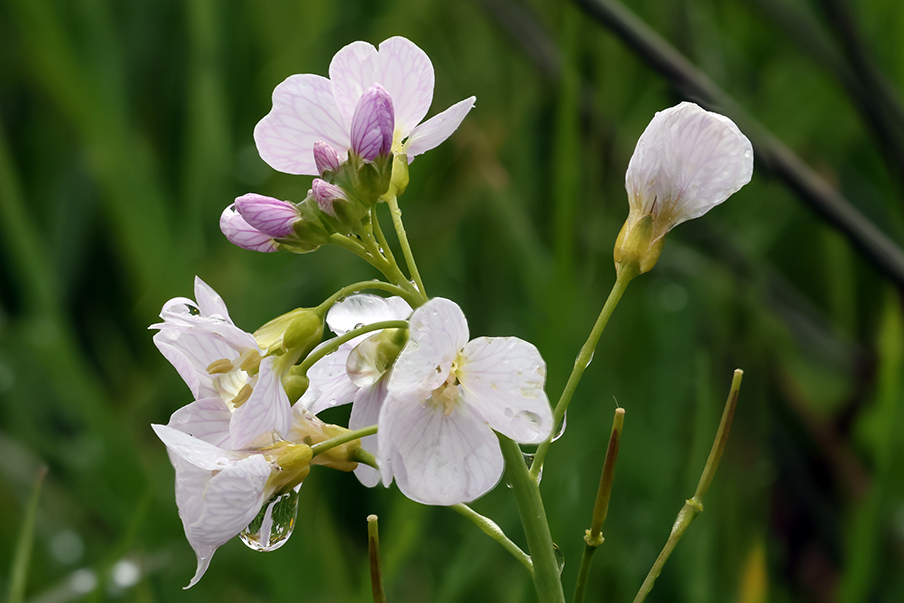 |
|
17th: Heron It is great to see our heron back on the land - its been a little while!! |
|
18th: Buttercups We may have two humans and six dogs on the land every day, twice a day, but the buttercups just keep on looking magnificent 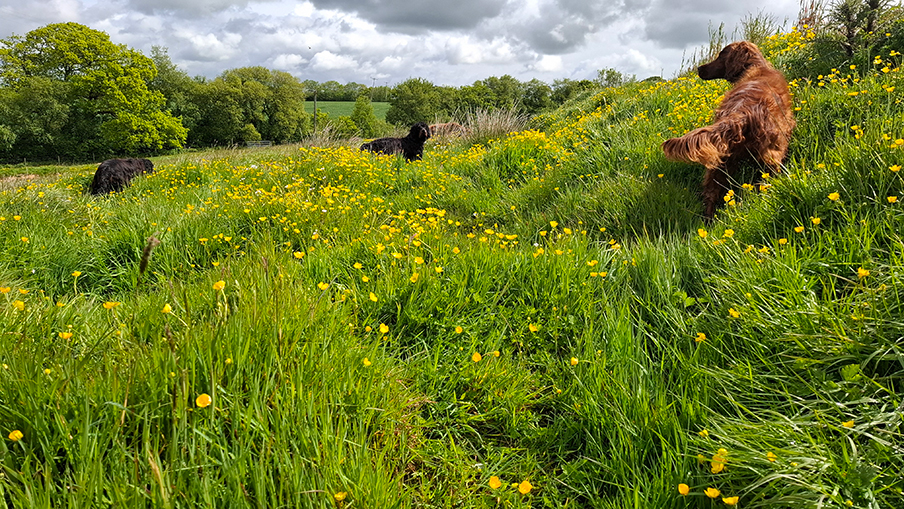 |
|
19th: Green Carpet Moth Carpet moths are usually nocturnal but during the day they will rest in the grass, which means they are a species that can be seen in the day as they can be easily disturbed. It is hard to believe these are the same moth. The first picture was of one taken after a moth trapping session on 11th May and the second was taken today on our afternoon walk. Sadly, their bright green really does fade!! 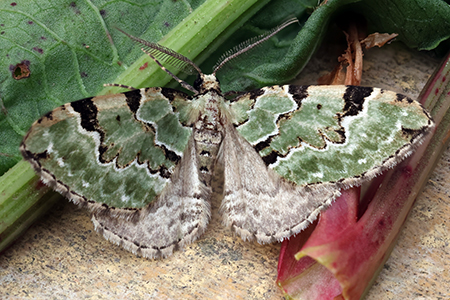 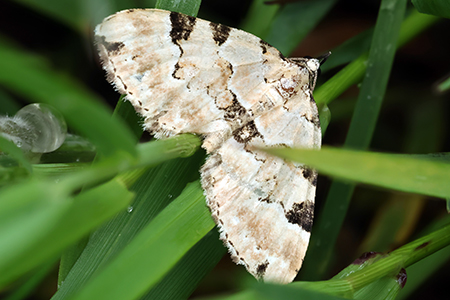 |
|
20th: Moss Safari This is a video of a droplet of water from moss, magnified x40 under a microscope - how utterly amazing to see. We are reading a book called 'The Moss Safari' by Andrew Chandler-Grevatt and hope to become a little more knowledgeable about what some of these creatures may be. We don't think any of these are tardigrades (the most popular organism to find in moss) but we need to play around with the lighting and focus to get better views. What a stunning first video to have though!! |
|
21st: Bumble bees Bumble bees were out in force last month when we had the first flush of spring sunshine and warmth - the rain earlier this month saw them beat a bit of a hasty retreat but they are back - all over the garden and the land. This foxglove is growing in our gravel - gravel that what was once weeded!!! The whole area is now a huge draw for large numbers of invertebrates who come for the nectar, the shade, the cover, the leaves... Not much beats the sight of a bumble bee backing out of a foxglove flower and then zooming off to find a new one. |
|
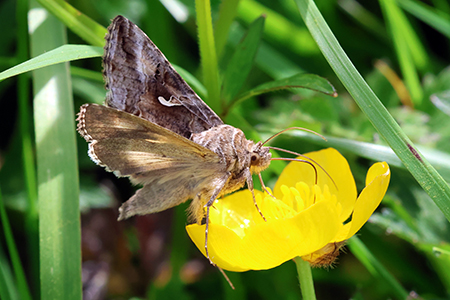
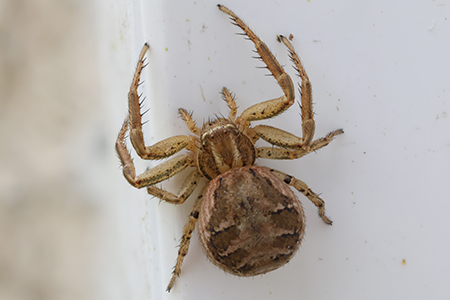
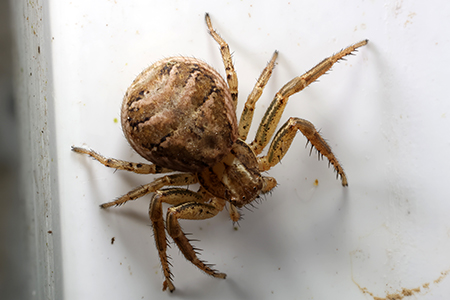
22nd: Invertebrates Invertebrates numbers have really shot up in the last few days as temperatures have risen and the easterly winds have dropped. Walking through the grass in our fields sends all sorts up in the air, including this evening, this beautiful marked Silver Y moth. We also saw some delightful lacewings. And then as we came back into the garden and walked up the steps into the utility room, we spied this delightful spider on the door frame. It's a crab spider and quite possibly the Xysticus cristatus - but without genitalia examination no thanks), one cannot tell!! 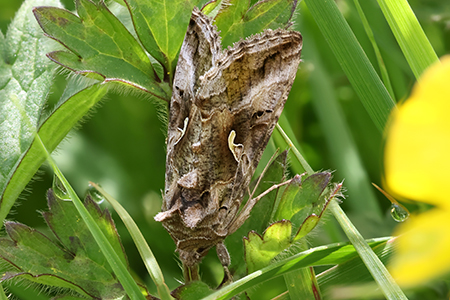
 |
|
23rd: More Parasitic Wasps These wasps hatched from a communal cocoon, unlike those earlier in the month that came from individual ones. Logic suggests they are a different species but getting accurate IDs demands a bit more skill than we have (these ones may have more red on their legs??). The behaviour was virtually identical: lots of rubbing of legs, frantic rushing around and mating!! And off they go!!! |
|
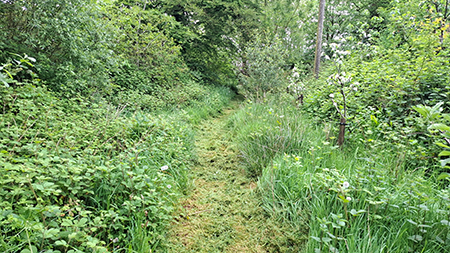
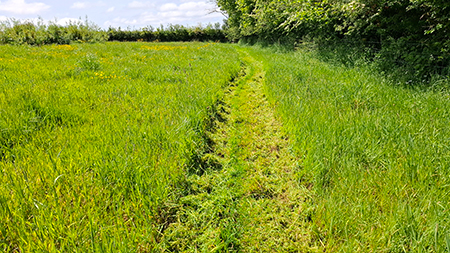
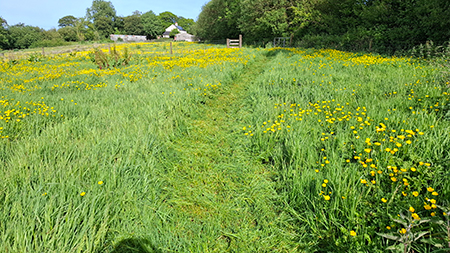
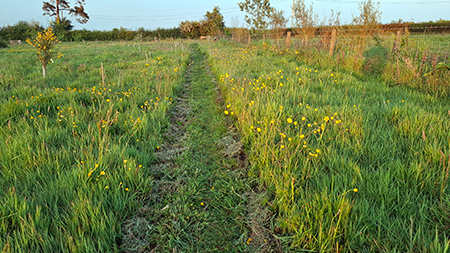
24th: Paths We have bitten the bullet and are making paths around the fields - we have of course left it a little too late and with sod's law well and truly on our side (not!!), both the trackmaster and the brushcutter gave up on us at the end of the day!! The paths are for us (it is getting increasingly difficult to walk around in all the long grass) and also for visitors as we have some guided walks coming up and it is best to keep people on dedicated paths so vegetation isn't trampled. 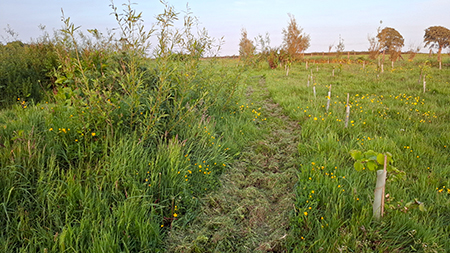
 |
|
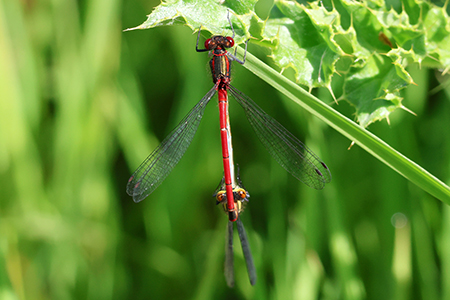
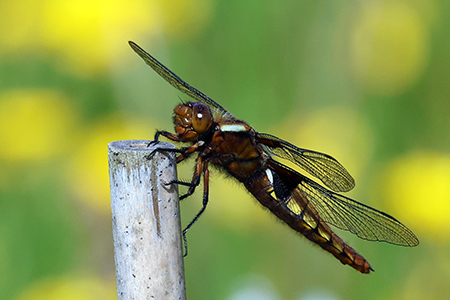
25th: Poultry Pond Poultry Pond this morning was deliciously full of life and colour. Ragged Robin 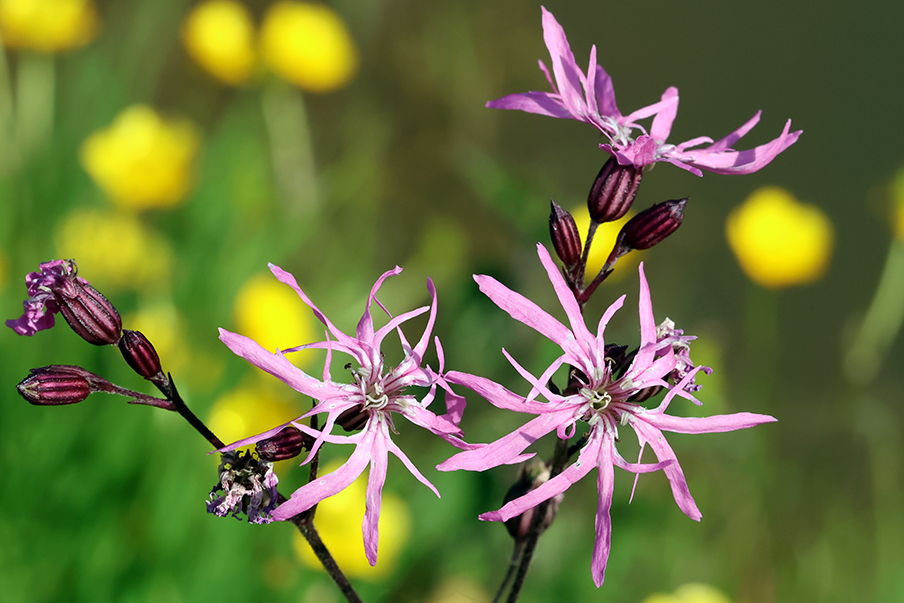 Large Red Damselflies 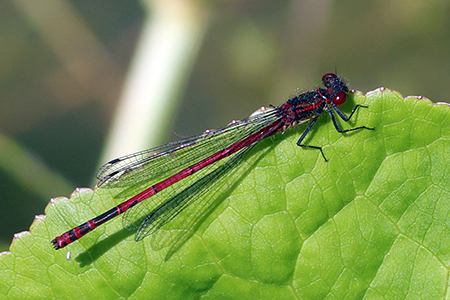
Male and female Broad Bodies Chasers 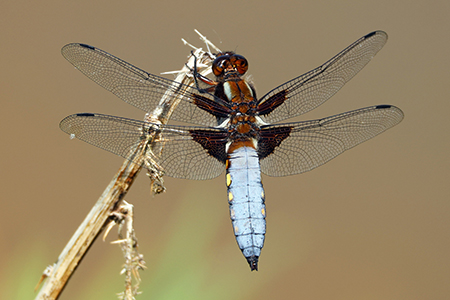
 White Clover and Yellow Flag 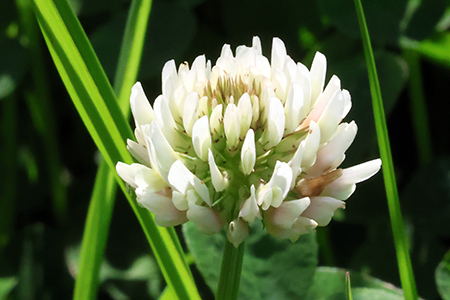 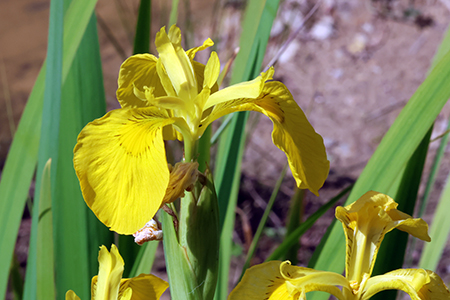 |
|
26th: Mothing Another mothing session as the fab weather continues: three traps set but only the stables one had a good catch and the few caught in the other two (Gathering Area and Poultry Corner) were repeats anyway. Not sure why those two weren't as successful - lots of trees and cover but maybe too hidden?? Anyway, we had six new species so very pleased. Pale Tussock and Square Spot 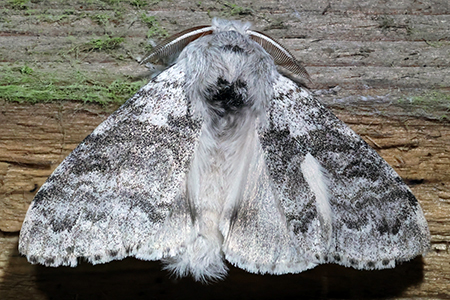
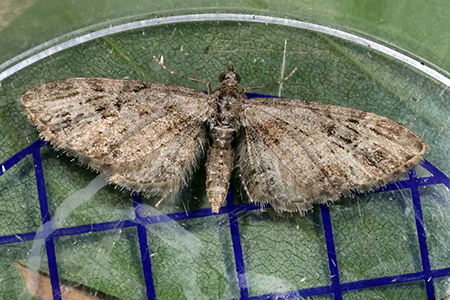
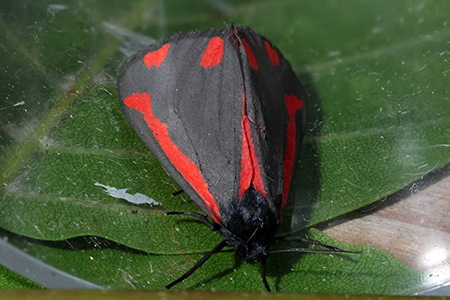
Ingrailed Clay and Cinnabar (chuffed about this one - we have a LOT of groundsel this year) 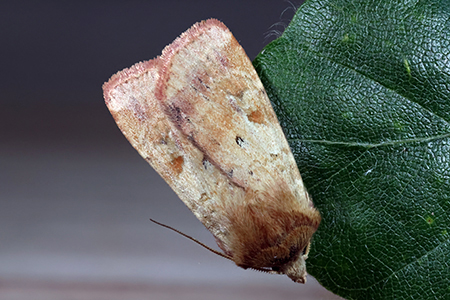
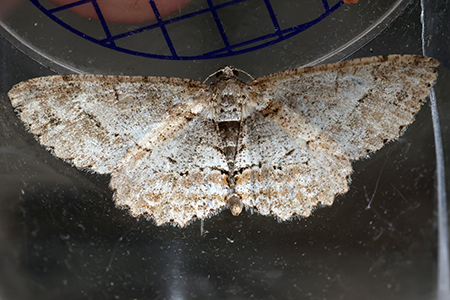
 Treble Lines and Mottled Pug 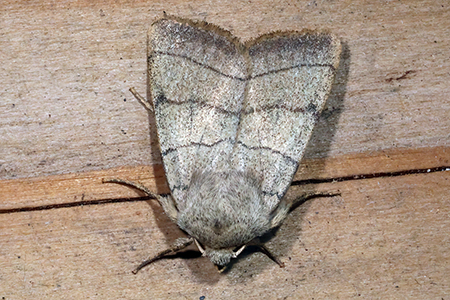
 |
|
27th: Heathercoombe Gardens A delightful day with Becky exploring Heathercoombe Gardens on Dartmoor. As well as the stunning views, smells, sounds and abundance of colours and shapes, we were both seriously excited to hear a cuckoo - first time in years for us both. We sat eating our lunch and were treated to its call the entire time we ate!! 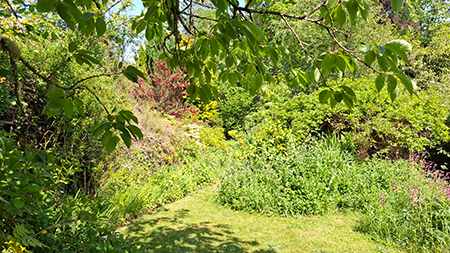
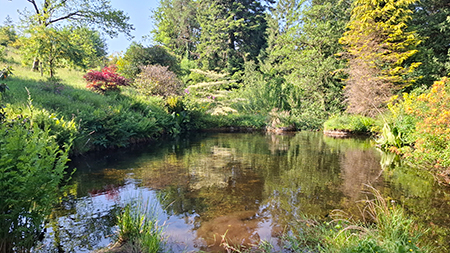 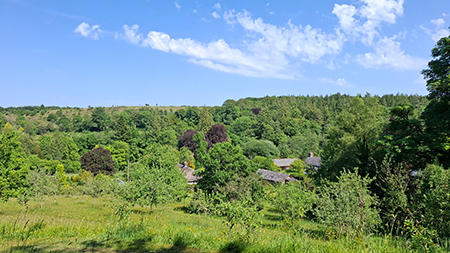 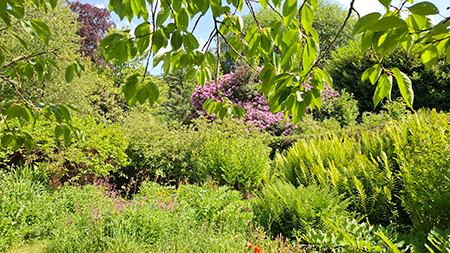 |
|
28th: Spindle Ermine We were really chuffed to see the very obvious signs of Spindle Ermine moth Caterpillars on our 'Jo and Paul' spindle tree today. They can totally defoliate the plant they eat but if the tree or bush is mature enough, they don't usually kill it. This tree however was only transplanted last year and whilst was full of flowers in early spring, is not that leafed up yet and as such, we have decided to bring the caterpillars in and raise them in a net. We have plenty of spindle saplings and will be able to take few leaves from several plants to keep these caterpillars happy until they pupate, probably towards the end of June/ July. 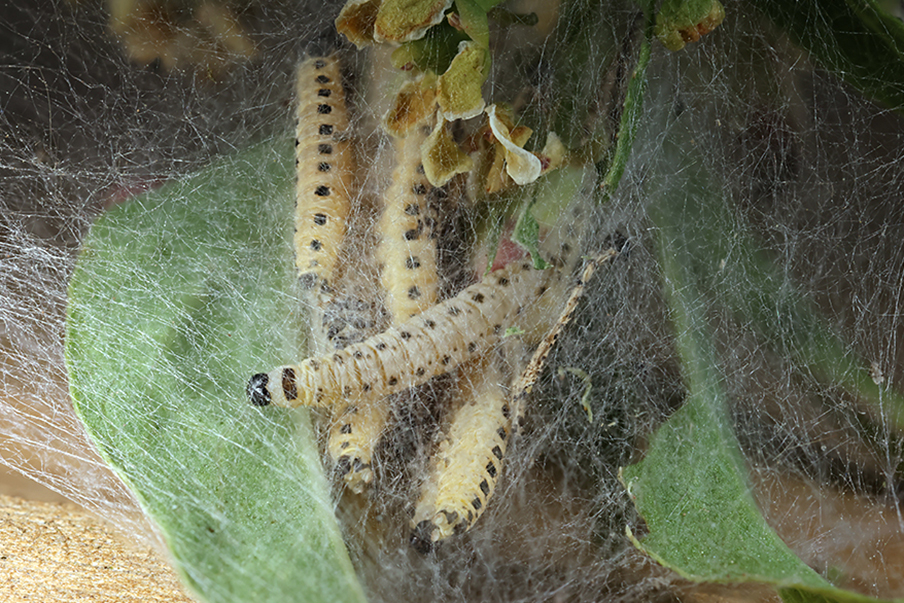 |
|
29th: Colour Ox-eyed daisies and marigolds are really putting on a show in our banks just now!! Glorious. The recent heatwave has bought a lot of life to the fore - although we now need a bit of rain to keep it all looking wonderful!!! 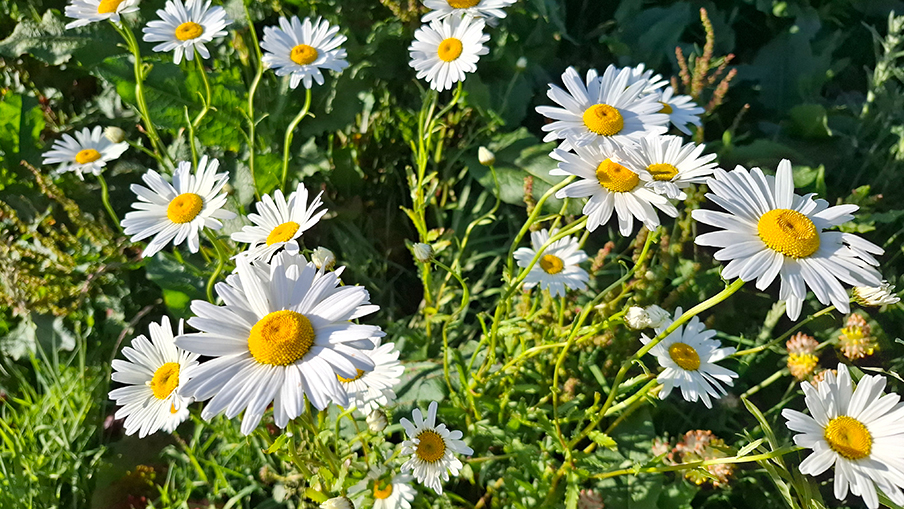 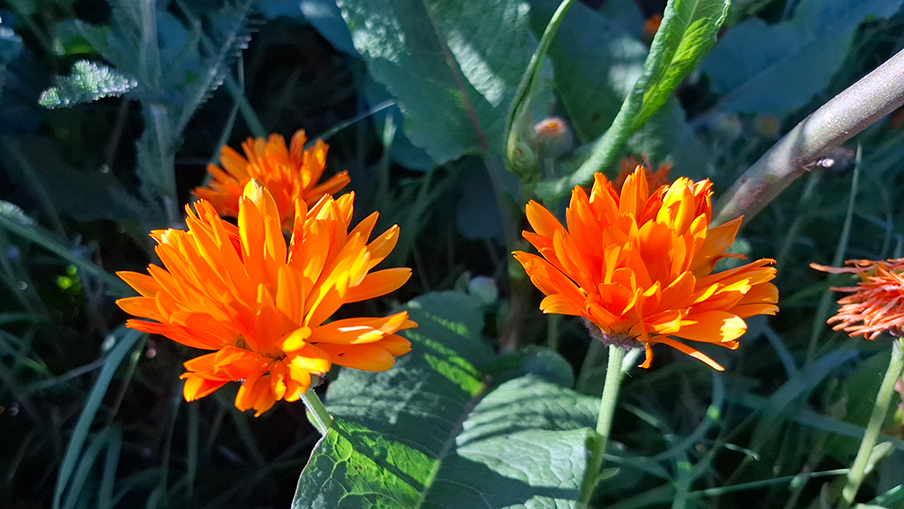 |
|
30th: Caterpillars A long overdue update about the caterpillars we are raising. There is a huge variation in hatch rates, survival rates, growth rates, eating habits... The figures above each double set of photos indicate egg numbers, hatching numbers and current 'still with us' numbers (with the percentages in brackets). Garden Tiger Moths 50/ 26 (52%)/ 8 (31%) - Began hatching 14 April - still only around 1-2cms in length, very slow to develop 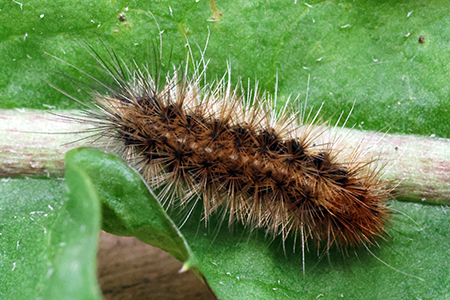
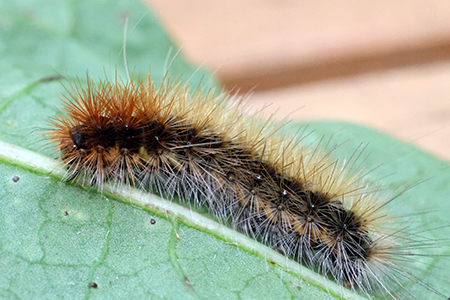
Eyed Hawk Moths 20/ 18 (90%)/ 7 (39%) - Began hatching 22 April - now huge (7-8cms), big eaters, starting to pupate 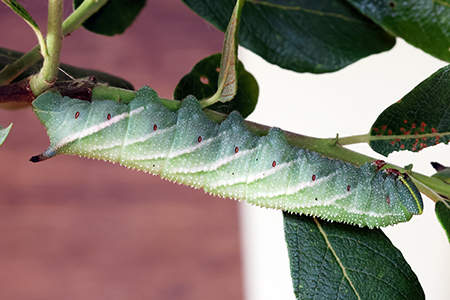
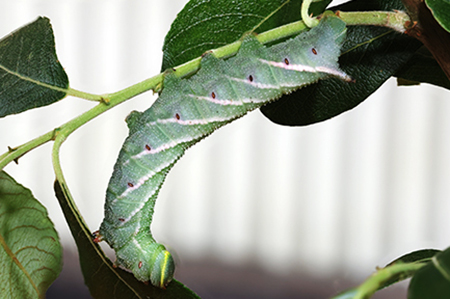 Emperor Hawk Moths 50/ 25 (50%)/ 22 (88%) - Began hatching 23 April - now huge (7-8cms), big eaters, lots of colour changes, gregarious, starting to pupate 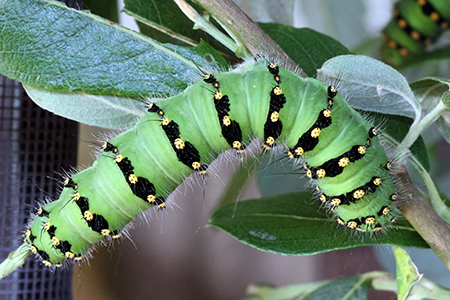
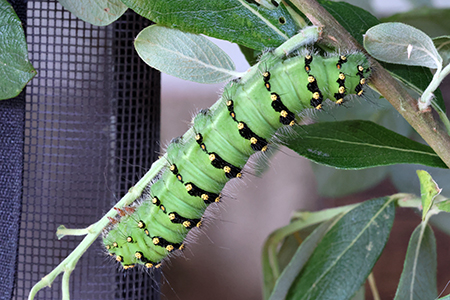 Puss Moths 20/ 9 (45%)/ 8 (89%) - Began hatching 25 April - now huge (7-8cms), big eaters, fat, colourful, one 1/3rd size of others 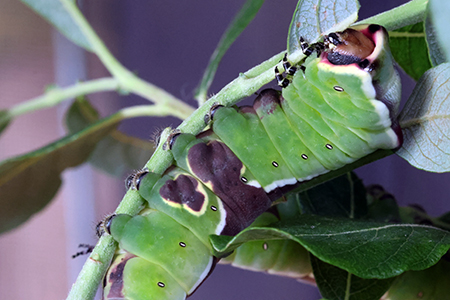
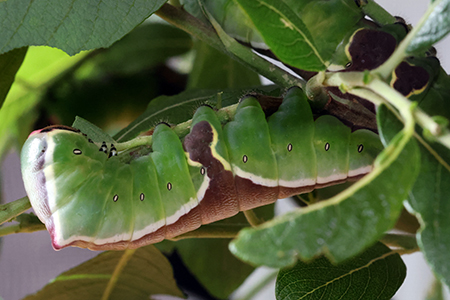 Lime Hawk Moths 20/ 17 (85%)/ 3 (18%) - Began hatching 28 April - 3cms, fragile and slower growing 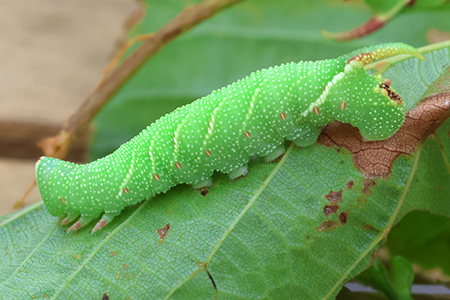
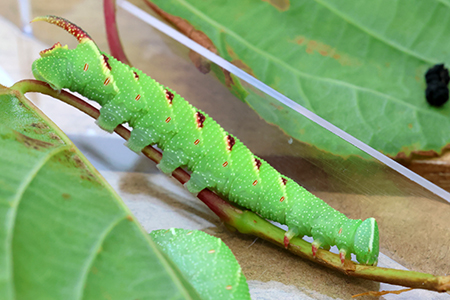 Poplar Hawk Moths 50/ 33 (66%)/ 29 (89%) - Began hatching 15 May - 1-2cms, seem robust, growing well 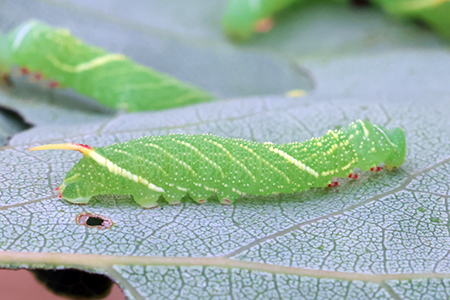
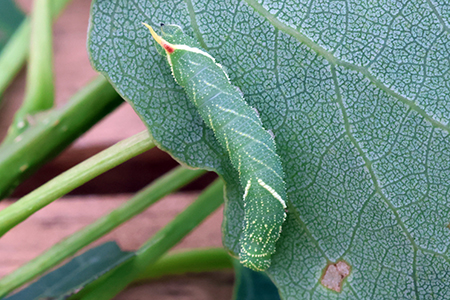 |
|
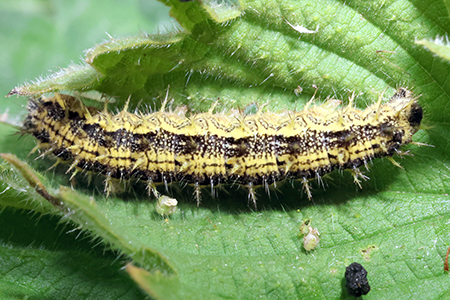
31st: Caterpillars - LOTS!! We often talk to friends about how seeing endless caterpillars coverings plants, especially nettles, seems to not be a 'regular' sight anymore - maybe something we recall from out childhoods? Well, we literally 'squealed' with delight when we saw this today: peacock caterpillars in all their gorgeous shiny black glory!! And THEN, in the same patch we found scores of newly hatched small tortoiseshell caterpillars too. And a bit further along, a few older ones!! Made our day, and week, and possibly month. Need to find some Red Admiral ones now and then we will have scored a hat-trick of the main 'nettle-eating' butterfly larvae. Our land seems to be giving us new delights every time we step into it just now!! Sooo lucky!! 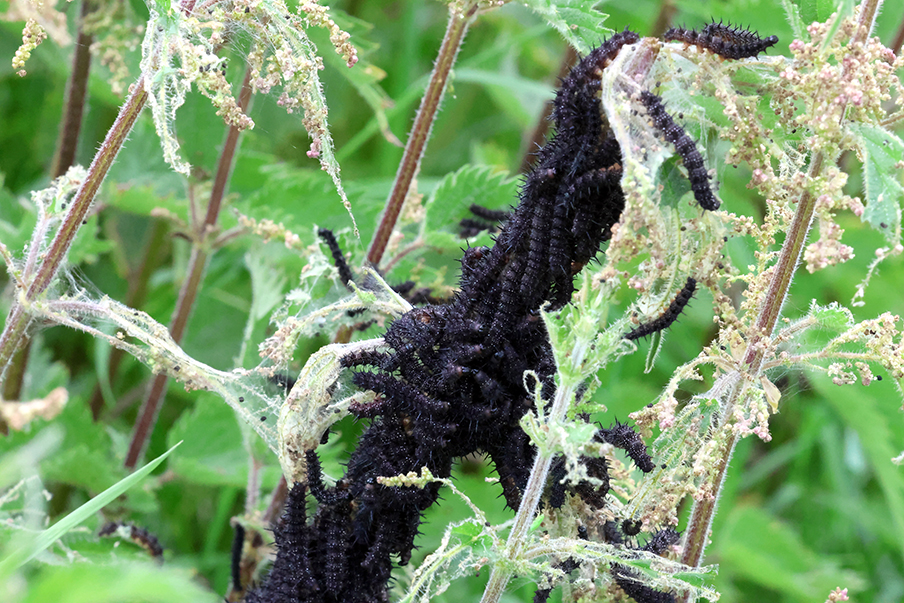 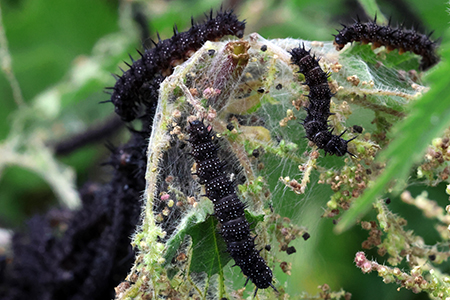
 |