
| Home | Nature Diary | Flora | Fauna | Fungi | Events |
| Rugs | Dogs/Cats | Smallholding Devon | Smallholding Cornwall | About |
| 2024 | 2025 |
| << May 2026 | June 2026 | July 2026 >> |
|
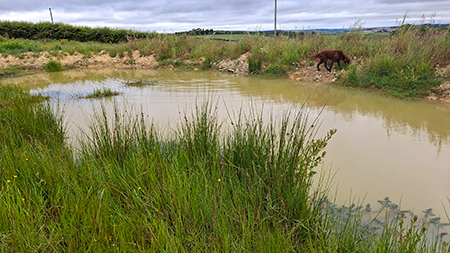
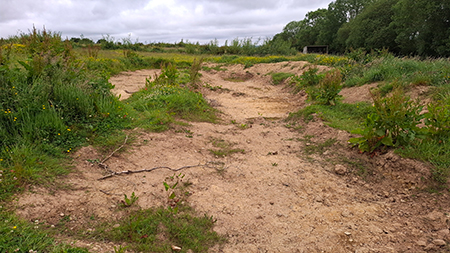
1st: Ponds Another long overdue update - this time the ponds. All are low in water after the recent heat wave but the start of this month promises rain which will mean a bit of a 'freshening up' at the least. Poultry pond continues to teem with life and the Ox-eyed daisies, Clover and Ragged robin round the edges are looking great. Chaser and Little Chaser have their fair share of 'chasers' which is wonderful and the latter is now completely vegetated round all the sides which gives it a very natural look. Fruit, Swallow and Yeti remain empty with the first two really filling with vegetation, especially Sow thistles and clover - these will become very different habitats which is not a bad thing at all!!! (no pics of the Clay Pit) Poultry - lots of life - invertebrates and birds and outside edges getting more naturalised 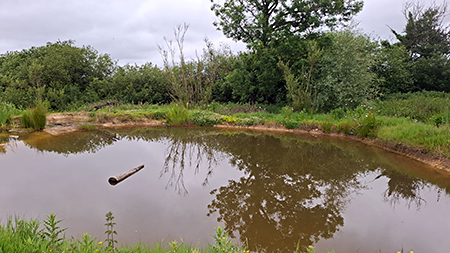
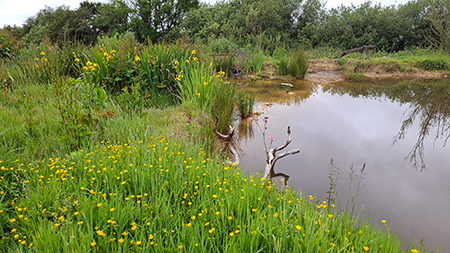 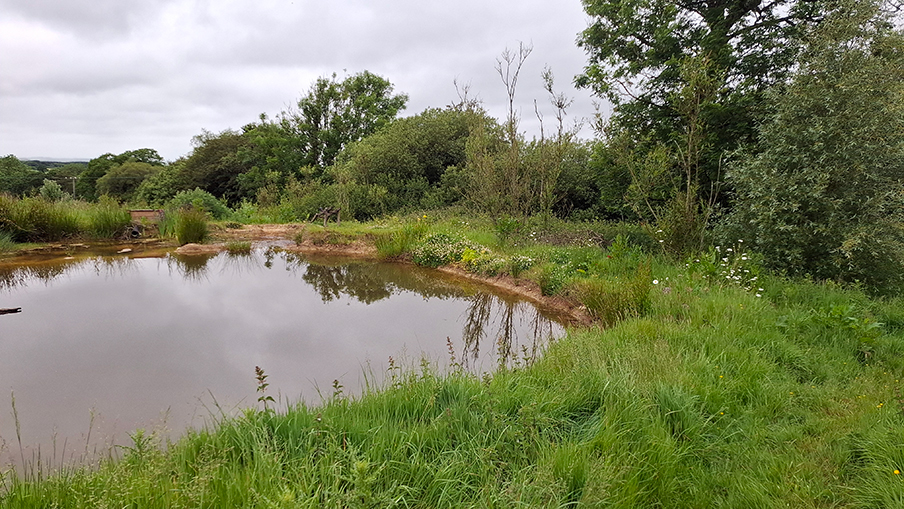 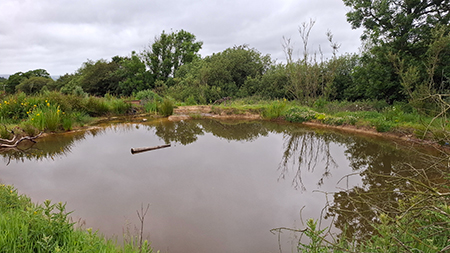
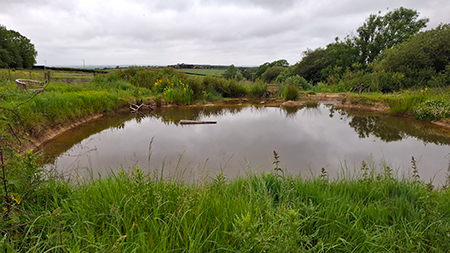 Goat - the 'beach' and south facing bank are full of a huge variety of plants - 20 plus species found so far! 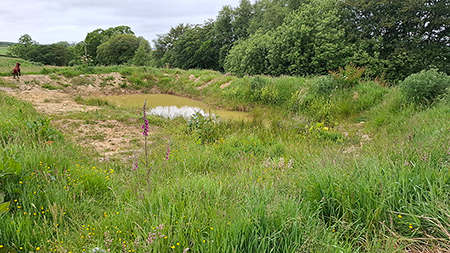
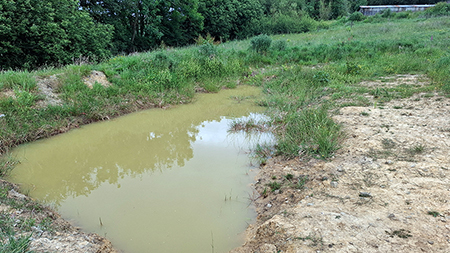 Rabbit - one of the least populated with life: banks and water 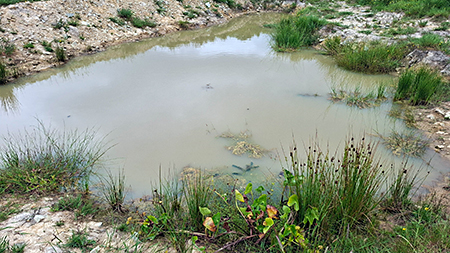 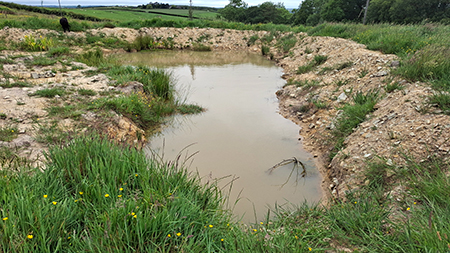 Oak - the smaller bowl is just about holding its own still!! 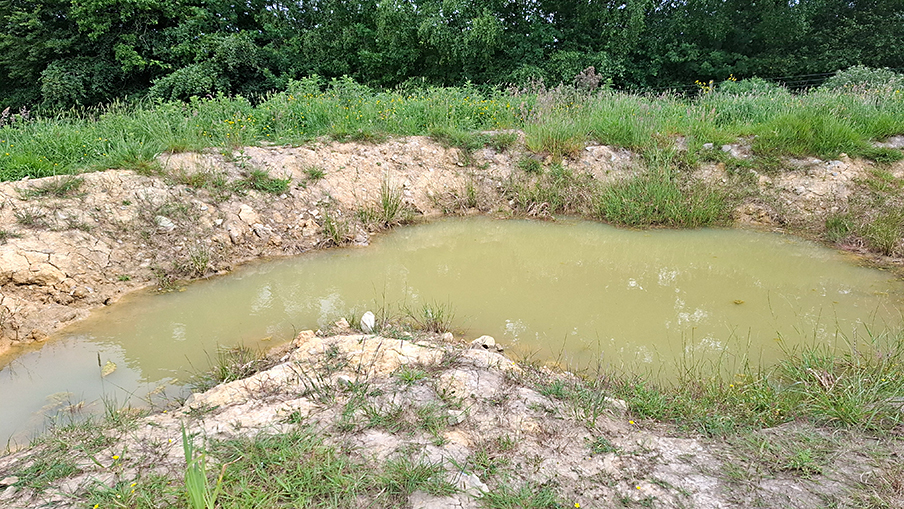 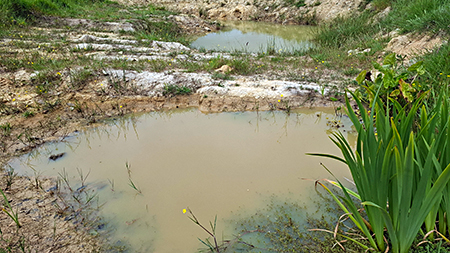 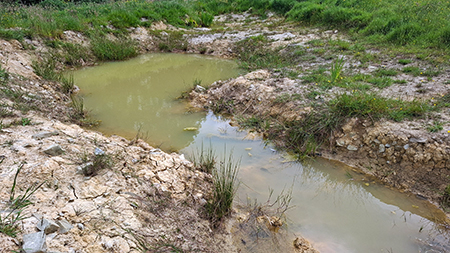 Chaser - popular with Swallows and Broad-bodied Chasers alike 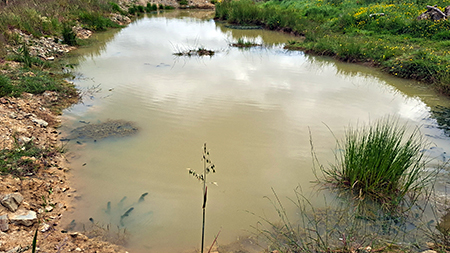
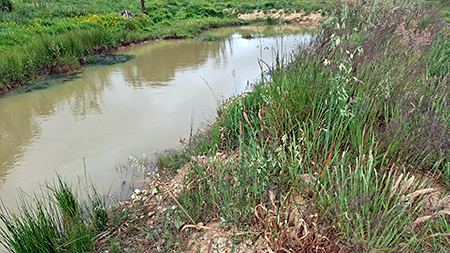 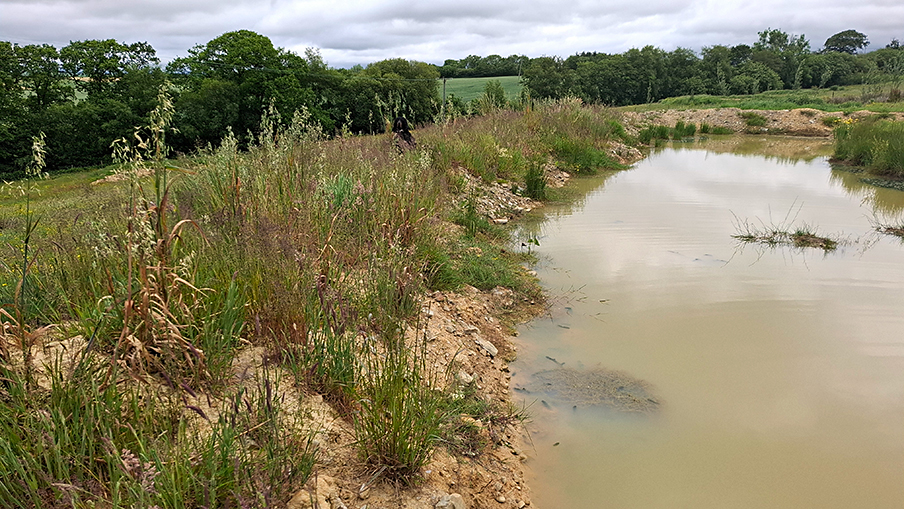 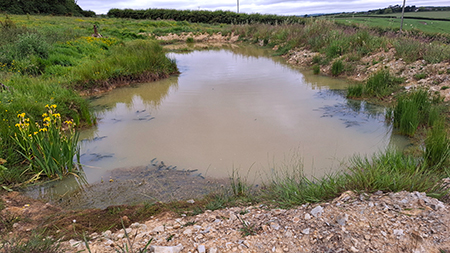
 Little Chaser - a bit of a hidden gem now a very well vegetated pond 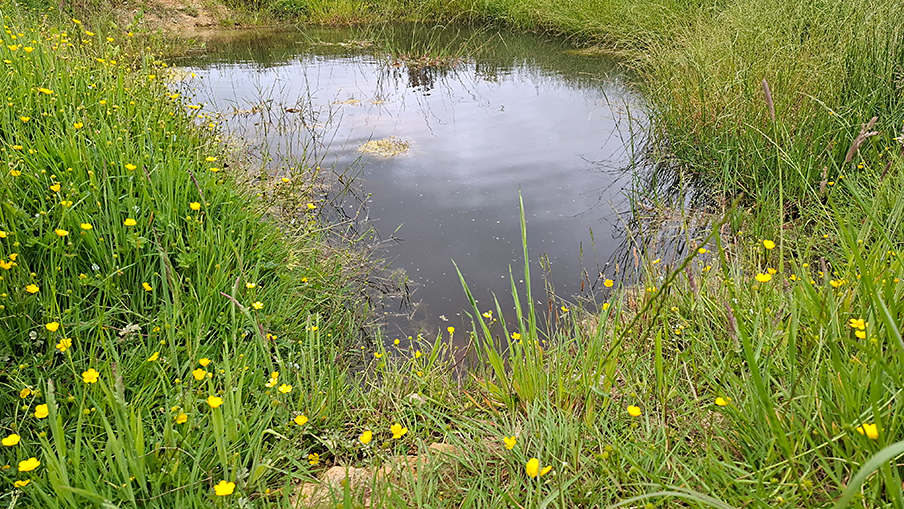 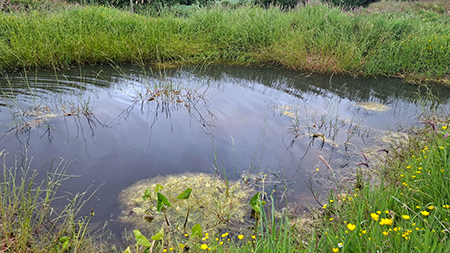
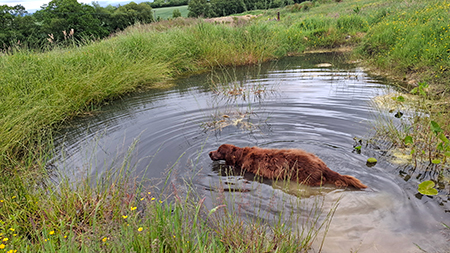 Yeti - vegetating up well with Sow thistle (mainly Spiny we think) 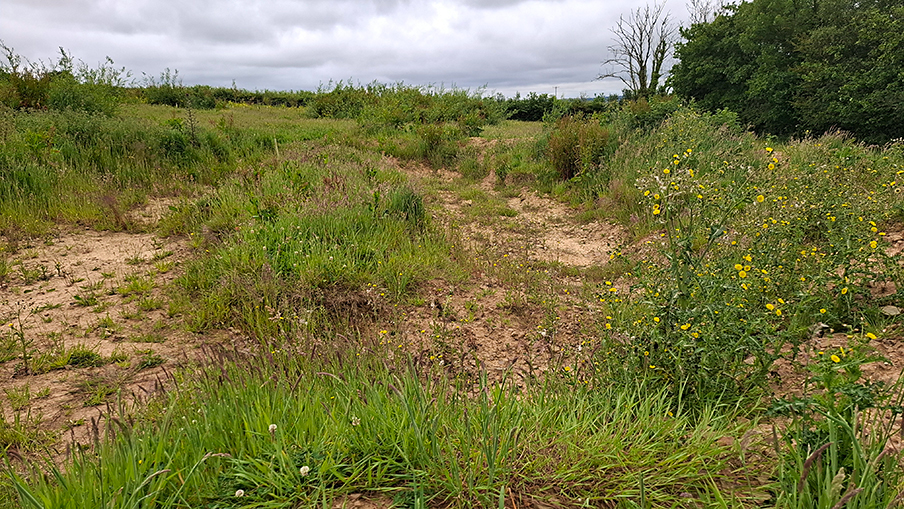 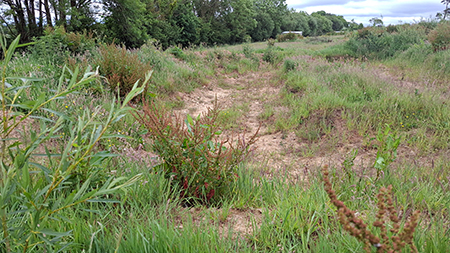
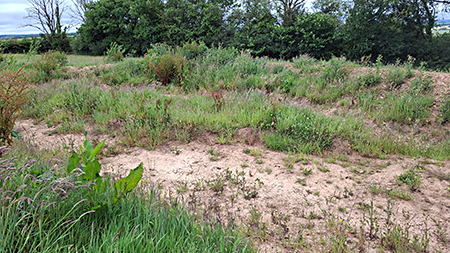 Swallow - fabulous clover in and around this pond 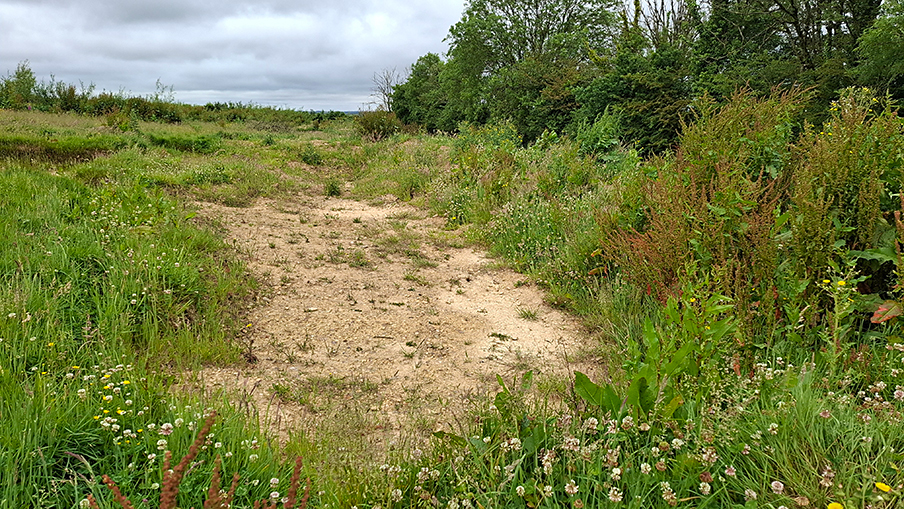 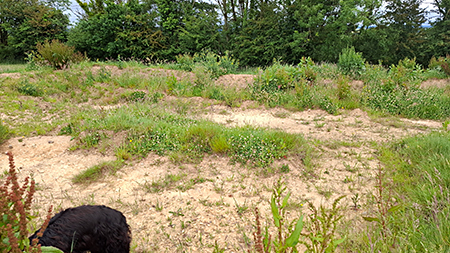
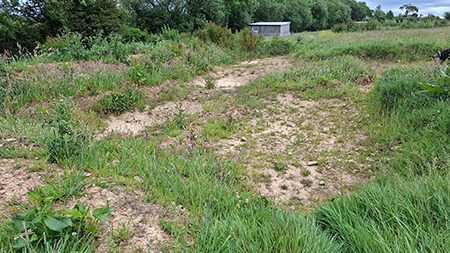 Fruit- as this was full of water over the winter and early spring, vegetation hasn't had a chance to take hold yet!! 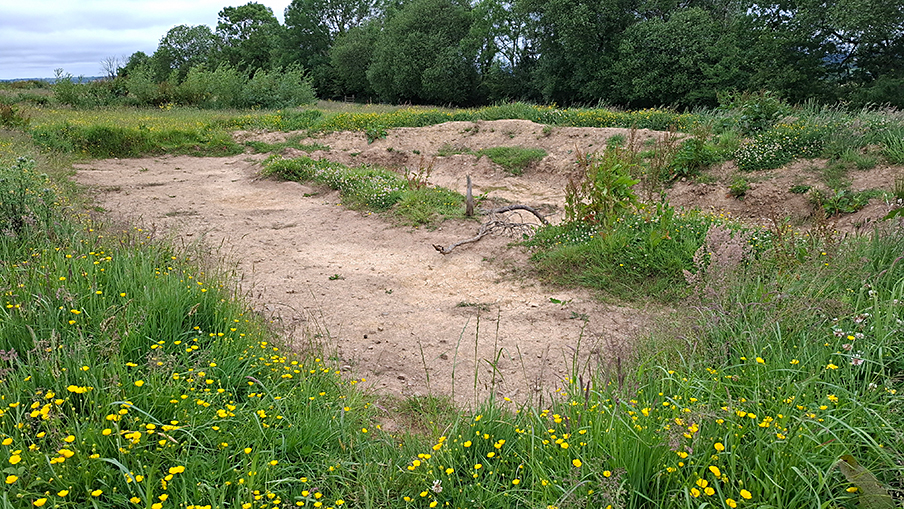 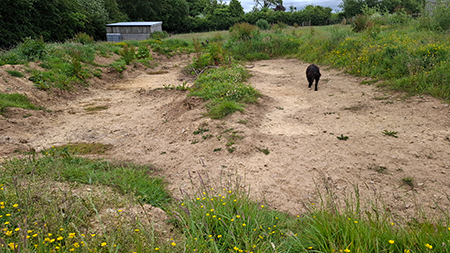
 |
|
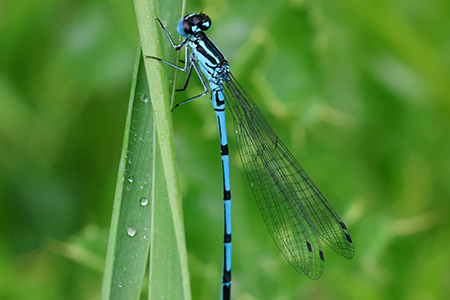
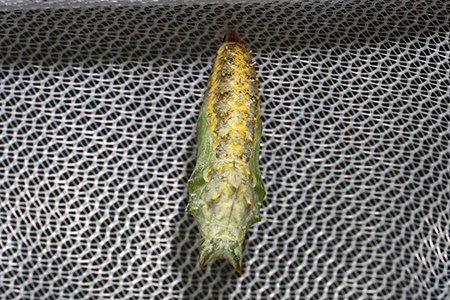
2nd: Invertebrates This gorgeous Angel Shades moth decided to fly in the house last night and settle on the kitchen carpet. We snapped a few photos and were then delighted to liberate it back outside. Love the way the wings are folded or draped over the body when at rest - very elegant! A new species for us! And the Blue-tailed damselfly is another one - we are seeing lots of damselflies just now - most seem to be the Azure (also pictured) but this beauty decided to visit the greenhouse yesterday (possibly escaping the rain). And it was rather amazing to find two chrysalis in our nettle net this morning - we assume they are two of the four Tortoiseshell caterpillars we found at the weekend. With any luck these will emerge as butterflies in two to four weeks!! 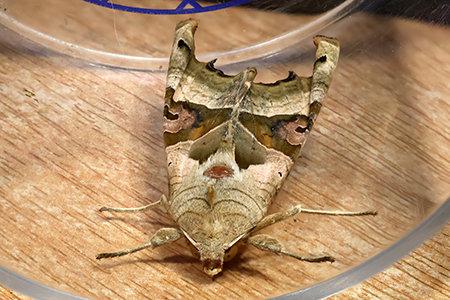 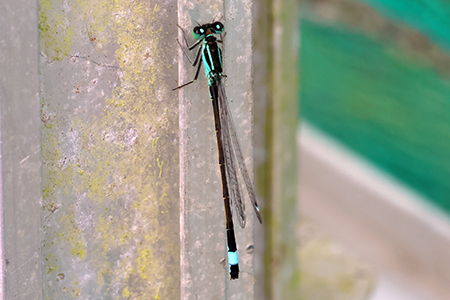
 |
|
3rd: A day under the Bird Feeding Station |
|
4th: Puss Moth Caterpillars In the last few days, seven of our eight Puss Moth caterpillars have pupated. It has been simply amazing to watch. You know when they are about to start as their bright green fades and they turn paler or even brown. Then they start to crawl away from their food plant to find a gap or crevice in some nearby wood. Spot chosen, they proceed to scrape, chew and layer the moss, bark, wood and build themselves a cocoon. It takes a few hours to complete and after that, the caterpillar then begins the actual (and unseen) process that sees it change from the larva to the moth. For moths in general, this process can take anything from weeks to several months. For these Puss Moths, we don't expect to see them until next Spring (which is a very long time to wait)! 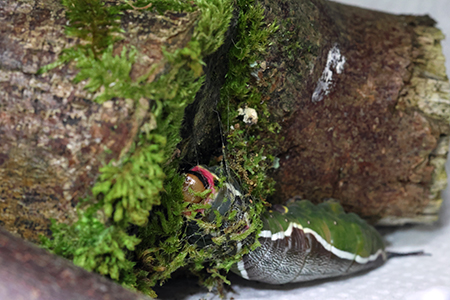 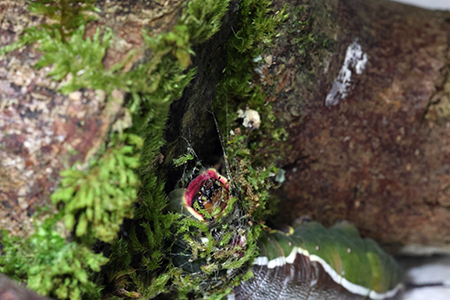 Both finished, one moss based, one wood based - but you wouldn't know either was a cocoon at first glance - clever!! 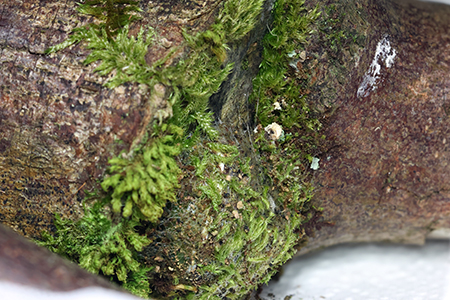 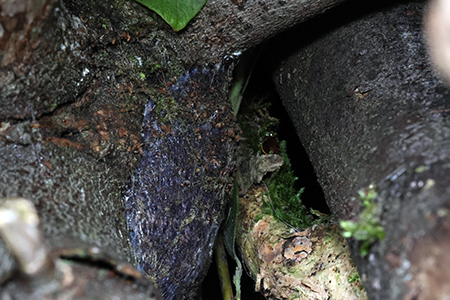 Not yet finished, but close 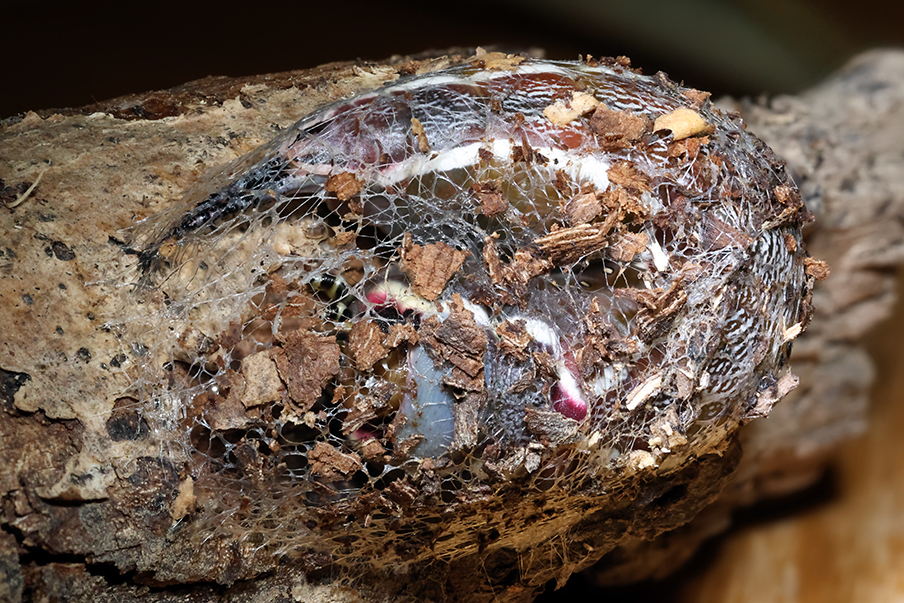 |
|
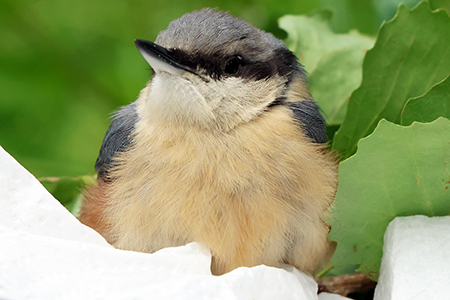
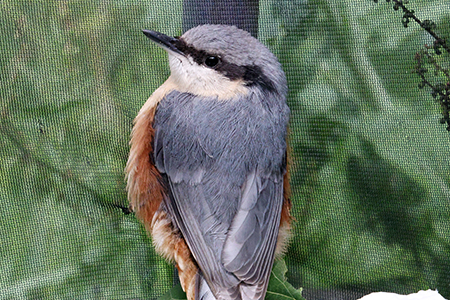
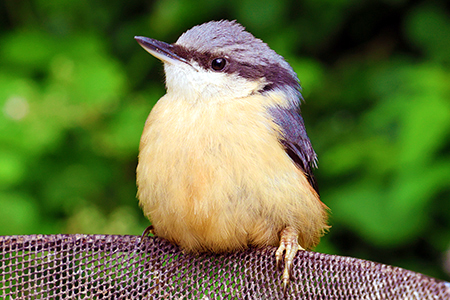
5th: Nuthatch The sound of a thud on the window was swiftly followed by the sight of this beautiful nuthatch lying on the decking, wings in a heap and head decidedly wobbly! We scooped it up before any of the dogs or cats could show an interest and popped it in a butterfly net cage, our fingers well and truly crossed. The neck wasn't broken and everything else seemed intact. It's toes were so long and as it began to come to and explore, even in the small cage, we saw how easily these birds are able to travel both up and down vertical surfaces. Remarkable.Over the next half hour, the head returned to a less wobbly state, the panting eased and the eyes opened up - and stayed open. When it looked fairly awake we decided to see if it was able to fly off from the bird feeding station - we get a very regular nuthatch visitor every day - and chances were, this was it!! It perched on the feeding tray for a little while and then all of a sudden, off it went: a beautiful straight flight into the gap between the trees. A very happy ending - and a deep sigh of contentment at our luck in getting to see such a stunning bird so close up. 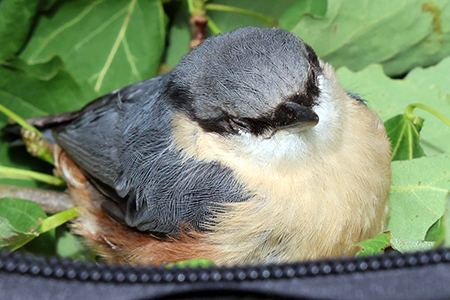
   |
|
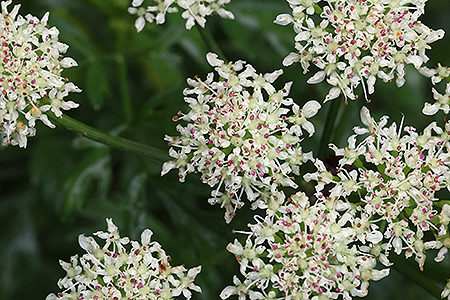
6th: Water hemlock When we diverted the middle ditch water into Chaser last winter (Feb 25), we didn't then see the water hemlock at all and assumed it had died due to the ditch being much drier. It was a delight to spot it today, obviously having found enough water to survive and then re grow. It is of course highly poisonous to humans and livestock if ingested, but is also a fabulous plant for wildlife as the flowers are very nectar rich. As we don't plan to eat it, the poisonous aspect to it is not really a problem 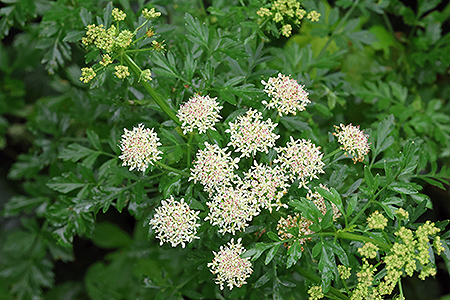
 |
|
7th: Hare Very chuffed indeed to catch this footage of a hare in Goat field last week. S/he obviously likes our paths too. Interestingly, the place where its ears were having a bit of a periscope moment, is where the fox goes in and out of the hedgerow - coincidence?? |
|
8th: Rich pickings Rich pickings for the blackbirds on our paths!!! |
|
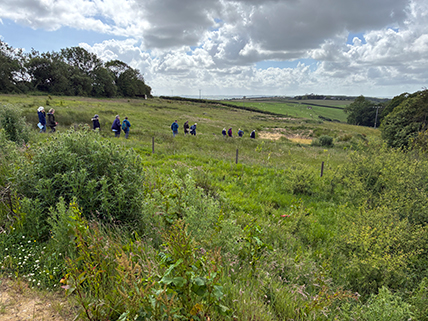
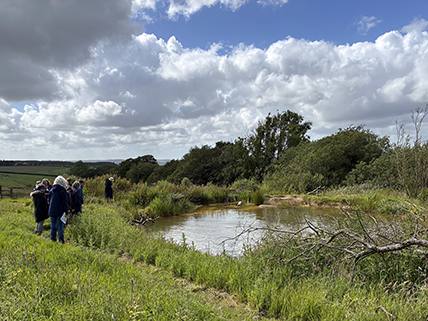
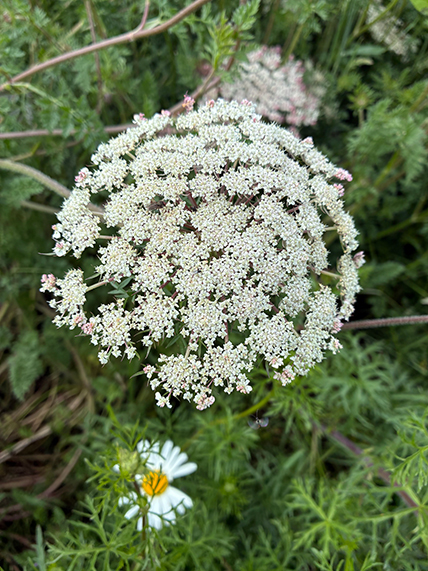
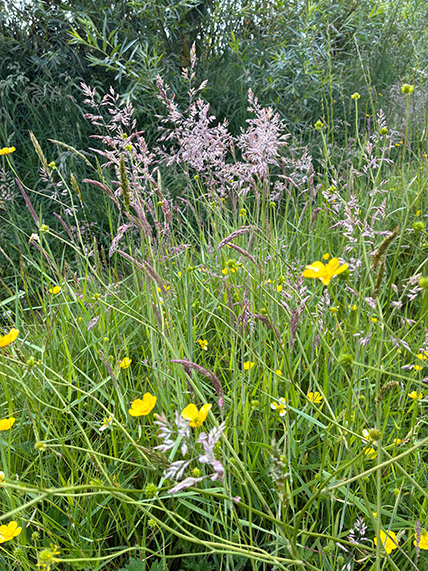
9th: Grasses and Wildflower Workshop A wonderful Grasses and Wildflower afternoon with Cathy Horsley from DWT. In her words: 'It was a fantastic group of people. I learned a lot too.' Net proceeds from the afternoon have been donated to DWT, earmarked for Cathy's Wilder Communities Team and specifically for the Big Autumn Sow: this is where wildflower seeds are given out to community spaces across North Devon. We took part last year and so some of the species looked at on this walk are as a result of our 2025 Big Autumn Sow planting. So, all delightfully circular. 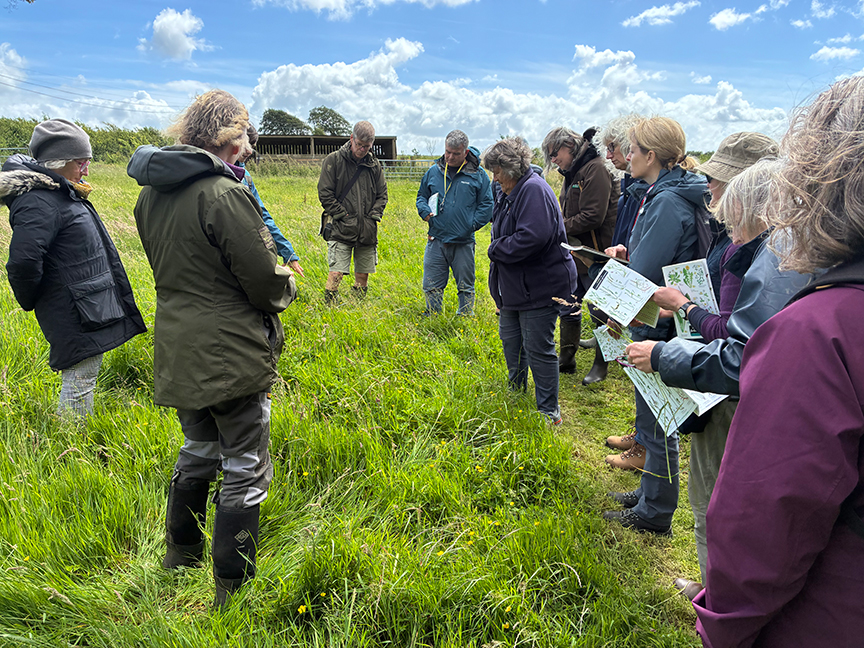
 |
|
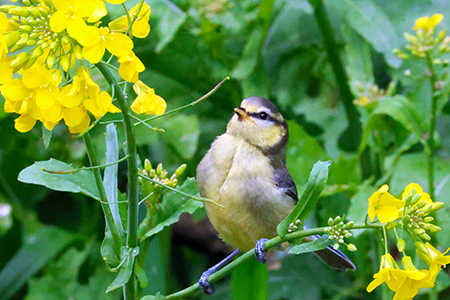
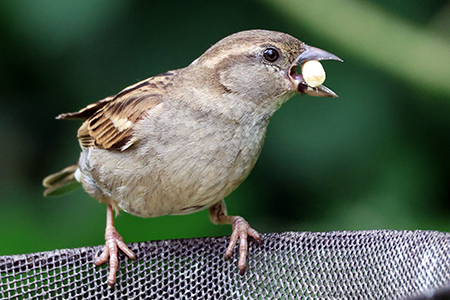
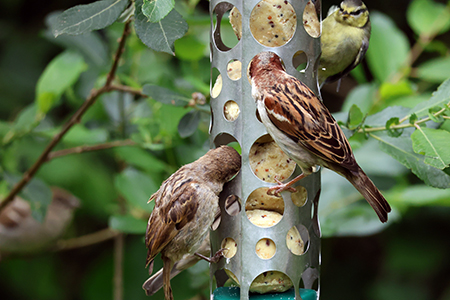
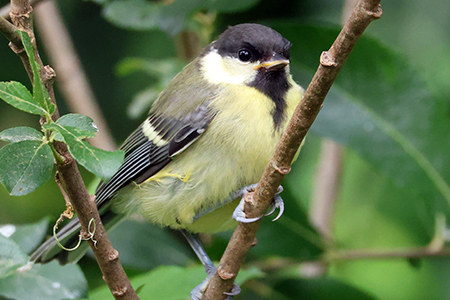
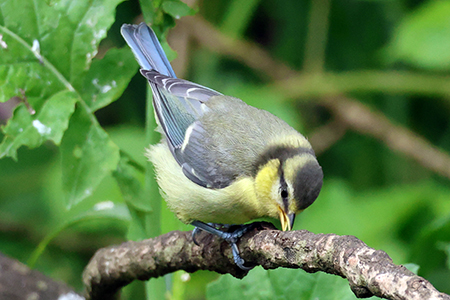
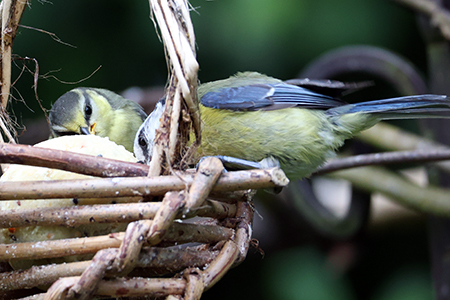
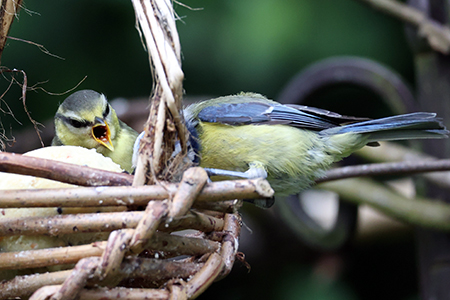
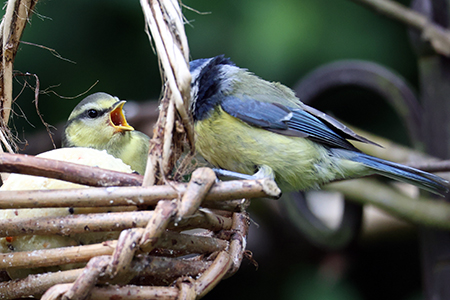
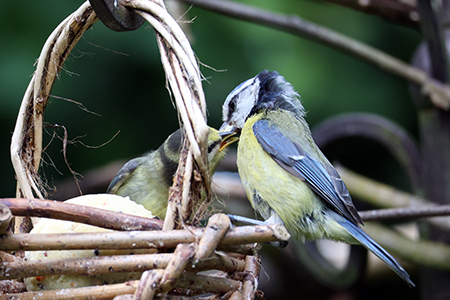
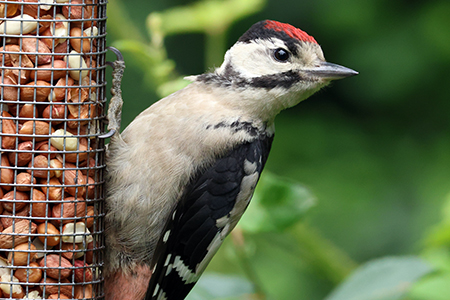
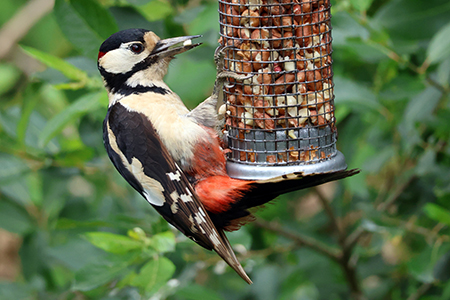
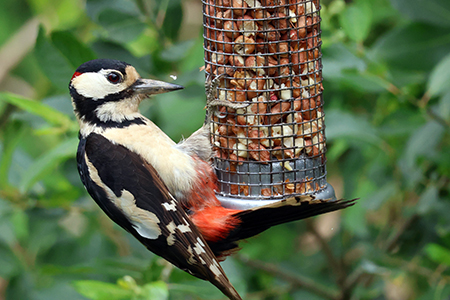
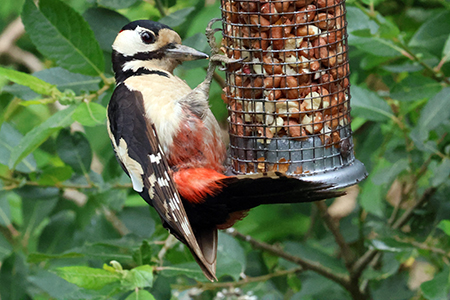
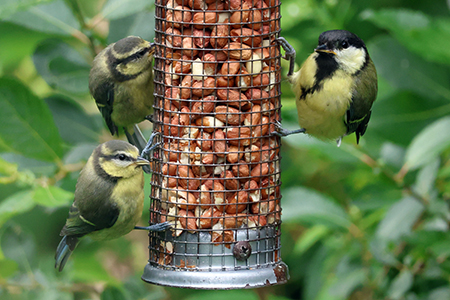
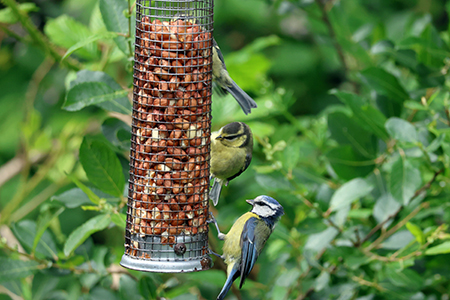
10th: Bird feeding station The bird feeding station is just manically busy at the moment - we are getting a lot of youngsters coming in, demanding to be fed by adults and then, when ignored, realising they can do it themselves!! It was an utter joy to stand and watch them all for a good half hour today. 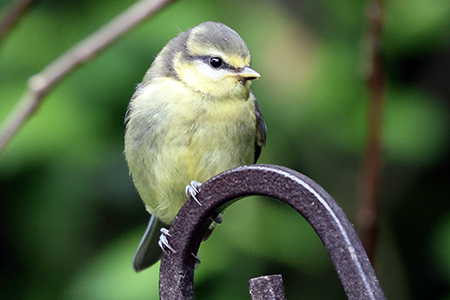
 |
|
11th: Nettle caterpillars Our nettle net is doing really well - it is mainly full of Peacock caterpillars but we also have a few Tortoiseshell and Red Admirals. And at the start of the month, the older ones started to pupate so we have around 20 or so chrysalis hanging from the top of the net. They only take two to three weeks to emerge, whereupon we will release them so, in the case of the Tortoiseshells and Red Admirals, they can mate and produce a second brood of the year. Peacock butterflies only tend to produce one generation a year. All three spend the winter as adults and so with any luck, we may see more appear next spring if all our 'home-grown' ones make it!!! 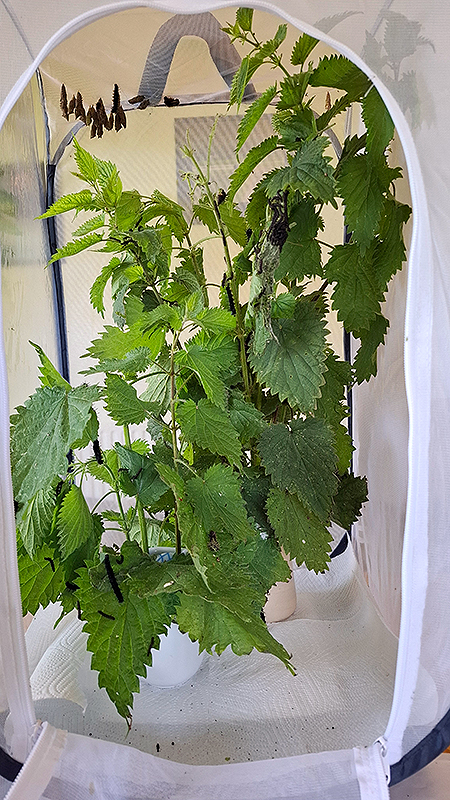 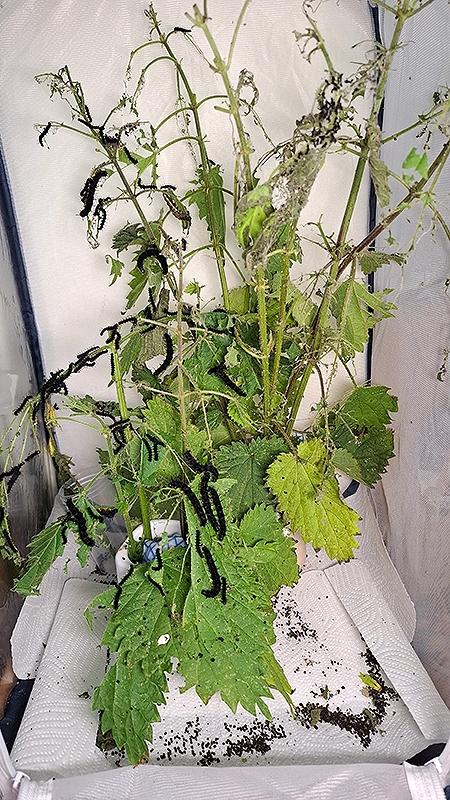 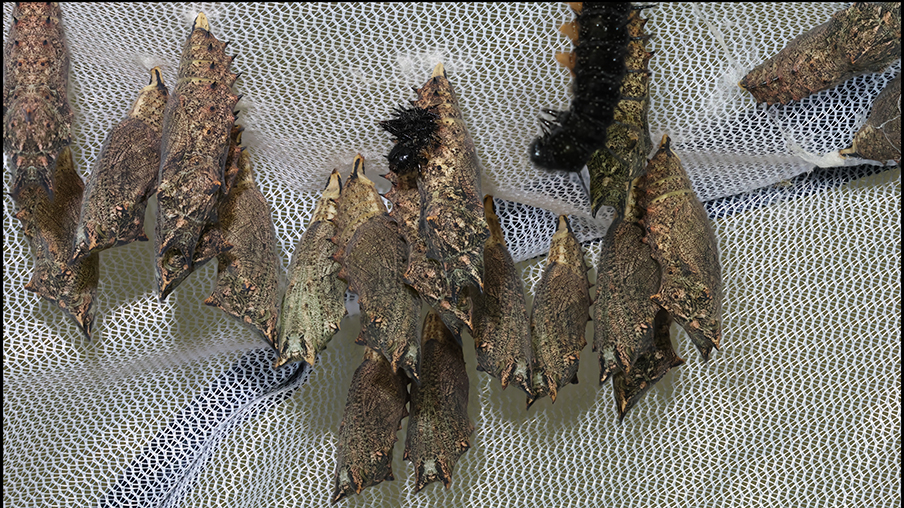 |
|
12th: Colour The banks and scrapes in Fruit and Swallow fields are really giving us some great colour Yarrow and Corn Chamomile 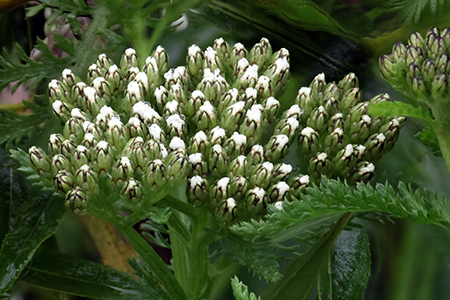 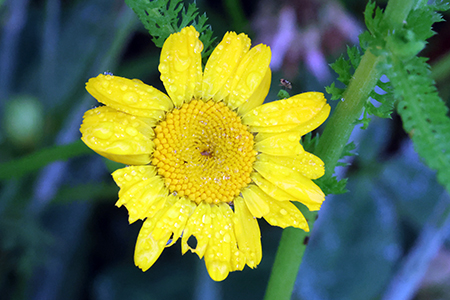 Marigold and Kidney Vetch 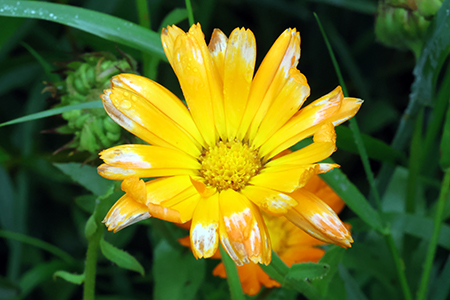 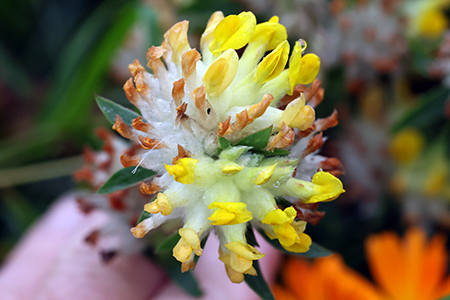 And a new species on the land: Cat's-ear - Hypochaeris radicata. The leaves are very low lying on the ground, a great way to tell it apart form the common dandelion. 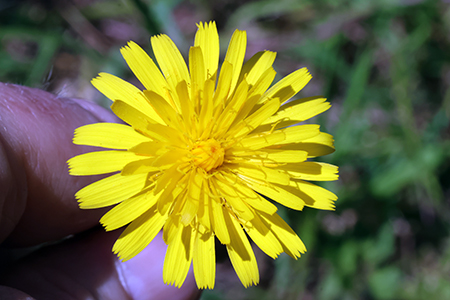 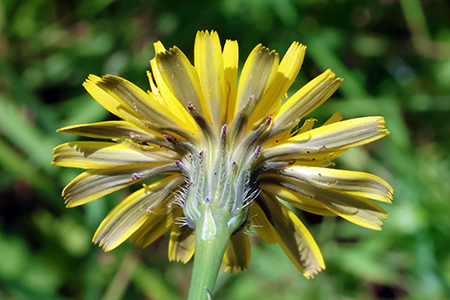 |
|
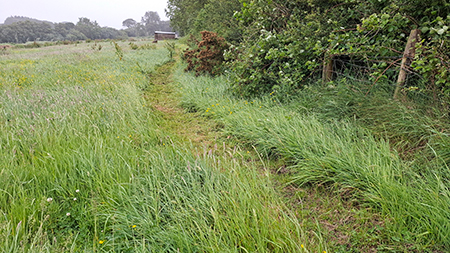
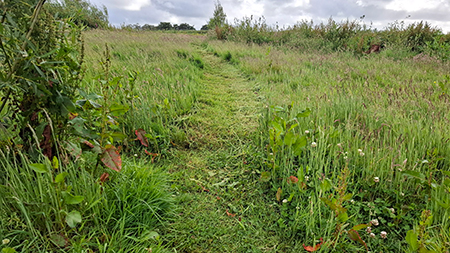
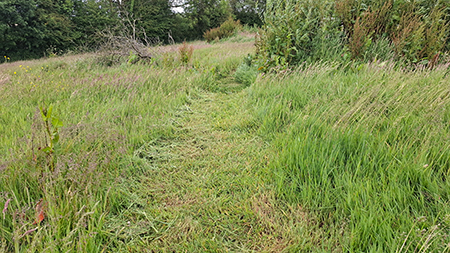
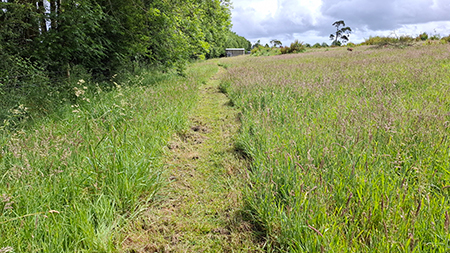
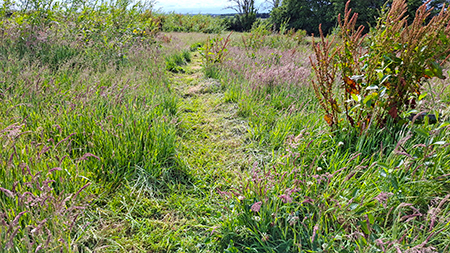
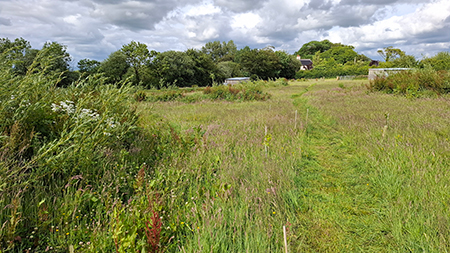
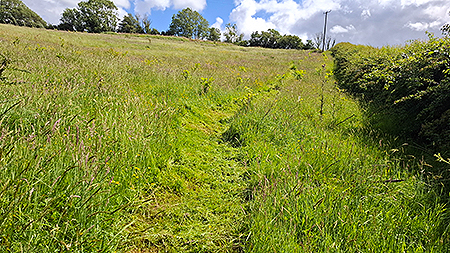
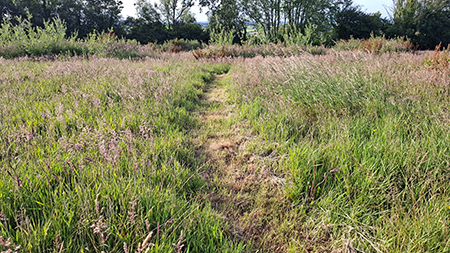
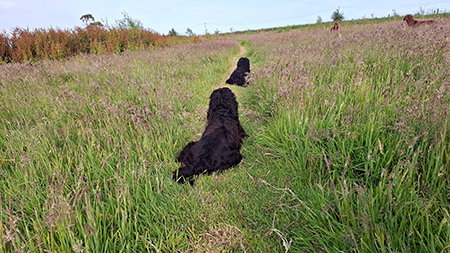
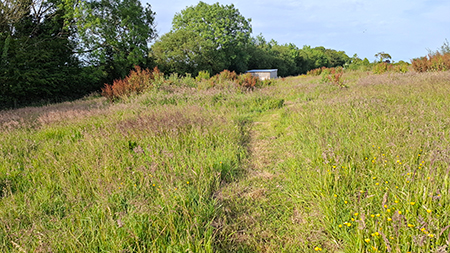
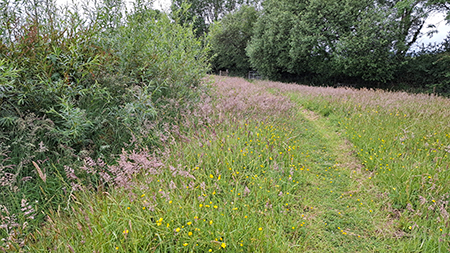
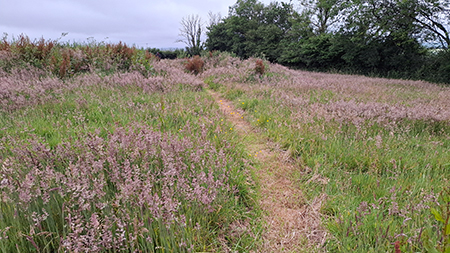
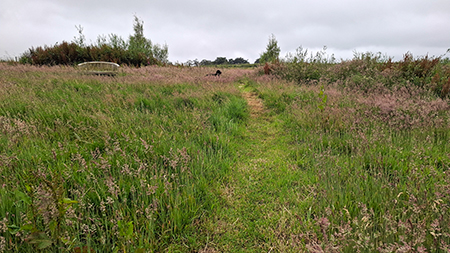
13th: Paths Our path making continues a-pace: these are pictures from the last couple of weeks or so. As well as thoroughly enjoying around these paths ourselves, we have also noticed how much wildlife is also using them, from hares and foxes to blackbirds and butterflies. Paths are another 'corridor': useful for making a quick getaway or moving from 'a' to 'b' without using as much energy. They can also be places to catch a bit of warmth, hunt for food that is near the surface and, just off the path can be a good place to 'lurk' to catch food too. We really are loving the extra dimension they have brought to the land!! 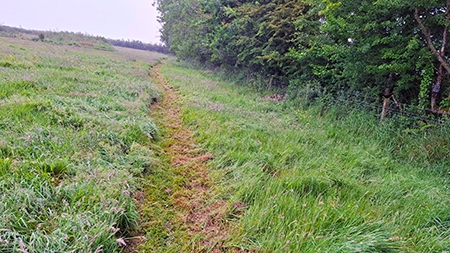
 |
|
14th: Beetle Larvae We are fairly sure these are beetle larvae but we are not sure what sort. We found the eggs on an alder leaf back on 27th May. They were white, laid on their sides and in 2 rows and we think we counted 18. Four days later on the 31st, 15 of them hatched and proceeded to eat the leaf, leaving tiny skeletal holes as they went. Over the last two weeks, we have watched them grow and become ever more mobile. It has been hard to give them fresh leaves as at first they simply ate where they were and only moved in line with the nibbled leaf. After the first week, they did start to move onto fresh leaves which was a relief as we were worried about the moisture content of the leaves after two to three days of being picked. In the last few days, they have become much more active and now can be seem scurrying around. These images and videos are taken through a microscope at a magnification of x20. When the larvae first hatched, we had to use a lens or the scope to see them individually. It is only in the last few of days have we been able to properly see them individually with the naked eye. Not all have survived, We think there are around 10 or so left. The larvae do look like ladybird larvae but we haven't been able to find any information on ladybirds that lay white eggs. |
|
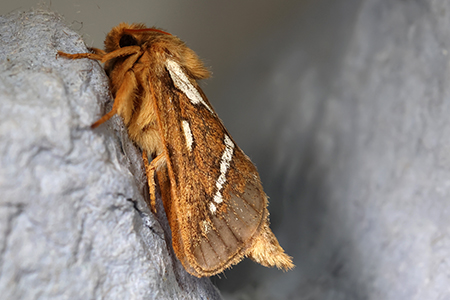
15th: Mothing A fab day of moth photography yesterday - the evening of 14th/ 15th brought in 55 moths of 22 species across three traps. These numbers are comparable with those from 2024 and 2025 but we don't really do enough trapping to make a truly sound comparison. Eight were new species (all pictured below) , including two hawk moths, the Privet and the Eyed Hawk and the rather lush Swallow Prominent - all of which were very happy to be handled. Eyed Hawk and Flame 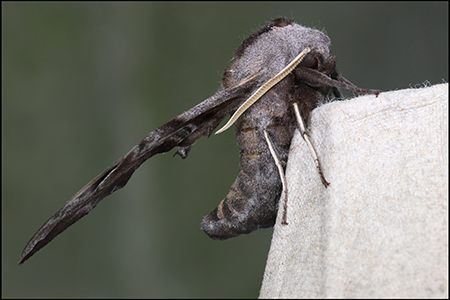
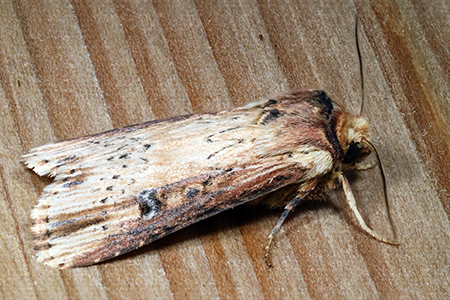 Privet and Marbles Minor agg 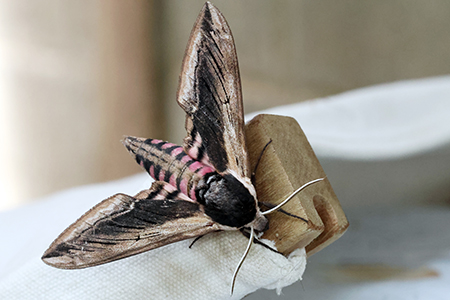
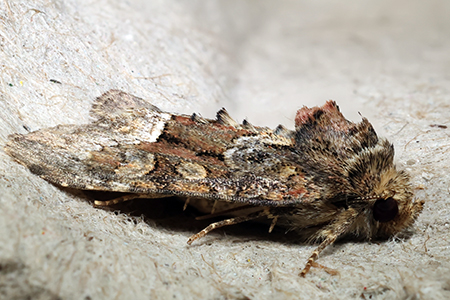
Garden Pearl and Swift 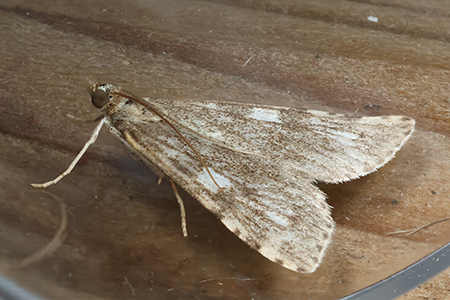
 Swallow Prominent and Dusky Brocade 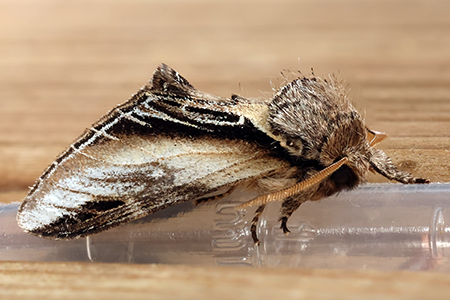 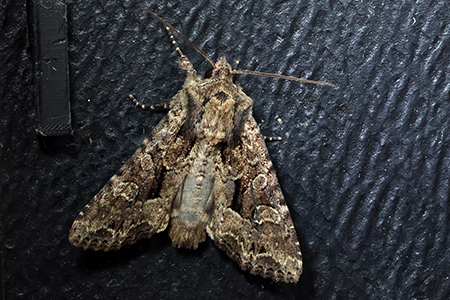 |
|
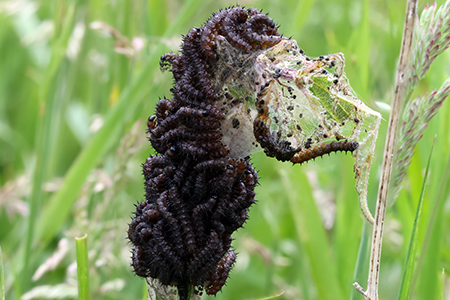
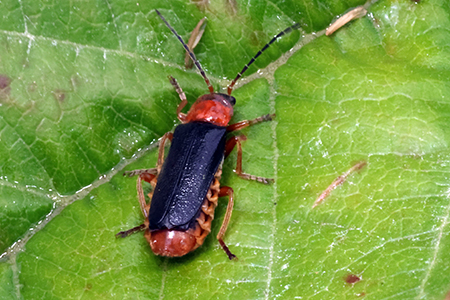
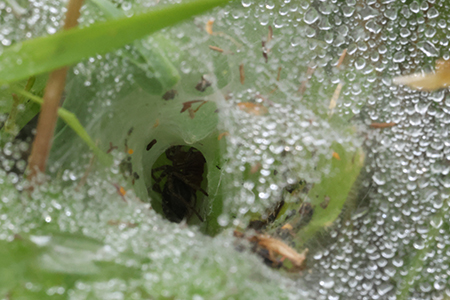
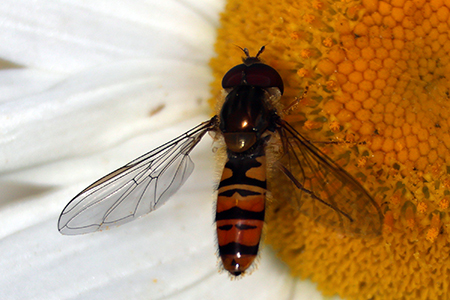
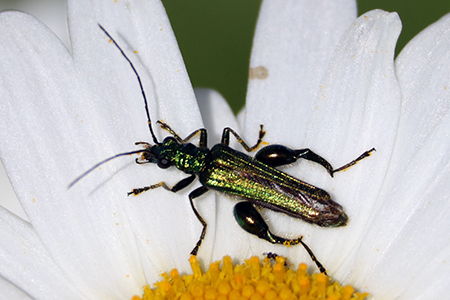
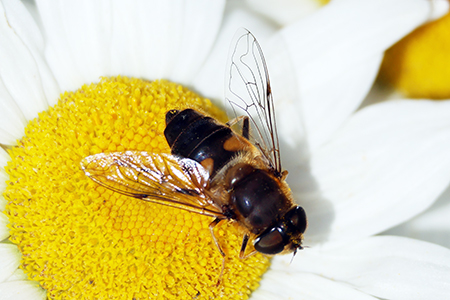
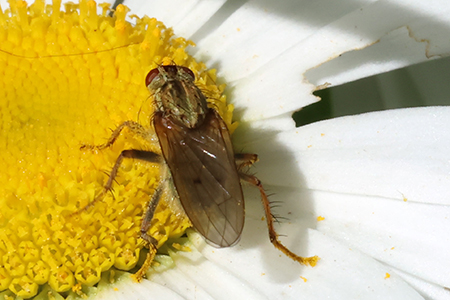
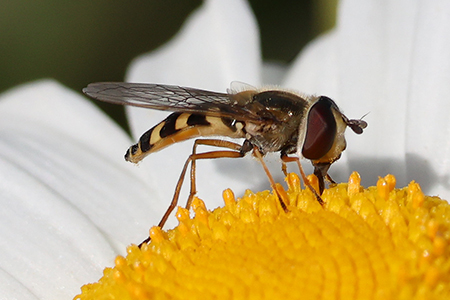
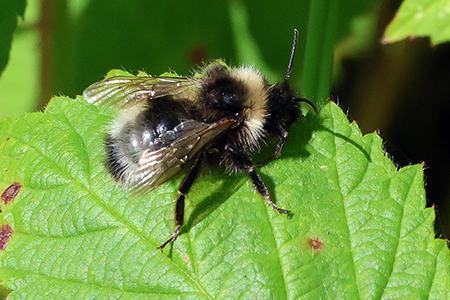
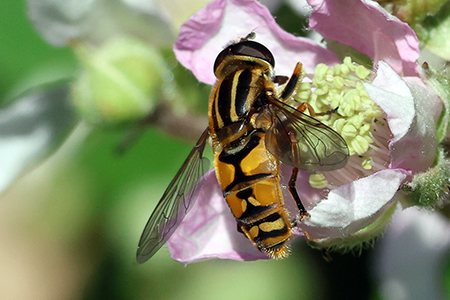
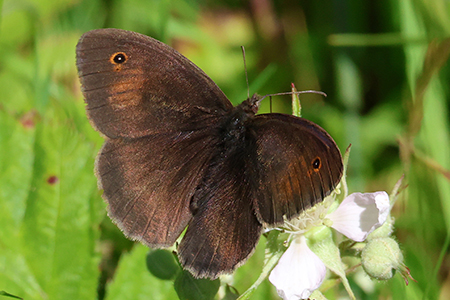
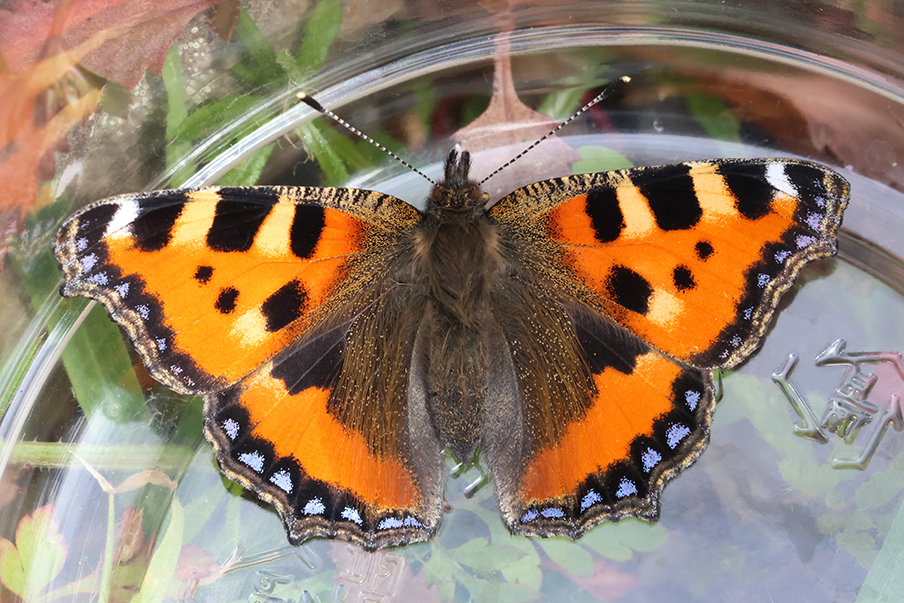
16th: Invertebrates June has been seriously weird on the weather front - at times very wet and cold. We feel that some of the invertebrates must be suffering. BUT, on the warmer, less windy days we do see a lot as we wander round the land. The number of daytime moths seems huge at the moment: Straw dots, Nettle taps, Carpets, Tortrix and others we haven't identified. We spotted a new butterfly two days ago: the Large Skipper, which isn't that much bigger than the Small Skipper; another mass hatching of Peacock caterpillars, this time in the Poultry area; some joyful Soldier Beetles (Cantharis flavilabris) and we are seeing more spiders' webs - this one was from a funnelweb spider of some sort - it wasn't brave enough to show itself and/or realised we weren't food and couldn't be bothered. The Oxe-eyed Daisies in the Poultry Area are a fabulous invertebrate draw: three days ago we spotted Marmalade hoverflies, Swollen thighed beetles, Tapered drone flies, Yellow dung flies and, new for us, Migrant aphideaters in their droves, all on one small section of flowers. Further along on the brambles there was another new species, a Forest Cuckoo bumblebee along with Sunflies and our first Meadow Brown of the year. Wow!! AND today, the first butterfly from our Nettle Net emerged, a gorgeous Small Tortoiseshell, that will hopefully find a mate and start a second generation. 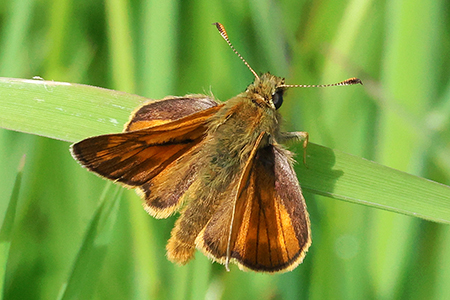
  |
|
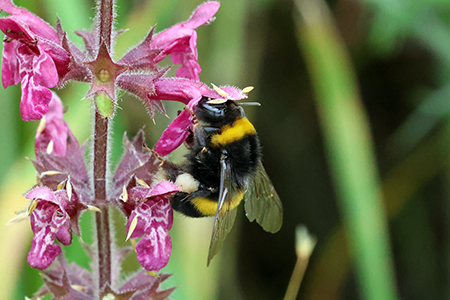
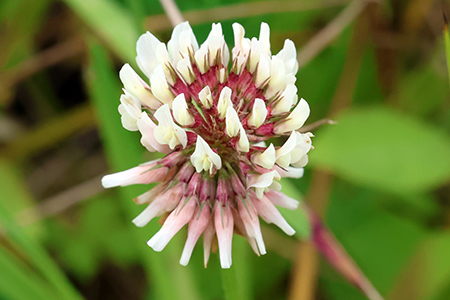
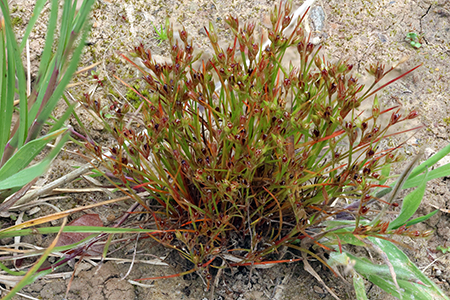
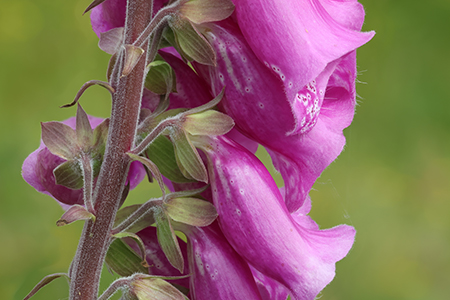
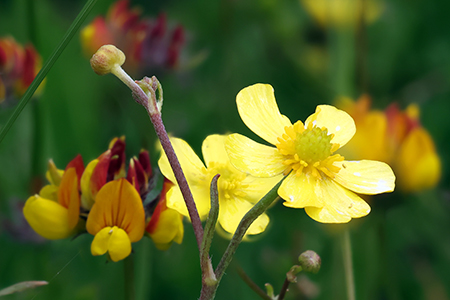
17th: Goat Pond beach We have mentioned the 'beach' area of Goat pond before. It has a fabulous range of plant life living on it - the last time we counted, we got to 20 species in a few short minutes. The Greater Bird's-foot trefoil is stunning just now, and the Woundwort is a mecca for the bees. The whole area is a joy to see. 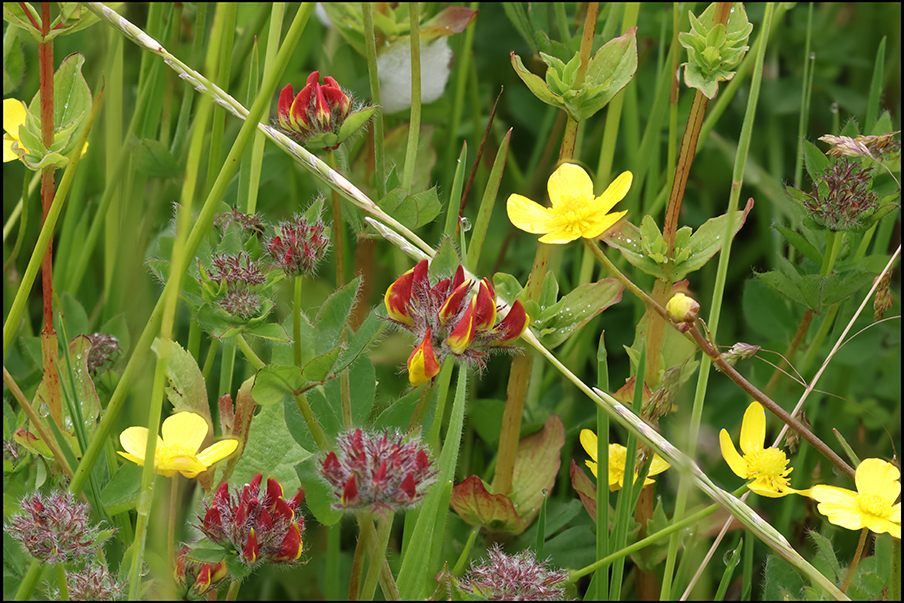 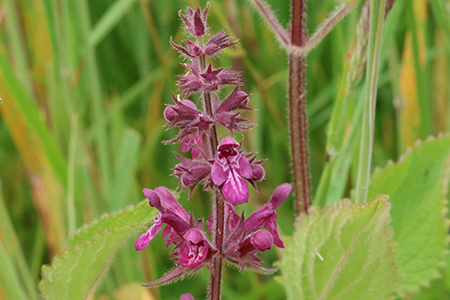
 |
|
18th: Parasitic plants Yellow Rattle is popping up in our banks thanks to wild flower seeds from Devon Wildlife Trust + Jo and Paul, sown last Autumn. It does well in grasslands, living a semi-parasitic life by feeding off the nutrients in the roots of the nearby grasses.It doesn't however grow densely and as such, this then allows other seeds in the seed bank to grow through. Yellow Rattle is used a lot to help develop wild flower meadows and is also another important pollinator for insects as well as being a useful food plant for various caterpillars. Eyebright, although smaller can do a similar job and we have a fair bit of this coming up too. Cornflowers and Birds-foot trefoil are not parasitic but both are adding yet more amazing colour to our banks and scrapes. It is wonderful to turn a corner as we meander along our paths and come across these patches of colour amongst the grasses. 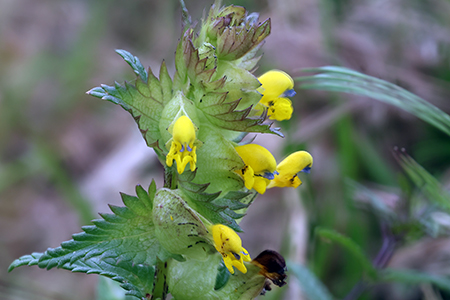 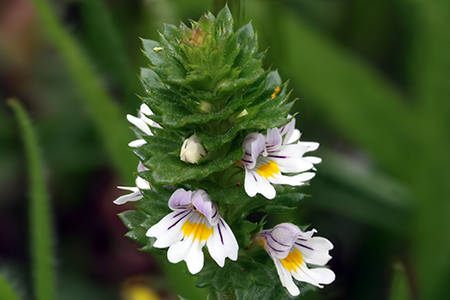 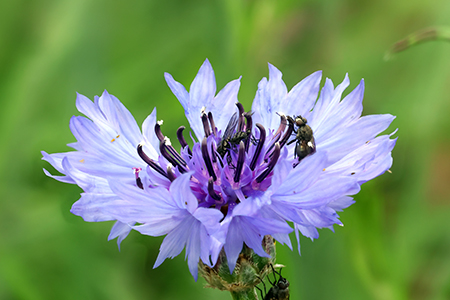 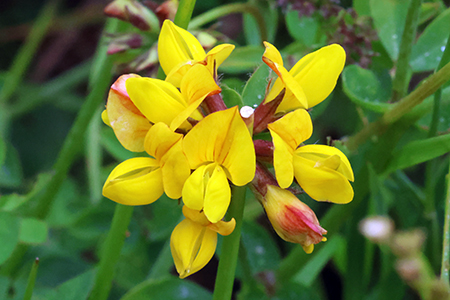 |
|
19th: Common Darter It was a joy to come across this Common Darter on the banks of Goat Pond. We think it was fairly newly emerged as it was pristine and also happy to sit and pose for us for a while. We aren't sure we have seen as many dragonflies this year as last but July is perhaps the better month for spotting them. We will see. 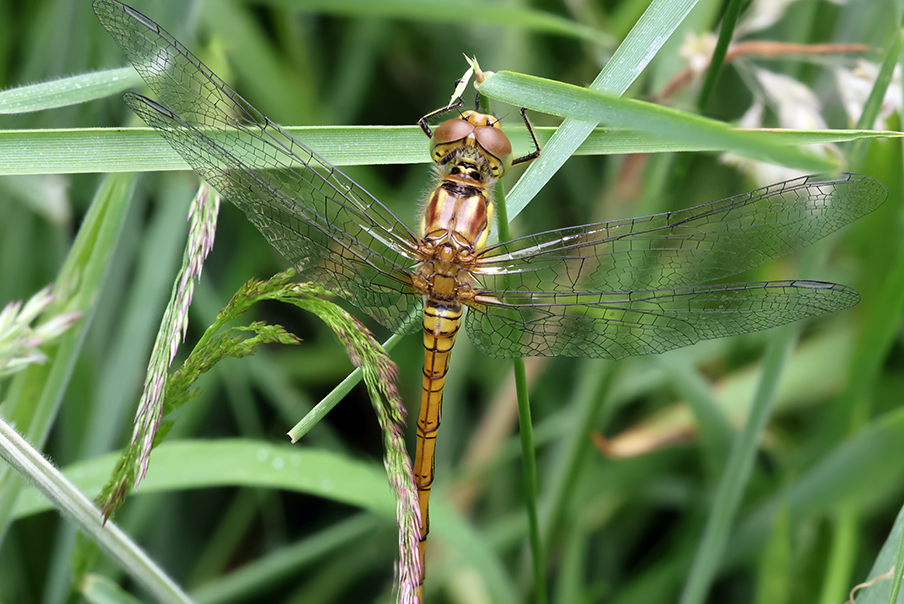 |
|
20th: Whirlygig Beetles We promise that we did not speed this video up - when they start to do their 'zoomies' Whirlygig beetles really do go that fast. These rapid movements create ripples that bounce off objects, acting a bit like a radar that then helps them to locate their prey. They are fascinating animals that apparently have two pairs of compound eyes: one pair looks upwards over the water surface and the other looks down, underwater. Try keeping your eye on one beetle - it's hard!! |
|
21st: Green Shield Bugs We are fairly sure these are Green Shield bug eggs, We found them on a nettle leaf on 12th June, The first two photos were taken on 14th and 18th and then, today, when we looked at the eggs under the hand lens, we saw these amazing markings (bottom pic).They look like the shape of the shield bug larvae that hopefully will be hatching soon. The nymphs as they are called, will look very much like wingless versions of the adults with different colours. When they first hatch they feed off symbiotic bacteria left by the female on the eggs and once consumed, they will then complete their first instar stage. After that they will then eat plant sap from various deciduous trees, with hazel being a favourite. We much much hope we can keep them until they are adult and watch as they go through all five instar stages. Fingers crossed. 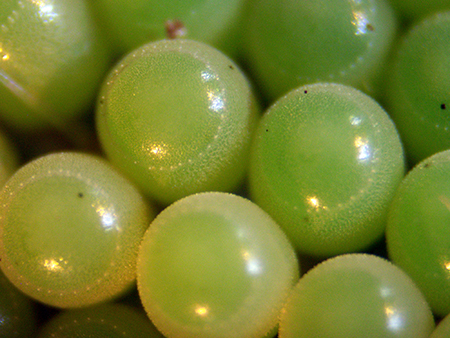 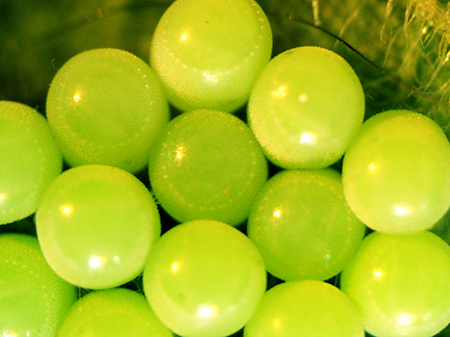 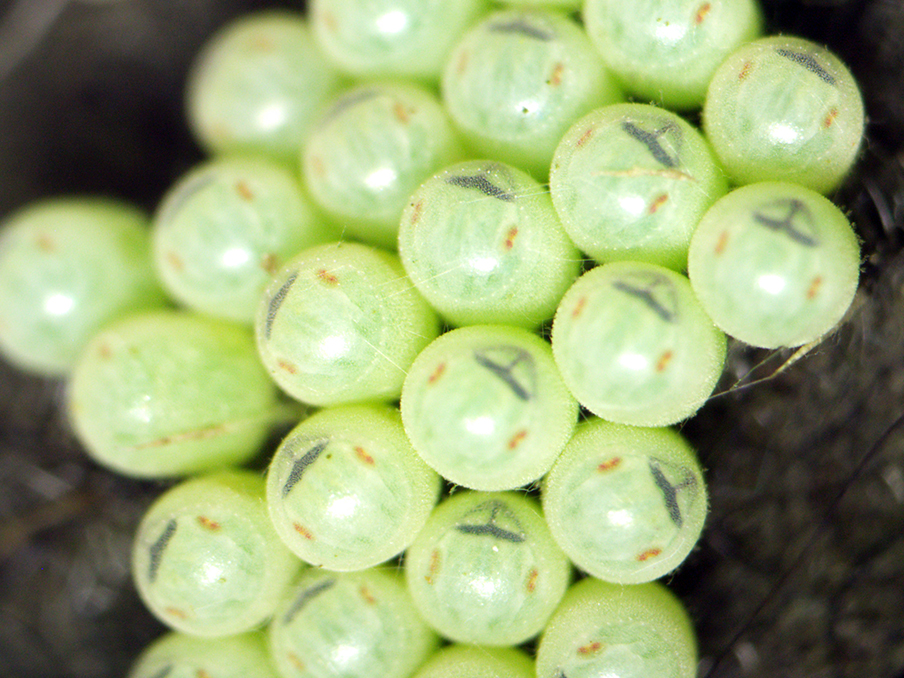 |